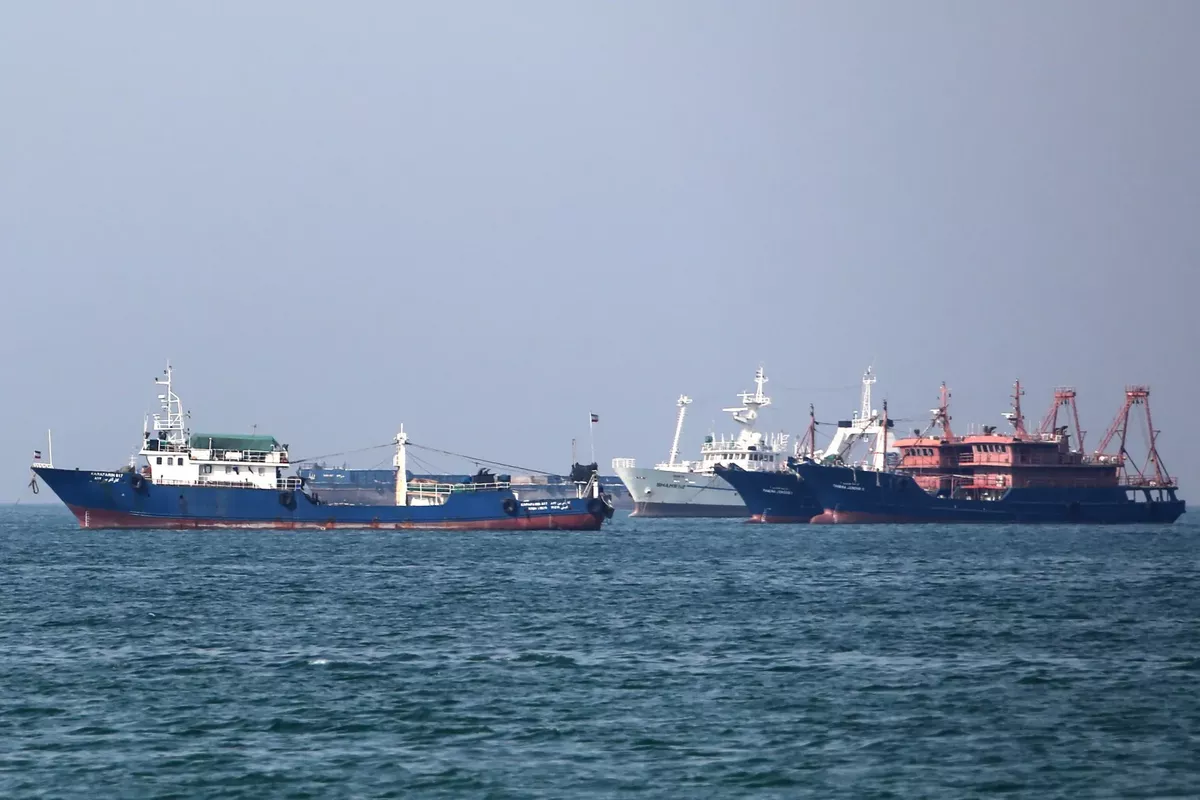
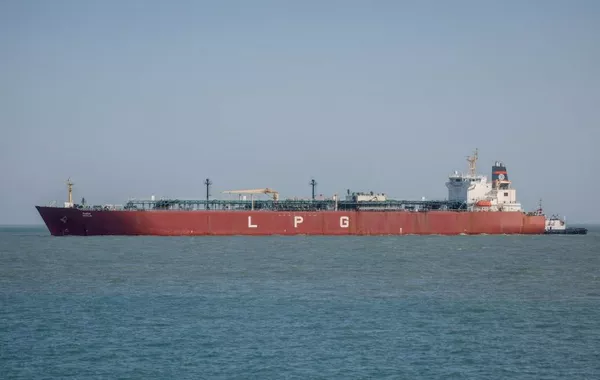
As questions persist over which vessels are allowed or denied passage to and from Iranian ports via Hormuz, a fresh US tweak has widened the blockade's scope even as ships continue probing transit through the strait.
When Trump announced the blockade of Iranian ports, many assumed that no vessels would be allowed to enter or exit the Strait of Hormuz. The confusion was amplified by one of Trump’s Truth Social posts, where he claimed that it would move to an “all being allowed to go in, all being allowed to go out” basis. However, the reality is quite different.
Hormuz is not blocked, nor is all movement. CENTCOM statements later cleared some of the fog, while still leaving parts of it vague. “The blockade is to be enforced impartially against vessels of all nations entering or departing Iranian ports and coastal areas. CENTCOM forces will not impede freedom of navigation for vessels transiting the Strait to and from non-Iranian ports”, reads the CENTCOM statement. However, there appears to be another layer of exemptions as well.
In a recent update issued on Thursday, the US Naval Forces Central Command (NAVCENT) has updated the blockade conditions. It now indicates that “all Iranian vessels, vessels with active OFAC sanctions, and vessels suspected of carrying contraband are subject to belligerent right of visit and search.”
India Today’s Open Source Intelligence (OSINT) team tracked movement in the Strait of Hormuz and adjacent waters to assess how effective the US blockade has been so far, and to understand what exemptions may have allowed even some Iranian-linked vessels to enter ports.
Our tracking using vessel monitoring platforms shows that at least 10 vessels, as claimed by US CENTCOM, were stopped under the blockade in the first three days of the blockade since it came into effect on April 13.
Vessels That have Made a U-Turn
Rich Starry (IMO 9773301), Christianna (IMO 9596703), and Ostria (IMO 9260067) were among the eight vessels that executed U-turns within the first 48 hours of the US blockade.
Another Iranian-flagged vessel, Kashan (IMO 9270696), which had been hugging the Iranian coastline while attempting to “breach” the blockade, has also turned back after advancing beyond Iranian waters toward the Pakistan coast.
US Central Command confirmed the incident, though it did not explicitly name the vessel. However, vessel tracking independently verified by India Today indicates that the ship in question was Kashan. CENTCOM stated, “an Iranian-flagged cargo vessel attempted to evade the blockade after departing Bandar Abbas, exiting the Strait of Hormuz, and moving along the Iranian coastline. The guided missile destroyer USS Spruance successfully redirected the vessel, which is now heading back toward Iran.”
Another vessel, Guan Yuan Fu Xing (IMO 9179696), has made multiple attempts to transit the US blockade, broadcasting “China owner and crew” via AIS as a form of digital signalling. Tracking data shows the vessel has performed several U-turns but has so far failed to cross. It is currently positioned in the Gulf of Oman. Lloyd’s List Intelligence notes that the ship has previously used such signals to leverage its Chinese links for safer passage through high-risk zones.
A similar pattern is visible among other vessels such as Sifra (IMO 9185346), Tania Star (IMO 9134165), MT Eureka (IMO 1022823), Global Rani (IMO 9136113), and Pearl (IMO 9672301). While the precise reason behind each U-turn cannot be definitively established, all these ships have executed at least two course reversals in the Gulf of Oman and continue to remain in the area.
The locations of these U-turns are not uniform. They are dispersed across different points rather than concentrated at a single chokepoint. However, none of these vessels appears to have been permitted to enter the Strait of Hormuz.
This spatial dispersion suggests that the US blockade may be operating in multiple layers. It also indicates that CENTCOM forces are likely gathering intelligence in real time, with responses calibrated individually for each vessel rather than through a uniform enforcement pattern.
Which Ships are Allowed to Sail Through?
Despite the announcement of a blockade, vessel movement has not come to a standstill. Instead, a pattern of selective movement and quiet exemptions is visible across the Strait of Hormuz and along the Iranian coastline.
India Today’s analysis, based on AIS mapping, shipping patterns, and route tracking, identifies which vessels are being blocked and which are allowed to pass. From this, it deduces the criteria under which vessels are selectively permitted to transit the blockade.
Some vessels that had already entered Iranian waters before the enforcement window appear to have been allowed to complete their journeys.
Ships not carrying cargo seem to face far fewer restrictions. Alicia (9281695), which displayed no destination and was likely sailing without cargo, continued its transit, suggesting that empty runs are not a priority target under the blockade framework.
A key exemption lies in the destination. Vessels linked to Iran but heading elsewhere are largely not being obstructed. Agios Fanourios I (9759824), despite its Iran linkage, continued towards Basrah in Iraq. Similarly, Peace Gulf (9304588) did not divert toward any Iranian port, reinforcing that transit traffic to third countries remains largely untouched.
Movement within Iranian waters, especially along the coastline, appears to continue under a different threshold of scrutiny. Ships are seen hugging the coast, possibly to avoid interception in open waters. Golbon (9283033), for example, is tracked moving along the Iranian coastline and eventually docking at Chabahar, pointing to ongoing domestic or near domestic maritime activity.
Cargo type also seems to influence enforcement. Rosalina (9568562), likely carrying food supplies to Bandar Imam Khomeini, was not visibly obstructed. This aligns with the possibility that essential goods are being allowed passage, even as broader restrictions remain in place.
See the original article here