Kazakh-Chinese Team Uncovers 3,000-Year-Old Settlement

Photo credit: National Museum

Kazakh-Chinese Team Uncovers 3,000-Year-Old Settlement

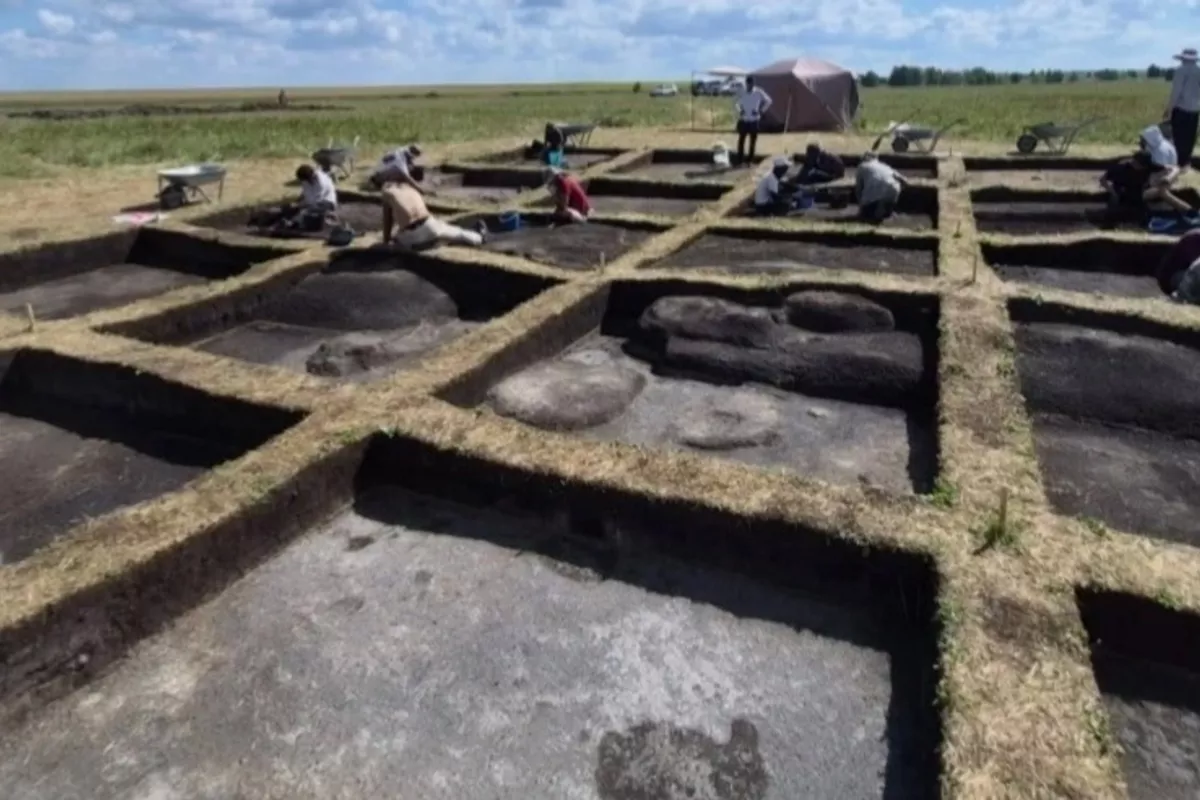
A joint Kazakh-Chinese archaeological expedition has uncovered an ancient settlement near the village of Imantau in North Kazakhstan, offering new insights into life on the Eurasian steppes more than 3,000 years ago.

Researchers have discovered the remains of ancient dwellings along with ceramic fragments, stone and bronze tools, arrowheads, animal bones and metal ore residues at the site, Kazinform reports.

The settlement is preliminarily dated to the 16th-15th centuries BCE, placing it in the Bronze Age.

Excavations covered an area of 324 square meters between July 14 and August 17. Based on the layout of the settlement and the artifacts recovered, researchers believe it may have been inhabited by a socially and economically prominent community.

Evidence of early animal husbandry was also found. In the western part of the settlement, archaeologists uncovered layers of ash, burnt stones and numerous horse bones, pointing to the important role of livestock in the community’s economy.

The excavation is being carried out as part of a five-year Kazakh-Chinese archaeological program in cooperation with the National Museum of China. The initiative focuses on Bronze Age and Early Iron Age sites across the Eurasian steppes.

Chinese laboratories are contributing advanced analysis of soil, ash, bones and metal samples to help determine their composition and age.

The archaeological work will continue, with excavation periods expected to expand from 33 days this year to 45 days next year. Researchers also plan to study additional Early Iron Age sites in the region.

The expedition brings together four Chinese experts and more than 20 Kazakh archaeologists and students from different regions of the country.

Related news

Kazakh-Chinese Team Uncovers 3,000-Year-Old Settlement

A joint Kazakh-Chinese archaeological expedition has uncovered an ancient settlement near the village of Imantau in North Kazakhstan, offering new insights into life on the Eurasian steppes more than 3,000 years ago.