In 2025, Kazakhstan's foreign policy shifted from tactical engagement and gradual cooperation to a more comprehensive strategic realignment.
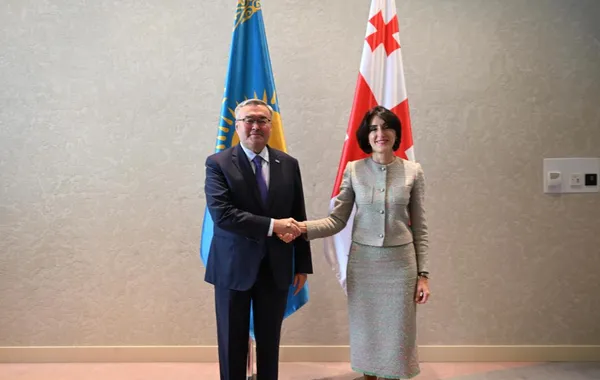
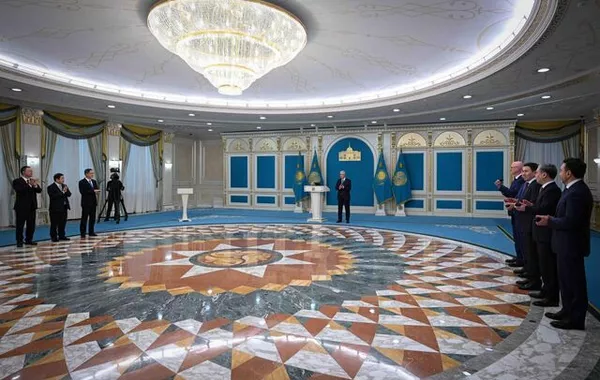
The year was marked not only by a dense calendar of high-level visits and signed agreements, but also by the elevation of relations with key partners to new strategic frameworks, signalling longer-term political alignment and economic integration, The Caspian Post reports, citing Kazakh media.
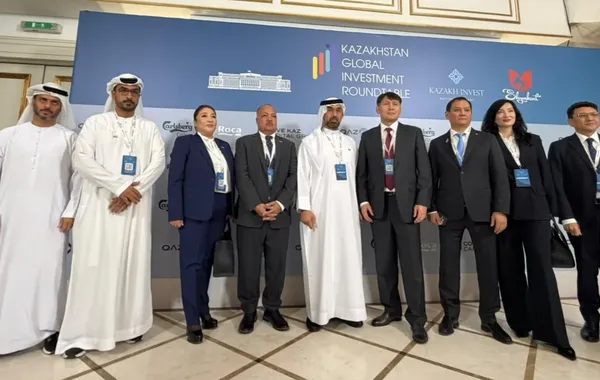
Across Europe, Asia, the Middle East, and North America, Kazakhstan has positioned itself as a pragmatic yet increasingly proactive diplomatic actor, leveraging its geography, economic potential, and political stability amid global fragmentation. Kazakhstan continued to host and participate in international platforms, including the Astana International Forum and United Nations initiatives, reinforcing its role as a convening power that facilitates dialogue across geopolitical divides.
EU: consolidating a strategic partnership
Relations between Kazakhstan and the EU gained renewed momentum in 2025, anchored by the 10th anniversary of the Enhanced Partnership and Cooperation Agreement (EPCA). High-level engagement, including the December 2025 visit of European Council President António Costa to Kazakhstan, underscored the EU’s view of Kazakhstan as its key partner in Central Asia.
Discussions focused on expanding cooperation beyond traditional trade into green energy, critical raw materials, transport connectivity, digitalization, and education. Particular emphasis was placed on the Trans-Caspian International Transport Route, which aligns with the EU’s objective of diversifying supply chains and strengthening Europe-Asia connectivity.
Alongside sectoral cooperation, Kazakhstan and the EU signaled plans to modernize the legal framework for travel facilitation to simplify procedures, expand humanitarian contacts, and enhance mobility between Kazakhstan and EU member states. The next round of consultations on this agenda is scheduled for 2026 in Astana, reflecting a sustained commitment to deepening people-to-people ties.
United States: diplomatic first and strategic recognition
One of the most significant diplomatic milestones of 2025 was President Kassym-Jomart Tokayev’s visit to Washington - the first official White House reception of a Kazakh leader during Tokayev’s presidency.
Observers described the visit as a clear shift from symbolic diplomacy toward a results-oriented strategic partnership, signaling that Washington now regards Kazakhstan as a meaningful actor rather than merely a resource provider.
During the visit, Kazakhstan and the U.S. signed 29 agreements worth nearly $17 billion, spanning energy, transport, digitalization, healthcare, education, and critical minerals. Discussions also addressed regional security, economic connectivity, and Kazakhstan’s stabilizing role in Central Asia, underscoring the country’s strategic relevance in broader Eurasian dynamics. The visit coincided with the C5+1 consultations, highlighting Kazakhstan’s integration into multilateral frameworks with Central Asian partners.
China: From cooperation to long-term strategic alignment
Kazakhstan’s partnership with China reached a new level in 2025, reflecting both deepening economic ties and long-term strategic alignment.
During the Central Asia-China Summit and bilateral meetings in Tianjin, the two countries signed 24 intergovernmental agreements covering energy, transport, customs, digital technologies, agriculture, science, and investment protection. President Tokayev formally described the relationship as an “eternal comprehensive strategic partnership,” signaling durable political trust, institutional depth, and long-term commitment.
The focus is increasingly shifting from raw material exports to industrial cooperation, high-tech manufacturing, renewable energy, petrochemicals, and logistics corridors, demonstrating Kazakhstan’s ambition to move up the value chain. China remains Kazakhstan’s largest trading partner, and 2025 reinforced Astana’s strategy to position itself as a key transit and production hub connecting China with European and Middle Eastern markets. The Tianjin agreements also reflected a broader regional trend: Central Asia’s deeper integration into Asian economic networks, while maintaining strategic autonomy and multi-vector diplomacy.
Türkiye and Azerbaijan: Strategic partnerships with measurable impact
Relations with Türkiye were strengthened at the fifth High Level Strategic Cooperation Council in Ankara, where Kazakhstan and Türkiye signed 18 intergovernmental and interagency agreements covering defense, energy, transport, and cultural cooperation. President Tokayev said Kazakhstan is prepared to supply 34 categories of goods worth $1 billion to the Turkish market. Turkish businesses continue to play a substantial role in Kazakhstan’s economy, executing projects valued at nearly $6 billion across energy, construction, agriculture, and infrastructure. Energy and transport cooperation also advanced, with plans to increase Kazakh oil flows through the Baku-Tbilisi-Ceyhan pipeline and further develop the Trans-Caspian International Transport Route, with Türkiye investing in logistics terminals, railways, and Caspian Sea infrastructure to expand east‑west connectivity.
With Azerbaijan, Presidents Tokayev and Ilham Aliyev signed 15 new agreements spanning transport, logistics, digitalization, energy, industrial safety, healthcare, and cultural exchange. Both sides pledged to double bilateral trade to $1 billion. Cargo traffic on the Trans‑Caspian route rose 62% to 4.5 million tons, with projections to reach 10 million tons as transit bottlenecks ease and tariffs are harmonized. Additional commitments included joint projects in shipbuilding, transformer production, digital‑trade corridor integration, and the deployment of a deep‑sea fiber‑optic line under the Caspian Sea.
Russia: A Comprehensive Alliance Declaration
In November 2025, Kazakhstan and Russia signed a landmark Comprehensive Alliance Declaration, elevating their relationship to a full strategic partnership and alliance. The document’s language signaled long-term commitments across the economic, energy, education, and humanitarian sectors. Key areas of cooperation included expanding bilateral trade, energy collaboration, including nuclear energy and strengthening academic and technological ties through joint research programs and university partnerships.
The declaration reflects Astana’s effort to formalize relations with Moscow within a structured, predictable framework amid shifting regional dynamics. For Kazakhstan, the agreement reinforced stability in a critical bilateral relationship while preserving room for maneuver within its broader multi-vector foreign policy.
Peace diplomacy: Ukraine, the Middle East, and rules-based stability
Beyond economic and strategic engagement, Kazakhstan asserted a more visible role in peace diplomacy in 2025. President Tokayev reiterated support for a peaceful resolution of the war in Ukraine, based on international law and respect for sovereignty, during conversations with President Volodymyr Zelenskyy. Astana also welcomed efforts by U.S. and Russian leaders at the Alaska Summit to advance negotiations and ease humanitarian suffering.
In the Middle East, Kazakhstan confirmed its accession to the Abraham Accords, framing the move as a contribution to dialogue and de-escalation. Simultaneously, Astana reaffirmed its support for Palestinian statehood and the two-state solution, underscoring a principled engagement approach while maintaining independence from competing narratives.
A turning point, not a finale
Taken together, Kazakhstan’s diplomatic activity in 2025 reflects a clear transition. Whether upgraded partnerships and strategic declarations translate into tangible economic results will depend on implementation in the years ahead. Still, 2025 stands out as a year when Kazakhstan moved visibly from adaptive diplomacy toward shaping its place on the global stage as a connector, a partner, and an increasingly consequential middle power.