Editor's note: Seymur Mammadov, a special commentator for News.Az, is the director of the international expert club EurAsiaAz. The article reflects the author’s personal opinion and does not necessarily represent the views of News.Az.
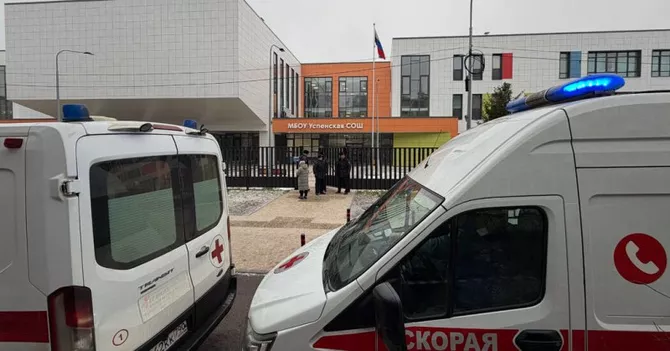
The tragedy that unfolded on December 16 at the Uspenskaya Secondary School in the village of Gorki-2 in Russia’s Moscow region has become one of the most shocking and morally significant events of recent years. Kobiljon Aliev, a 10-year-old Tajik citizen, was killed inside a school building. Yet as more details emerge, it is increasingly clear that this story is not only about a brutal crime, but about a conscious act of courage by a child who chose to protect others at the cost of his own life.
The morning began like any ordinary school day. Students were preparing for classes, teachers were handling routine matters, and nothing suggested that within minutes the school would turn into a place of terror. A 15-year-old student from the same school, Timofey K., entered the building carrying a knife and pepper spray. He was wearing clothing bearing the slogan “No Lives Matter,” associated with radical online subcultures that glorify violence and deny the value of human life.
According to video footage later circulated online, the attacker acted deliberately. He prepared for the assault in advance, leaving a mock explosive device in a school restroom, then moved through the corridors filming his actions, questioning children and adults about their nationality, and openly displaying aggression.
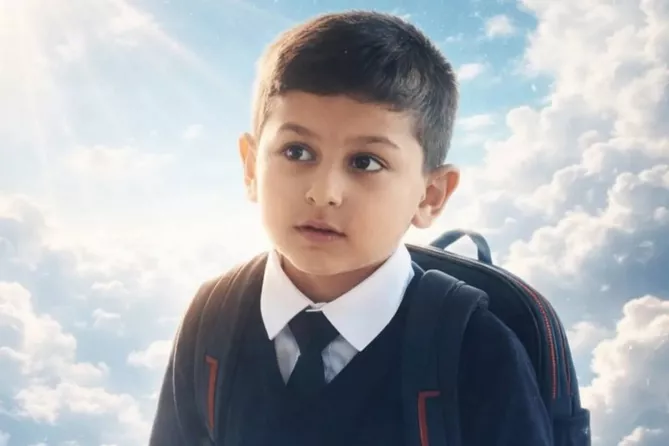
Kobiljon Aliev, a 10-year-old Tajik citizen, who was killed in a school stabbing attack (Photo: X social media platform)
When he encountered a group of younger students, panic followed. A security guard who attempted to intervene was sprayed with pepper spray and stabbed. Children scattered in fear.
It was at this moment that Kobiljon Aliev made a decision that would define his final seconds.
According to relatives and based on the testimony of his younger brother, the class teacher urgently began leading the children into a classroom to hide them. Realizing that the attacker could follow the group, Kobiljon said he would distract him and ran toward the stairwell. This was not a panicked escape. It was a conscious attempt to draw danger away from other children.
On the stairs, the boy stumbled. The attacker caught up with him and inflicted multiple stab wounds. Witness accounts indicate that Kobiljon tried to shield himself with his hands and cried out for his father. His final words - “Dada! Dada!” (“Dad! Dad!”) - remain a devastating reminder that, despite his courage, he was still a child.
Kobiljon Aliev was the son of Nilufar Safoeva, a migrant worker from Tajikistan who worked as a cleaner at the same school. After the death of her husband, who had served in Tajikistan’s border troops, she raised her two sons alone, working multiple jobs to provide for her family. Neighbors described the family as quiet, hardworking, and respected. Kobiljon himself was known as a calm, non-aggressive child with no conflicts at school.
Amid discussions about extremist ideology, online radicalization, and failures in school security, one essential truth must not be lost. At the center of this tragedy stands a child who made a moral choice - a choice to protect others.
Police officers at the entrance of a school in the Moscow region after the stabbing on Tuesday. (Photo: AFP)
Precedents: How the world honors children for heroism
History and modern practice offer clear, documented precedents showing that children who perform heroic acts, even at the cost of their own lives, are officially recognized, posthumously awarded, and commemorated.
In the United States, 10-year-old Kiera Vera Larsen was posthumously awarded the Carnegie Medal for Heroism after saving another child from being struck by a car, sacrificing her own life in the process. Her family received the medal along with a financial grant from the Hero Fund. This case was reported by ABC 10 News San Diego (KGTV) and is widely cited as an example of recognizing child heroism at the national level.
In another U.S. case, young survivors of the Robb Elementary School shooting in Texas received the official Kid Hero Award for calling 911 and helping to save others during the attack. This recognition, reported by ABC News, demonstrated that acts of bravery by children are not only acknowledged but formally honored.
In the history of the Soviet Union and during World War II, there are well-known examples of so-called “pioneer heroes” - children and teenagers who performed acts of extraordinary bravery. Many of them were posthumously awarded high state honors, including the title of Hero of the Soviet Union, and their memory was preserved in books, memorials, and public spaces.
One of the most famous examples is Valya Kotik, a young partisan who was awarded the Hero of the Soviet Union title after his death. Streets, schools, and children’s institutions were named in his honor - a fact documented in historical sources, including vladlib.ru.
Streets, parks, and living memory
The practice of honoring heroes through public space continues today.
In Russia, for example, a street in Nizhny Novgorod was named after a person awarded the Order of Courage, illustrating how cities commemorate acts of bravery through urban naming practices.
In New York City, there is an established and formal practice of co-naming streets in memory of significant residents who have died. These decisions are officially approved by the New York City Council and serve as a lasting form of public recognition and respect.
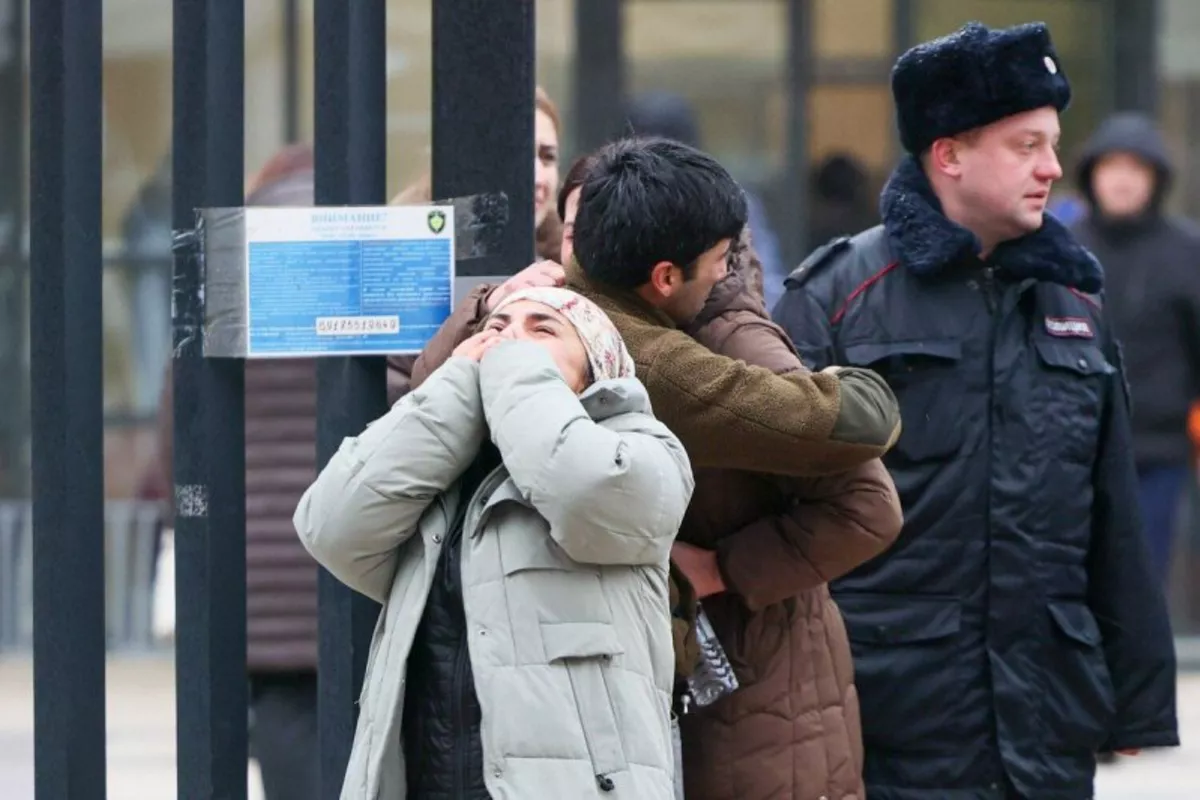
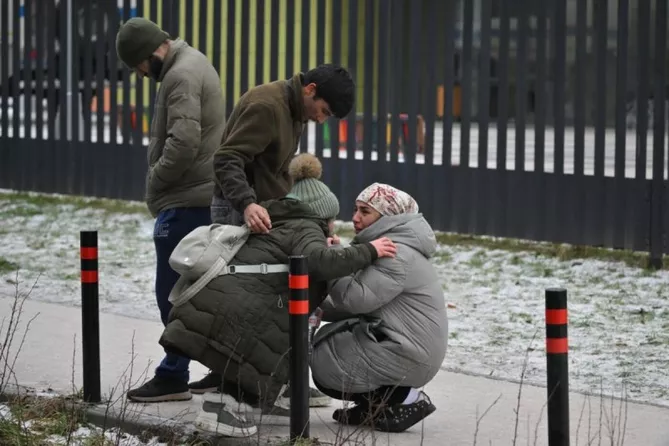
Kobiljon Aliev's relatives outside the school where the tragedy occurred (Photo: RIA Novosti)
Why this matters
Naming a street, park, school, or memorial plaque after a child hero is not merely symbolic. It represents:
- public recognition of bravery and self-sacrifice;
- preservation of memory for future generations;
- affirmation of societal values such as courage, responsibility, and care for others.
Against this backdrop, the story of Kobiljon Aliev must not fade into routine news reports or statistics. What he did was not accidental or impulsive. It was a conscious act of self-sacrifice - the highest form of human courage - carried out by a 10-year-old child.
It is precisely Tajikistan, Kobiljon Aliev’s homeland, that today holds the moral authority and responsibility to honor his memory. A posthumous award, the naming of a street, school, park, or youth center after him, or the installation of a memorial plaque would not merely commemorate a tragedy. It would establish a clear moral benchmark for society.
Kobiljon Aliev had no power, no status, and no protection. He had only a moment, and in that moment, he chose others over himself.
Remembering him is no longer a matter of sympathy.
It is a matter of moral duty.
He should be remembered not simply as a victim, but as a child hero who drew death away from others at the cost of his own life.