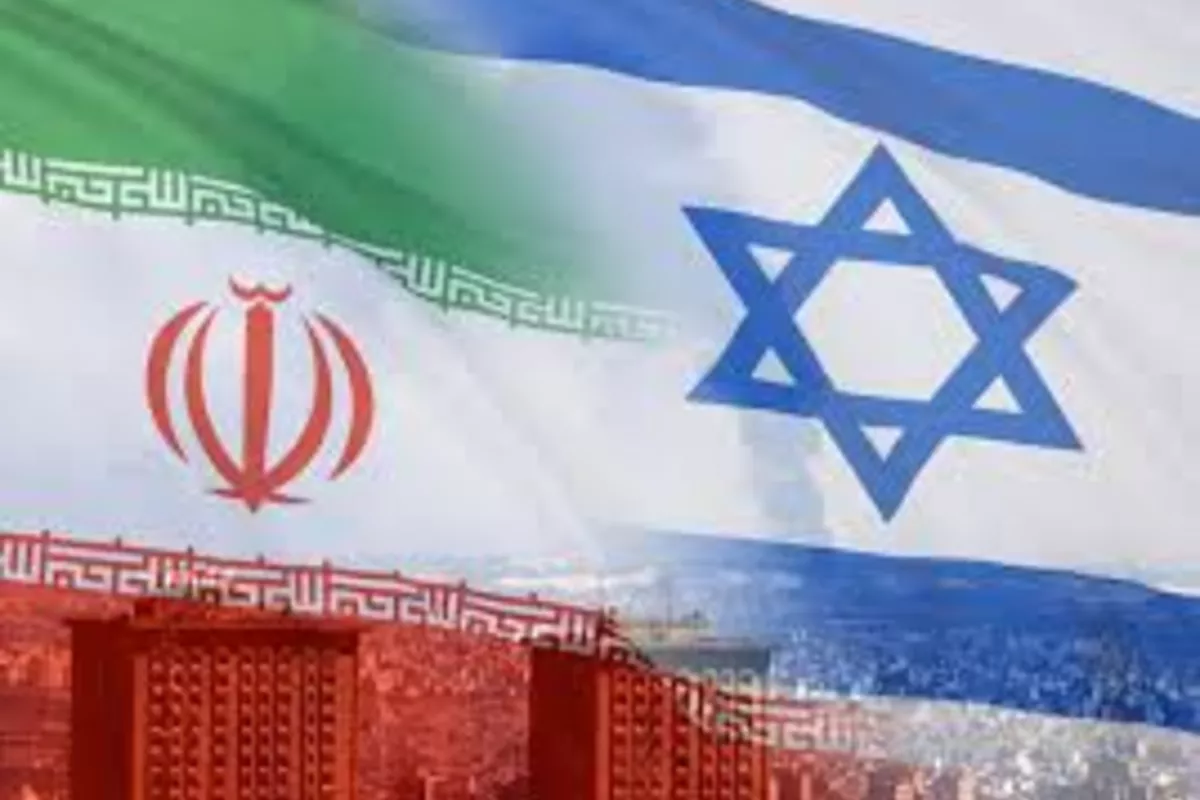
In the aftermath of the 12-day war of 2025, Iran’s leadership appears to be in a state of profound crisis. Beyond its military setback, the country faces severe drought, widespread economic disruption, and tightened sanctions imposed by Germany, the United Kingdom, and France. The Shiite axis that Tehran spent decades building has largely unraveled. Under intense Israeli pressure and with support from the U.S. and France, the Lebanese government has, for the first time, taken decisive action against Hezbollah.
Territorial claims against Iran are also growing louder. Most recently, the United Arab Emirates renewed demands for the return of the disputed islands of Abu Musa, Greater Tunb, and Lesser Tunb, an issue that until recently seemed untouchable.
In a bid to restore its regional standing, Iran is urgently rebuilding its missile capabilities while seeking to acquire weapons and air defence systems from Russia and China. Analysts warn these steps could further strain the already weakened economy and deepen divisions within the ruling elite. The Islamic Revolutionary Guard Corps (IRGC) and the regime’s most hardline factions are reportedly the strongest advocates of renewed conflict. Against this backdrop, the U.S. and Israel are closely monitoring even minor shifts in Iran’s internal balance of power and appear determined to prevent Tehran from reestablishing its influence in the Middle East.
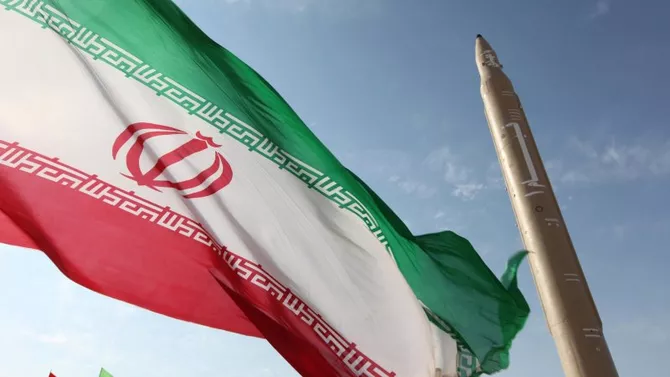
Photo: AFP
Israeli leaders are increasingly alarmed by the pace of Iran’s missile recovery. Prime Minister Benjamin Netanyahu has stepped up consultations with Israel’s military leadership following intelligence assessments suggesting that Tehran is close to replenishing its ballistic missile stockpiles, which were heavily depleted during the June conflict. Netanyahu is expected to travel to the United States before the end of the year to raise these concerns directly with President Donald Trump. Israel has reportedly prepared several operational scenarios targeting Iran, with final decisions resting with the White House.
The restoration of Iran’s military capabilities is central to these discussions. According to Israel’s military assessments, Tehran’s capacity is nearing pre-war levels. The Kan public broadcaster reports that Iran’s accelerated production of ballistic missiles is currently viewed in Jerusalem as a greater threat than its nuclear programme. This issue is expected to dominate talks between Netanyahu and Trump, scheduled for late December.
Sources cited by Axios indicate that Israel has warned the United States that a series of IRGC exercises conducted this month could be preparations for an attack on Israeli territory. “The probability of an Iranian attack is less than 50%, but no one wants to risk dismissing it as merely a drill,” Axios reported. Israeli intelligence officials reportedly raised similar concerns six weeks earlier, when unusual movements of missile launchers were detected inside Iran.
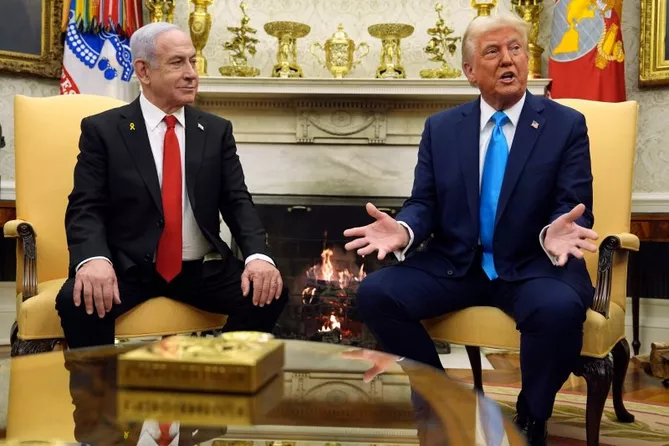
Photo: AP
Hints of a possible renewed conflict were also voiced by Israel Defense Forces Chief of Staff Eyal Zamir during a speech on 21 December. “Iran financed and armed the chokehold around Israel and was behind plans to destroy it,” Zamir said, adding that the IDF would strike its adversaries “wherever necessary - both on the near and far fronts.”
As reports circulate of Iran increasing its ballistic missile production, Tehran insists the programme is purely defensive. Iranian Foreign Ministry spokesman Ismaeil Baghaei stated that the missiles are intended solely for “self-defence and deterrence” against potential attacks. Speaking at a press conference in Tehran on 22 December, he stressed that “Iran’s missile programme is non-negotiable.”
Supporting these statements, the Iranian Fars news agency reported missile tests across several regions, including Khorramabad, Mahabad, Isfahan, Mashhad, and Tehran. Press TV, an Iranian state-affiliated broadcaster that has recently begun airing content in Hebrew, quoted Iranian Army Commander Major General Amir Hatami as warning: “We will respond decisively to any malicious intent.” His remarks came amid intensified speculation about a potential Israeli strike on Iran.
Tensions are clearly rising on both sides, and many analysts argue that the June war has not truly ended. What exists now is a fragile, non-binding ceasefire. Iran continues to categorically reject Israel’s right to exist, and the rhetoric of its leaders remains unchanged: Israel is portrayed as an enemy that must be eliminated. Under these conditions, a resumption of hostilities increasingly appears to be a matter of time.
NBC reported on 20 December that Prime Minister Netanyahu intends to present President Trump with a range of military options, both with and without U.S. participation, during a planned meeting in Florida. Netanyahu reportedly aims to persuade Trump that Iran’s expanding ballistic missile programme threatens not only Israel but also regional stability and U.S. interests. NBC noted that if current production trends continue, Iran could manufacture up to 3,000 ballistic missiles annually.
Meanwhile, Iran International, a television channel affiliated with the Iranian opposition, reported that Western intelligence agencies have detected unusual activity linked to the modernisation and reinforcement of the IRGC Aerospace Force. According to sources, this activity includes atypical movements and coordination involving drone units, missile systems, and air defences. While these actions could relate to routine exercises, the scale and level of synchronisation have raised particular concern.
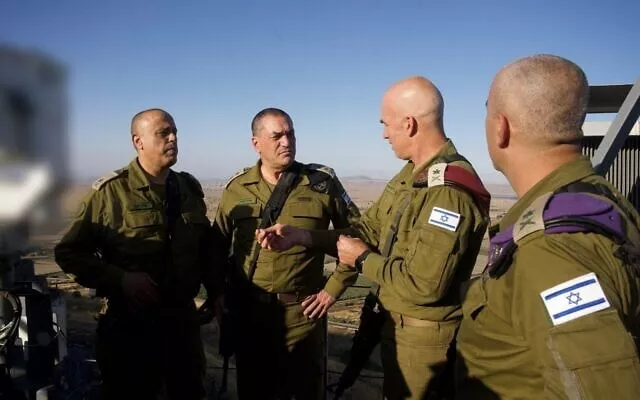
Photo: Israel Defense Forces
On the night of 22 December, Axios reported that IDF Chief of Staff Zamir warned Admiral Brad Cooper, commander of U.S. Central Command, that the IRGC missile drills could be used as cover for a surprise attack on Israel. Amid this increasingly tense environment, a small glimmer of hope emerged when President Trump hinted that he had received some form of signal from Tehran. Similar signals, however, were sent prior to the June war, and skepticism remains high.
As Trump stated on 22 December, “If they don’t want to make a deal, we will destroy them. We can shoot down their missiles very quickly; we have tremendous power.” U.S. Ambassador to Israel Mike Huckabee echoed the warning, saying that “Iran has not learned from the U.S. strikes on its nuclear facilities. I hope they got the message, but apparently they haven’t fully internalised it.”
Overall, the situation surrounding Iran continues to deteriorate. The ayatollah-led regime appears to be betting on outlasting the current U.S. administration, which traditionally changes every four years. In the case of Donald Trump, however, such a strategy may prove ineffective.