EU official Marta Kos emphasized the importance of renewed dialogue, humanitarian cooperation, and trade relations as the bloc aims for closer engagement with Türkiye.
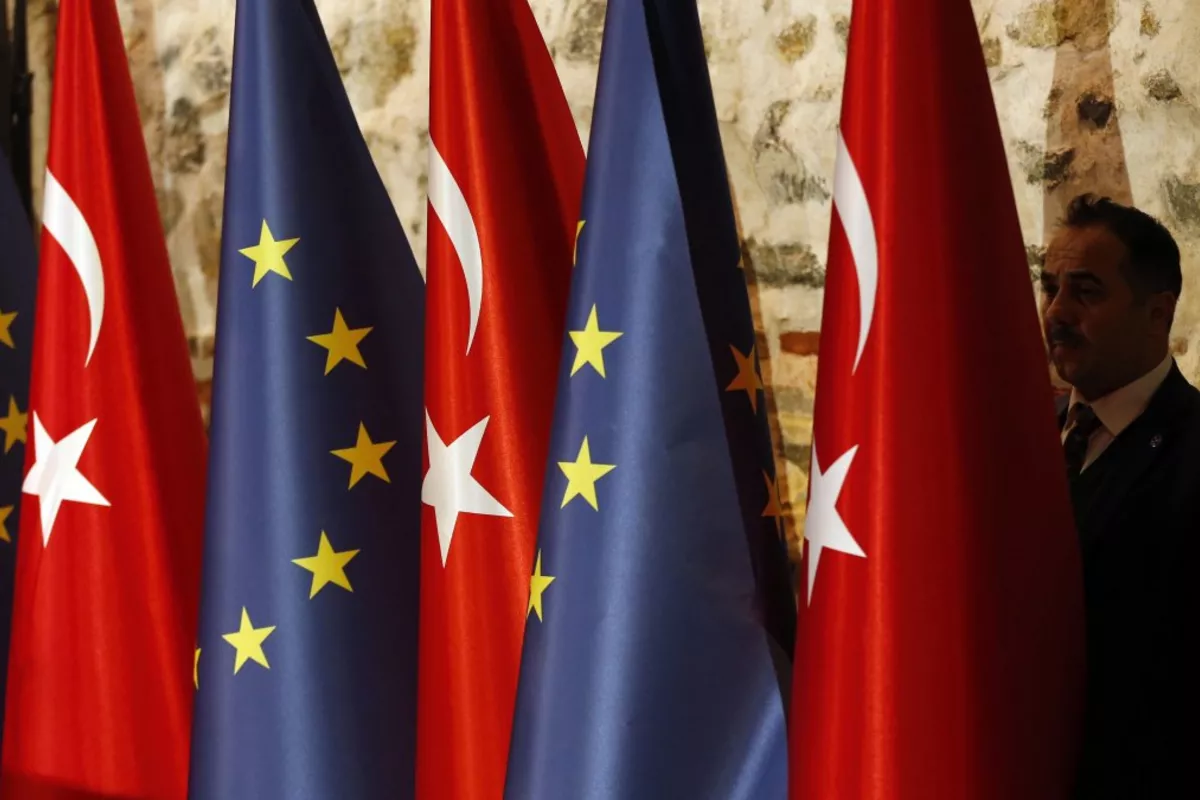
EU Enlargement Commissioner Marta Kos said the European Union and Türkiye share strong ties that outweigh their differences, announcing that two projects each worth 100 million euros ($118 million) will be signed during her Feb. 5-6 visit to Ankara, The Caspian Post reports, citing Turkish media.
"There is really more that connects EU and Türkiye than what is dividing us, and we really should work on this," she told Anadolu Agency (AA), stressing that "our economies are very much interdependent."
Kos said she is "very much looking forward" to her first official visit to Türkiye, and explained that she had "intense contacts" with her Turkish counterparts "since the first day" of her mandate, especially with Foreign Minister Hakan Fidan.
She asserted that her visit aligns with the approach of European Commission President Ursula von der Leyen, who held talks with President Recep Tayyip Erdoğan with the aim of opening a new perspective in the relations.
"We are really living in challenging times. The world is changing around us. We are seeing the return of imperial behavior as China, Russia, and the U.S. are aggressively building their spheres of interest," Kos said.
In the face of these geopolitical challenges, Kos urged strengthening cooperation, noting: "Our economies are very much interdependent. Whatever happens on the field of migration on each side is affecting the other side."
Kos expressed hope that the Ukraine peace agreement would be signed soon to "change the realities in Europe and also especially in the Black Sea, where I see Türkiye as a very important partner already."
Focusing On Trust
Kos explained that she aims to foster trust during her visit as "trust is getting nowadays more and more important" while both in politics and business one needs partners "whom you can trust and build on."
She described Türkiye as the "heart" of the EU's Connectivity Strategy, a geopolitical approach aimed at establishing transport, energy, digital, and people-focused connections, seeking to "better Europe with Central Asia and turning this middle corridor into a very, very strong connection."
"We can't do this without Türkiye," she asserted.
European Investment Bank
According to Kos, the Connectivity Strategy will allow much more for the EU and its partners "together in the Caucasus."
"This is also why I'm very happy that the European Investment Bank (EIB) is coming back to Türkiye," she said, referring to the multilateral financial institution owned by the EU's 27 member states that provides funds for strategic projects.
"During my visit to Ankara, two projects, each worth of 100 million euros, will be signed as part of the re-engagement of the EIB, which wasn't possible for some years," she revealed.
She praised the EIB's re-engagement as a result of the "high-level dialogue and economic discussions last year" that the "business community really, really loved to see."
"Now it is happening," she said, stressing that the two new renewable energy projects financed by the EIB "is now the start," and the EU bank, as well as the European Bank for Reconstruction and Development (EBRD) and the World Bank, would also play an important role in the future in new renewable energy and connectivity projects.
To support this agenda, Kos will meet with the minister of Transport and Infrastructure, Abdulkadir Uraloğlu, and Energy and Natural Resources Minister Alparslan Bayraktar.
Impact Of EU Trade Deals
Asked about the potential impact of recently signed trade deals with the South American trade bloc Mercosur and India on the EU's customs union with Türkiye, Kos asserted that the agreement underpins the "attractiveness" of making a free trade agreement with the EU and its 450-million-strong market, despite "some people are doubting" the bloc's geopolitical relevance.
She called the recent free trade deals "very important," but emphasized that "the trade between the EU and Türkiye is almost twice as much as our trade with Mercosur."
Kos urged to look at the "bigger picture in these uncertain times, when China, Russia and the U.S. are creating their spheres of interest."
"It will be more and more important that we do business with reliable partners. There are many things we can do to improve the bilateral trade," she noted, and explained that she had just received a letter from the Turkish business community, also published in the Financial Times, about the future of the EU-Türkiye economic relations.
"We should make much more out of this trading relation, including the improvement of the functioning of the customs union and removing some barriers we still have there," she asserted.
Noting that "both sides should work on this" while there is a "clear will and possibility," she promised to put all her "energy into moving on this."
"We really shouldn't miss this big chance which we have today, but it needs to be our common project and both sides have to deliver," she added.
Admitting that the customs union with Türkiye has not been updated for 30 years, Kos mentioned that all political developments, and especially relations with the Greek Cypriot administration, can help to make progress in this area.
'Made In Europe' Initiative
The "Made in Europe" initiative, which prioritizes European companies in public procurement in EU countries, is also "in principle a response to how the world of trade is also changing," Kos revealed.
She explained that the rules set by the World Trade Organization have been increasingly eroded and trade dependencies are used as blackmail or a weapon, which the EU wants to prevent.
"We want to be sure that if we spend public money, it actually benefits the companies that choose to work in Europe or close to Europe, who want to innovate, who also want to invest and produce in Europe and in places we can trust. This is a matter of security," she stressed.
She reminded that the work and discussions on the "Made in Europe" initiative are still in progress, and promised to "always defend that this economic logic should be aligned with our geopolitical logic, where we have to see who is our partner and with which partner we can get a better win-win situation out of this."
"If we take together economic and geopolitical logic, this cannot exclude Türkiye," Kos stated, adding that in order to participate in EU public procurements, first, the conditions enabling trade need to be "further developed."
"We would love to see Türkiye involved deeper in some of our policies, but there are some conditions which have to be fulfilled," she went on.
Kos said she would be meeting with Treasury and Finance Minister Mehmet Şimşek in Ankara, hailing that the EU and Türkiye had resumed high-level dialogues.
"Last year we had five: economy, trade, migration, security, research, innovation, agriculture," she asserted.
"I would also be very happy if we would be able to do also the high-level dialogues on energy and transport. For the time being, it is not possible, but let's move and see what we can do to make this possible," she added.
She called for more trust, noting that "big changes will not come through the night until we are able to build trust."
EU Membership Perspective
Asked about Türkiye's EU membership perspective in the face of political obstacles, Kos acknowledged that "since 2018, there is a standstill in the negotiation or accession process" but underscored that the EU still "considers Türkiye as a candidate country."
Acknowledging that they are "not starting from scratch," Kos underlined that the latest EU enlargement reports on the progress of candidate countries had "seen steps away from EU standards, especially on the rule of law and democracy."
"I know that Türkiye has a very long democratic tradition and also a strong civil society, and this is what we would like to strengthen, and this would build trust between the EU and Türkiye," she underlined.
According to Kos, there are "immense possibilities" to be exploited within the 450-million-strong internal market of the EU and Türkiye's over 80 million people.
"If we could put new energy into the development of the field of democracy, I think we could do really, really much more," she asserted.
Kos described that the accession process is influenced by dynamics in the candidate countries and EU member states as well, and "we are engaging with our candidate countries, and the decision-making process is worked out together."
"We know that any progress is connected to bilateral relations, not just Cyprus, but also with the Cyprus and the new Cyprus settlement talks. It is now a big opportunity to continue," she added.
Defense Cooperation
Asked about prospects of Türkiye's contribution to the EU's efforts in strengthening its defense industry and capabilities, Kos acknowledged Türkiye as a "very important, reliable NATO partner, the second-largest member in NATO, the institution that secured peace and security in the broader sense in Europe."
"We also have seen how Turkish drones have been playing a decisive role at the beginning of the war in Ukraine. We have also seen the role Türkiye is playing in the war. For all of these reasons, Türkiye is a kind of natural partner for Europe, and it would be good both for us if we could work more together," she added.
"Under certain conditions, Turkish companies can already cooperate, be part of our rearmament programs, if they have subsidies here in Europe," she explained.
Kos also stressed: "Personally, I would like to really see strong involvement of stronger involvement of Türkiye in the security in Europe," but warned that the development of EU security policy depends on member states.
"The new Cyprus settlement talks are a great opportunity for improvements also in this area," she said, noting that Türkiye is "undisputably a really important NATO and security partner."
Visa Liberalization
Referring to the EU's recently announced visa strategy, Kos underlined that due to last year's high-level dialogue on migration, the EU could introduce the so-called cascade system, allowing Turkish citizens to more easily get multiple visas, and that "this is already showing the results."
She highlighted that visa-free travel is one of the main topics in which she would like to see advancement, but warned that there are six conditions to be fulfilled.
Wowing to keep visa liberalization on the "high priority list" during her visit to Ankara, she explained that connectivity does not only mean "hard power in the sense of trade and transport and energy."
"When I speak about the connectivity, I would also like to stress the connections between people," Kos asserted.