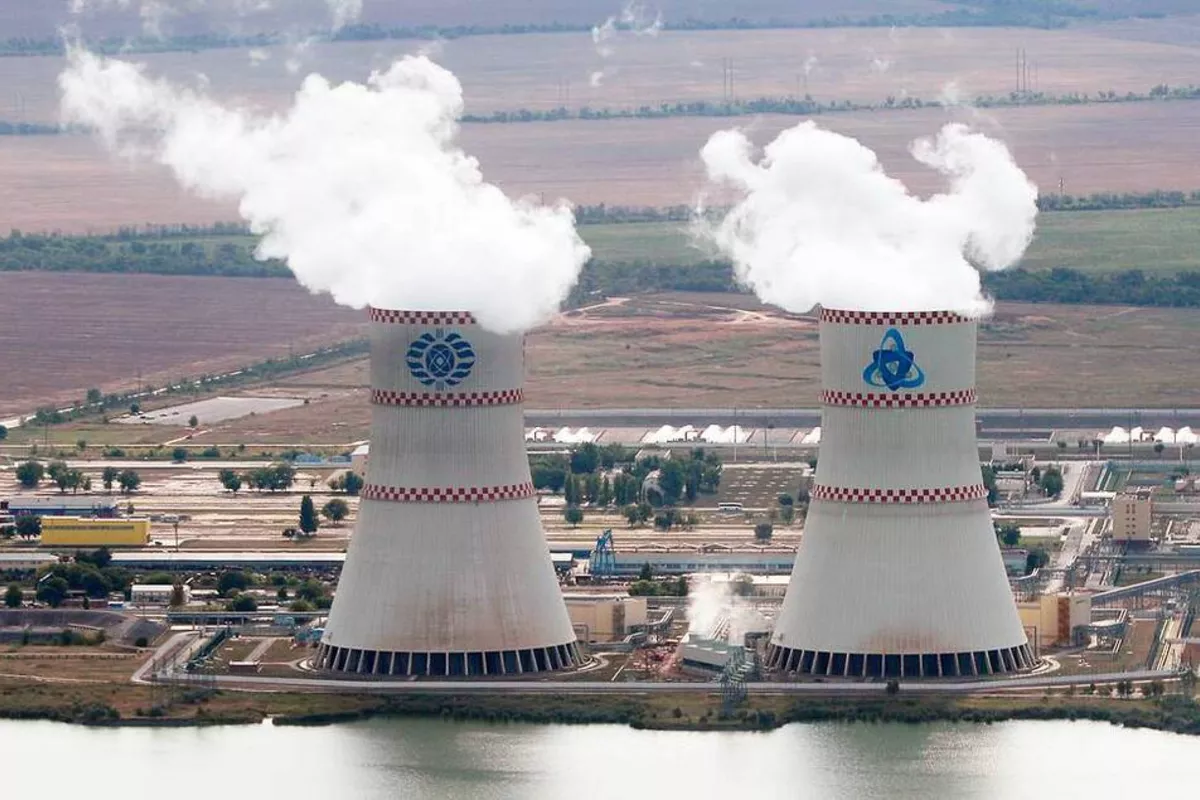
On February 5, 2026, Rosatom Director General Alexey Likhachev and Peter Szijjarto, Hungary’s Minister of Foreign Affairs and Trade, officially launched the first concrete pouring for the foundation of the Paks II Nuclear Power Plant.
The project, based on a Russian design, is one of the most prominent examples of Russia’s current nuclear construction activities abroad, The Caspian Post reports, citing TASS.
The ceremony once again highlighted the scale and geographic reach of Rosatom’s international nuclear portfolio.
From Soviet-era Projects to a Global Portfolio
The Soviet Union began building nuclear power plants outside its borders in the early 1960s. The first such facility was commissioned in October 1966 in the town of Rheinsberg in the German Democratic Republic. Although the plant was shut down in 1990 following German reunification, it marked the starting point of Soviet nuclear exports.
During the 1970s and early 1980s, Soviet production associations such as Atomenergoexport and Zarubezhatomenergostroy were involved in constructing nuclear power plants in Bulgaria, Finland, Czechoslovakia, Hungary, Cuba, and several other countries. Many of these projects were halted or abandoned in the early 1990s amid political and economic upheaval following the collapse of the Soviet Union.
Today, Russia’s overseas nuclear operations are conducted by companies within Rosatom’s structure, including Atomstroyexport, Rusatom Overseas, and Rosatom’s international network. Russia currently ranks first worldwide in the number of nuclear power units under construction abroad, with 41 power units in 11 countries.
Beyond plant construction, Russia is a major global supplier of nuclear fuel, holding approximately 17% of the international market. It also provides uranium enrichment services, conducts geological exploration and uranium mining abroad, and participates in the creation of research nuclear centers. According to Rosatom, the value of its foreign order portfolio exceeded $200 billion in 2025.
Hungary: Paks II Nuclear Power Plant
Hungary’s existing Paks Nuclear Power Plant, located in the central part of the country, operates four power units equipped with VVER reactors. Built between 1983 and 1987 using a Soviet design, the plant underwent a life-extension program between 2005 and 2009, implemented by Atomstroyexport. This program extended the operating life of the units to between 2032 and 2037 and increased their combined capacity from 1,760 MW to 2,000 MW. The facility currently generates around half of Hungary’s electricity.
In January 2014, Russia and Hungary signed an intergovernmental agreement on nuclear cooperation, paving the way for the construction of two additional units-Paks II. A contract for two VVER-1200 reactors was signed in December 2014 between Rosatom and the Hungarian energy company MVM. The project’s estimated cost is €12.5 billion, with Russia providing a €10 billion loan.
Hungary’s Atomic Energy Authority issued a construction permit for the fifth unit on August 30, 2022, allowing Rosatom to begin site preparation. In 2025, the Paks II project was removed from all Western sanctions lists.
Bangladesh: Rooppur Nuclear Power Plant
Russia and Bangladesh signed an intergovernmental agreement in November 2011 to build the country’s first nuclear power plant, Rooppur, located roughly 160 kilometers west of Dhaka. The plant will consist of two VVER-1200 units.
A general construction contract was signed in December 2015, with Atomstroyexport serving as the general contractor. In early 2017, Russia extended a state loan of $11.38 billion to finance the main construction phase. Work on the first unit began on November 30, 2017, followed by the second on July 14, 2018. The first unit is scheduled to be commissioned in 2026.
Belarus: Belarusian Nuclear Power Plant
Construction of the Belarusian Nuclear Power Plant in Belarus was completed in 2023, with two VVER-1200 units brought online. Discussions are ongoing regarding the construction of a third unit at the same site. President Alexander Lukashenko has also repeatedly expressed interest in building a second nuclear power plant in the country based on a Russian design.
Egypt: El Dabaa Nuclear Power Plant
In November 2015, Russia and Egypt concluded an intergovernmental agreement for the construction of Egypt’s first nuclear power plant at El Dabaa, on the Mediterranean coast in Matrouh Governorate. The project includes four VVER-1200 reactors.
The contract is valued at $30 billion, with $25 billion financed through a Russian state loan. Construction work officially began in July 2022 after delays caused by the COVID-19 pandemic. In January 2024, Russian President Vladimir Putin and Egyptian President Abdel Fattah el-Sisi attended a ceremony marking the pouring of concrete for the fourth unit’s foundation. In November 2025, the leaders took part in a video-linked ceremony marking the installation of the reactor vessel for the first unit, which is expected to enter service in 2028.
India: Kudankulam Nuclear Power Plant
Russia and India signed an agreement in 1998 to build two VVER-1000 units at the Kudankulam Nuclear Power Plant. These units were commissioned in 2016 and 2017.
Subsequent agreements expanded the project. Construction of the third and fourth units began in 2017, while contracts for the fifth and sixth units were finalized later that year. Work on the fifth and sixth units began in 2021. Start-up operations for the third unit are scheduled for 2026.
Iran: Bushehr and Hormoz Nuclear Power Plants
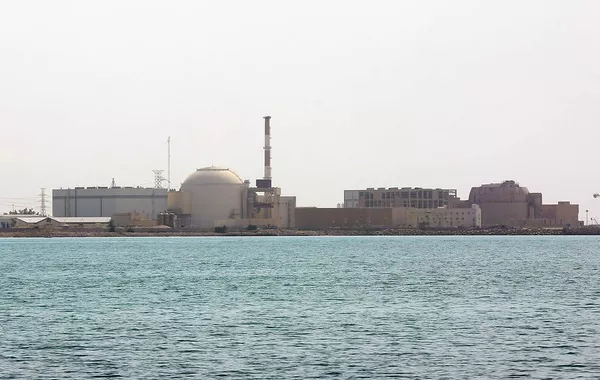
Russia and Iran signed agreements in 1992 on nuclear cooperation and the continuation of the Bushehr Nuclear Power Plant. Originally launched by a German consortium in 1975, the project was suspended after the 1979 Islamic Revolution. Russia completed and refurbished the first unit, which was connected to the grid in 2011 and officially handed over to Iran in 2013.
In 2014, a contract was signed for the construction of the second and third units at Bushehr. Construction began in 2019. In September 2025, Russia and Iran also signed a $25 billion agreement to build the Hormoz Nuclear Power Plant in Hormozgan Province, consisting of four units with a combined capacity of 5,000 MW.
Kazakhstan: Balkhash Nuclear Power Plant
On August 8, 2025, Russia launched construction of Kazakhstan’s first nuclear power plant near the village of Ulken in Kazakhstan. In November 2025, Kazakhstan’s Atomic Energy Agency announced that the project, led by Rosatom within an international consortium, would be named the Balkhash Nuclear Power Plant.
China: Tianwan and Xudapu Nuclear Power Plants
In China, Rosatom has built four units at the Tianwan Nuclear Power Plant and is constructing two additional VVER-1200 units, scheduled for commissioning in 2028. Russia is also building the third and fourth units at the Xudapu Nuclear Power Plant in Liaoning Province, with commercial operation expected in 2027 and 2028.
Türkiye: Akkuyu Nuclear Power Plant
Russia and Türkiye signed an agreement in 2010 to build the latter's first nuclear power plant at Akkuyu in Mersin Province. The project includes four VVER-1200 units and follows a build-own-operate model, with the plant owned by Rosatom’s subsidiary Akkuyu Nuclear.
Construction began in 2018, and nuclear fuel was loaded into the first unit in April 2023. Physical start-up is expected in 2026, with all units scheduled to come online by 2028. The project’s total cost is estimated at $22 billion. In February 2024, Rosatom announced that a political decision had been made to build a second nuclear power plant in Türkiye.
Uzbekistan: Small Modular Nuclear Power Plant
In May 2024, Atomstroyexport signed a contract with Uzbekistan’s Atomic Energy Agency to build a small modular nuclear power plant in Uzbekistan. The facility, located in Jizzakh Region, will consist of six RITM-200N reactors with a total capacity of 330 MW. Site construction began in April 2025, and Rosatom has also indicated plans for a large-capacity nuclear plant in the country.
Other projects and suspended cooperation
Rosatom is engaged in discussions or preliminary agreements for nuclear construction projects in countries such as Brazil, Vietnam, Kyrgyzstan, Laos, Mongolia, Myanmar, Nigeria, Saudi Arabia, and Sri Lanka.
In Finland, Rosatom began preparatory work on the Hanhikivi Nuclear Power Plant in 2016, but the Finnish side unilaterally terminated the contract in 2022.