DHA Photo
Türkiye has decided to implement and adhere to the EU Green Deal, which aims to transform Europe's economy, energy, and industry into more sustainable systems in the future, according to the country's top trade official on Tuesday.
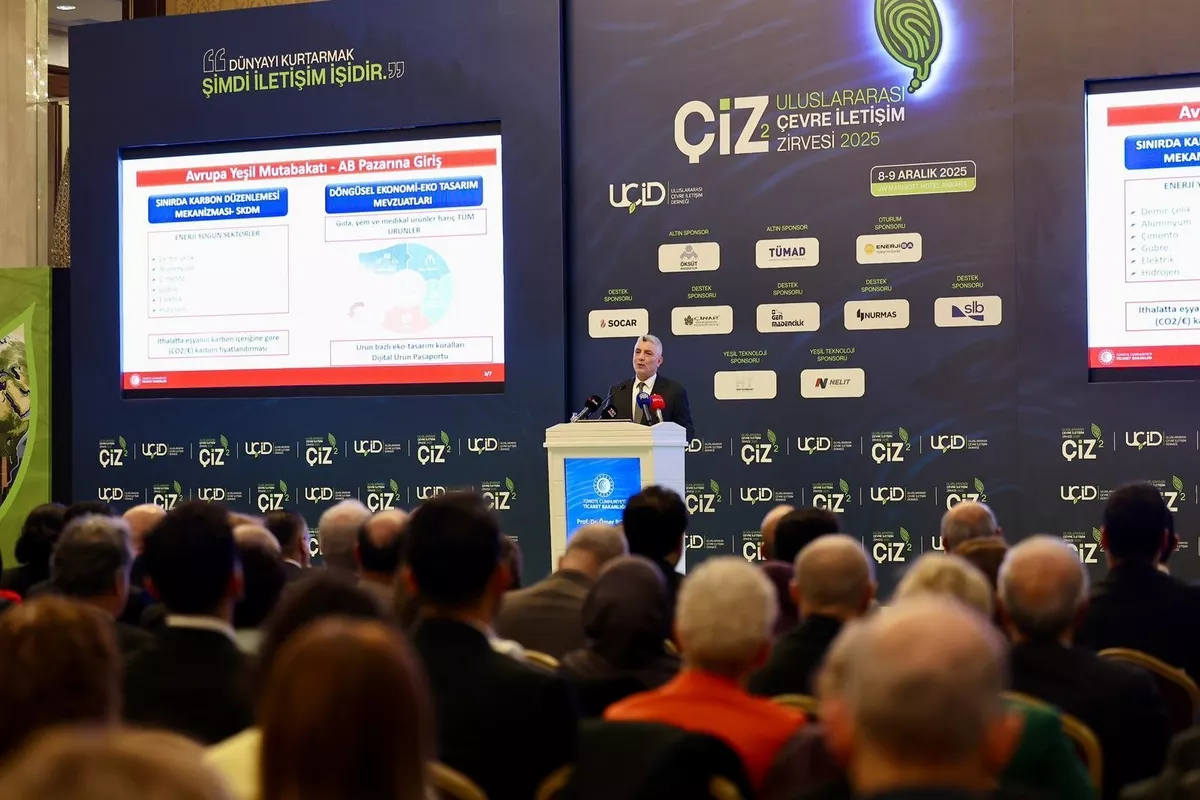
"We must comply with this agreement both to maintain our competitiveness and to protect and develop our export markets," Trade Minister Ömer Bolat said at the 2nd International Environmental Communications Summit, held by the International Environmental Communications Association (IECA) in the capital Ankara, The Caspian Post reports citing Turkish media.
He said environmental performance is no longer merely a matter of sustainability, but a key determinant of direct competitiveness.
Telling how the EU launched a comprehensive and strategic transformation process with the EU Green Deal, he stressed: "Because we have a Customs Union with the EU and do about 40% of our trade with the EU, we have decided to implement the EU Green Deal the same way."
"Our government is doing this because we believe in the requirements of a green economy," he said.
Stressing that Türkiye will host next year’s COP31 U.N. climate change conference, Bolat said the world is undergoing a transformation that is redefining all areas of the economy, from production and consumption to trade and investments.
He explained that one of the most important processes of the agreement is the Border Carbon Adjustment Mechanism (BCAM) and that Türkiye is working on complying with its rules.
The mechanism currently covers the iron and steel, aluminum, fertilizer, electricity, hydrogen and cement sectors, he said, adding that Türkiye has approximately $23 billion in exports in these sectors.
Bolat said iron, steel and aluminum constitute the main inputs for many industrial sectors, explaining: "The resulting administrative and financial costs are significant issues that could directly impact our competitiveness in foreign trade and the functioning of the customs union."
He said one of the key elements of the deal is the transition to a circular economy, noting that new practices such as the introduction of product-based legislation across all product groups and the "digital product passport" for EU market entry have become a part of life.
Share on social media