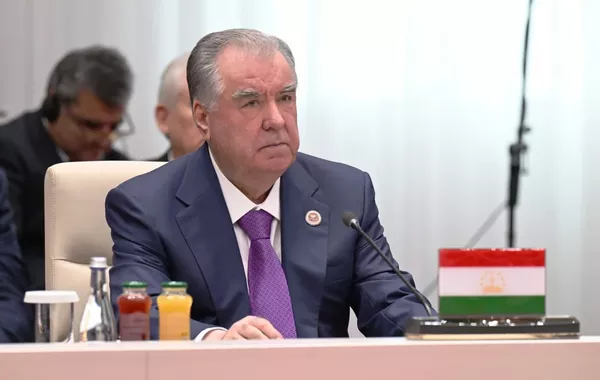
Tajikistan’s authorities say the country attracted $6.96 billion in foreign investment in 2025, a 35% increase (about $1.8 billion more) compared to 2024, according to figures presented by Sulton Rahimzoda, chairman of the State Committee on Investments and State Property Management (often referred to locally as “GosKomInvest”).
Those topline numbers are more than a headline. They speak to how Tajikistan is trying to position itself in a competitive region: modernizing investment rules, pitching projects tied to energy security and industrial capacity, and widening its circle of partners beyond traditional post-Soviet economic links. The same briefing also highlights a practical question that matters for businesses and policymakers alike: what kind of investment is coming in, from where, and into what kinds of projects-and how durable is the trend?
Below is an evergreen look at the data and the policy story around it, with an emphasis on what these signals could mean for Tajikistan’s economic direction.
The Headline: $6.96B in 2025-and Why the Jump Matters
The reported $6.96 billion in foreign investment for 2025 reflects a sizeable year-on-year acceleration. In a smaller, landlocked economy like Tajikistan’s, large swings in capital inflows often occur when several factors align at once: major infrastructure projects move into new phases, governments adjust the investment rulebook, and external partners shift priorities toward strategic sectors such as energy and transport.
Rahimzoda framed the increase as a product of sustained government work to make the investment environment more predictable. In that narrative, the 2025 results are not just a “good year,” but evidence that reforms and promotion efforts are yielding measurable returns.
At the same time, it’s useful to interpret such figures with a practical lens. “Foreign investment” can include different types of inflows-some long-term and capacity-building (for example, equity investments, industrial plants, or large energy facilities), and some more transactional (certain financing arrangements, contracted project flows, or time-bound capital injections). Even when the aggregate rises sharply, the economic impact depends on the mix: job creation, technology transfer, export capacity, and how much local value-added is generated.
What is clear from the official breakdown is that Tajikistan’s investment story in 2025 was not dependent on a single source region. Instead, the reported inflows were split between CIS and non-CIS partners, with the majority attributed to non-CIS countries.
Where the Money Came From: CIS vs Non-CIS Partners
According to the figures presented, CIS countries accounted for $3.3 billion of investment inflows in 2025-an increase of more than $1.6 billion compared to 2024. This is a significant jump in absolute terms, and it suggests that traditional regional economic ties remained highly relevant in 2025, even as Tajikistan sought broader diversification.
However, non-CIS countries provided 56.2% of the total, with reported inflows of about $3.9 billion. In other words, while CIS-origin investment rose strongly, the overall structure still points to a majority share coming from outside the CIS bloc.
There is an important nuance in the year-on-year comparison: the increase in non-CIS investment was smaller than the CIS increase-about $731.3 million more than in 2024, based on the figures cited in the briefing. That pattern can be read in more than one way:
-
It may indicate that CIS capital flows were “catching up” after a weaker prior year.
-
It may reflect that some large non-CIS projects were already underway in 2024, so the incremental growth in 2025 appears more modest.
-
It could also suggest that Tajikistan’s diversification push is real (non-CIS remains the majority), but the pace of additional non-CIS growth may depend on continued reforms and bankable projects.
From an evergreen perspective, the key takeaway is that Tajikistan’s investment landscape appears to be multi-vector: it is not exclusively anchored to one partner group, and it is trying to balance legacy economic geography with newer pools of capital and project finance.
Deals, Jobs, and Rules: What Officials Say is Driving Inflows
Rahimzoda also highlighted concrete institutional activity behind the numbers. The State Investment Committee reportedly signed nine agreements worth over $681 million, with expectations of creating more than 3,778 new jobs. Officials described these projects as intended to:
-
expand production capacity,
-
boost export potential, and
-
develop import-substituting manufacturing.
In the briefing summarized by regional outlets, the specific sectors for those nine agreements were not detailed. Still, the emphasis on exports and import substitution aligns with common policy goals in Tajikistan: reducing dependence on imported goods, strengthening domestic industry, and generating more stable foreign exchange earnings.
A central claim from the Investment Committee is that legal and regulatory modernization is a major contributor to investor confidence. Rahimzoda pointed to a new version of the law “On Investments and Stimulation of Investment Activity”, adopted on May 14, 2025. The same measure is referenced in reporting as part of a broader effort to update rules “to meet modern requirements,” which typically includes clearer guarantees, improved procedures, and incentives meant to lower friction for investors.
In an evergreen analysis, legal reform can matter in two practical ways:
-
Predictability and dispute risk: Investors often care less about “perfection” and more about whether rules are stable, processes are transparent, and disputes can be handled credibly.
-
Project pipeline quality: Updated laws can support the structuring of large deals-especially in infrastructure and energy-where financing, guarantees, and procurement frameworks must satisfy external lenders and partners.
Some reporting also notes that investment forums and promotion campaigns can amplify deal-making momentum by matching project sponsors with external partners and financing channels.
Rogun HPP as the Anchor Project-and What it Signals About Priorities
One of the clearest examples of Tajikistan’s investment strategy is its continued focus on completing the Rogun Hydroelectric Power Plant (HPP), widely described as a top national priority. In early 2026 reporting, the Abu Dhabi Fund for Development (ADFD) was cited as providing $100 million toward the project, with the funding intended to support construction and infrastructure works under a defined project package.
Rogun matters not only because of its size, but because it fits several national objectives at once:
-
Energy security and reliability: Stable electricity supply supports households, industry, and public services.
-
Industrial development: Power availability is a prerequisite for many forms of domestic manufacturing, including the import-substitution goals highlighted by officials.
-
Export potential: Over time, additional generation capacity can strengthen the case for regional electricity trade-an important long-term narrative for Tajikistan’s economy.
In many economies, a flagship project can shape the investment ecosystem around it: supply chains, construction services, grid upgrades, and policy attention. That is especially true when the project attracts international financiers and partners, because their involvement often encourages more formalized project governance and reporting standards.
The broader economic context also matters. Regional institutions have noted that Tajikistan’s trade balance and macro indicators can shift with import needs, commodity export performance, and exchange-rate dynamics-factors that can influence investor perceptions of stability and risk.
The Durable Question: Can 2025 Momentum be Bustained?
If 2025 is remembered as a “breakout year” for inflows, sustainability will likely depend on several evergreen conditions:
-
Policy follow-through: adopting laws is one step; consistent implementation is what changes investor experience.
-
Project clarity: transparent sector priorities and clearly packaged projects generally attract more competitive financing.
-
Infrastructure and connectivity: barriers like logistics, digital connectivity, and limited air routes can constrain some types of direct investment-particularly in higher value-added services and export-oriented manufacturing.
-
External partner cycles: strategic interest from major partners can rise or fall with regional geopolitics, commodity markets, and development-finance priorities.
Still, the 2025 breakdown-showing strong growth, diversified sources, and a policy narrative centered on rules and bankable projects-suggests Tajikistan is actively trying to convert geography and infrastructure priorities into a more investable proposition.