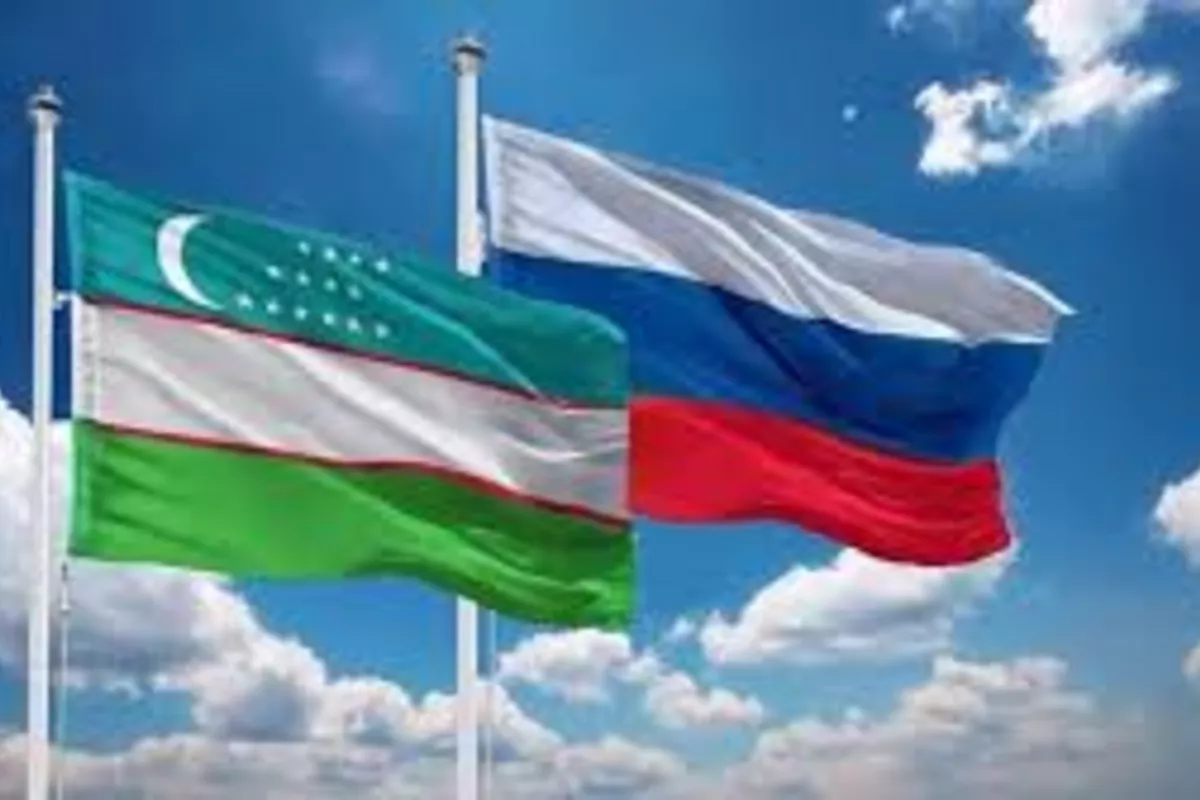
photo: Russia's pivot to Asia
Russia’s Trade Representative in Uzbekistan Konstantin Zlygostev has reviewed trade and economic cooperation between the two countries in 2025 and outlined priority areas for 2026.
Zlygostev made these remarks at a press conference at Sputnik Uzbekistan’s multimedia center, The Caspian Post reports via Uzbek media.
He noted that despite ongoing global economic challenges, the Russia-Uzbekistan trade relations continue to grow steadily, reaching a qualitatively new level. Over the past 3-5 years, bilateral trade volume has increased by around 20 per cent, while the number of joint projects continues rising.
The nature of cooperation is shifting from traditional trade to deeper industrial collaboration, technological exchange, and joint workforce development.
Digital collaboration is a key focus, with Russia offering a wide range of solutions amid Uzbekistan’s booming IT sector. Russian companies are leading in cybersecurity, providing technologies in both the public and private sectors.
Industrial cooperation is also expanding. Bashkortostan is planning an industrial park in Bekabad, while Russian-Uzbek technoparks are set to launch in Bukhara and Navoi regions. Cooperation is mutual: in April last year, the first phase of the Fergana wholesale-distribution logistics center opened in Russia’s Omsk region.
Transport and logistics development is another priority. Zlygostev emphasized the need for a more stable, predictable, and resilient logistics system, highlighting:
Multimodal transportation
Digital customs procedures
New logistics centers, warehouses, and distribution hubs
Strengthening the North-South corridor and routes through Kazakhstan
Developing multimodal hubs in Uzbekistan
Prospects for the trans-Afghan transport corridor
Zlygostev also discussed the potential benefits for Uzbekistan if it joins the Eurasian Economic Union (EAEU). Membership would give access to a common market of around 180 million people, reduce tariff barriers, unify technical and trade standards, and boost investment in joint projects.
Additionally, logistics would be simplified: Uzbek goods could move through Kazakhstan and Kyrgyzstan without additional procedures, making cross-border trade faster and more efficient.
Share on social media