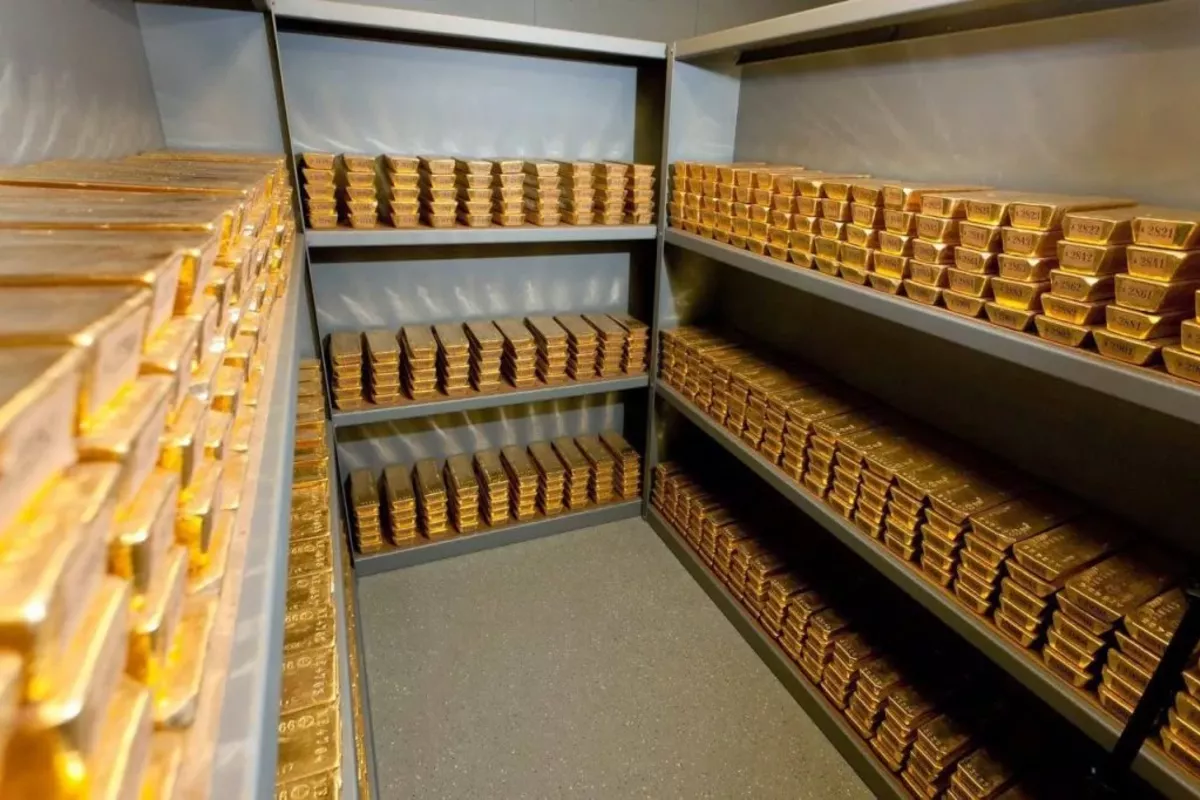
The Central Bank of Uzbekistan emerged as the world's second-largest purchaser of gold in the first four months of 2026, highlighting the country's continued strategy of strengthening its reserves through precious metal acquisitions.
According to data released by the World Gold Council (WGC), Uzbekistan's central bank increased its gold holdings by 24 tonnes between January and April, raising its total reserves to 414 tonnes. Gold now accounts for approximately 88% of the country's total international reserves, underscoring the key role the precious metal plays in Uzbekistan's monetary and financial strategy.
How does Uzbekistan compare globally?
Among the world's central banks, only Poland purchased more gold during the period. The National Bank of Poland added 14 tonnes to its reserves, bringing its total holdings to 595 tonnes, which account for around 30% of the country's international reserves.
China ranked third in net purchases, with the People's Bank of China increasing its gold reserves by 15 tonnes to a total of 2,322 tonnes. Despite the significant increase, gold represents only around 9% of China's total reserves due to the country's extensive foreign exchange holdings.
Kazakhstan and the Czech Republic also ranked among the top five buyers. Kazakhstan's central bank added 3 tonnes of gold, increasing its reserves to 79 tonnes.
Why are central banks buying gold?
The continued accumulation of gold by central banks reflects efforts to diversify reserve assets, reduce exposure to currency volatility and geopolitical risks, and strengthen financial stability. Gold is widely viewed as a safe-haven asset during periods of global economic uncertainty and market turbulence.
For Uzbekistan, maintaining a high share of gold in its reserves provides a buffer against external shocks while supporting the country's broader economic and monetary policies.
Which countries sold gold?
While several countries increased their holdings, others reduced their gold reserves. Turkey and Russia were among the largest sellers during the period.
Turkey's central bank sold nearly 80 tonnes of gold, with the largest volume of sales occurring in March. Meanwhile, the Bank of Russia sold approximately 6 tonnes in April alone and around 22 tonnes since the beginning of the year.
What does this mean for Uzbekistan's gold exports?
At the same time, Uzbekistan resumed gold exports in April after a six-month pause, taking advantage of changes in global market conditions. The value of gold shipments exceeded $1.5 billion during the month.
However, despite the resumption of exports, revenues remained significantly below the previous year's levels. Gold exports during the period represented less than a quarter of the $5.48 billion recorded during the corresponding period in 2025, reflecting the impact of declining global gold prices.
Uzbekistan's position as the world's second-largest gold buyer demonstrates the country's continued reliance on gold as a strategic reserve asset, even as it adjusts its export policies in response to changing market conditions.
expand Explained: Why Uzbekistan became the world's second-largest gold buyer and what it means for its economy
The Central Bank of Uzbekistan emerged as the world's second-largest purchaser of gold during the first four months of 2026, reinforcing the country's position among the world's most gold-dependent economies and highlighting a broader global trend of central banks increasing their holdings of the precious metal amid geopolitical and economic uncertainty.
According to data published by the World Gold Council (WGC), Uzbekistan's central bank added 24 tonnes of gold to its reserves between January and April 2026. This brought the country's total official gold holdings to 414 tonnes, with gold now accounting for approximately 88% of Uzbekistan's international reserves.
The figures place Uzbekistan behind only Poland in net gold purchases during the period and ahead of other major buyers, including China.
Why is Uzbekistan buying so much gold?
Uzbekistan has pursued a long-term strategy of accumulating gold as a core component of its foreign exchange reserves. Unlike many countries that maintain reserves primarily in foreign currencies such as the US dollar, euro, or yen, Uzbekistan has historically relied heavily on gold due to its status as one of the world's major gold producers.
The country's extensive domestic gold production allows the Central Bank to purchase locally mined gold and incorporate it into national reserves, reducing reliance on foreign currencies while strengthening financial resilience.
Economists generally identify several reasons why central banks increase their gold holdings:
- diversification away from major reserve currencies;
- protection against inflation and currency depreciation;
- reducing exposure to geopolitical risks and sanctions;
- strengthening confidence in national financial systems;
- creating a buffer against global economic volatility.
For Uzbekistan, these considerations have become increasingly important amid ongoing geopolitical tensions, fluctuations in commodity prices, and uncertainty in international financial markets.
How significant are Uzbekistan's gold reserves?
The addition of 24 tonnes during the first four months of the year increased Uzbekistan's total gold reserves to 414 tonnes, making it one of the largest official gold holders among emerging economies.
Perhaps more importantly, gold now represents approximately 88% of the country's total international reserves. This is one of the highest proportions globally and illustrates the extent to which Uzbekistan's reserve management strategy depends on precious metals.
While such concentration exposes the country to fluctuations in gold prices, it also provides protection against currency instability and external financial shocks.
Which countries bought the most gold?
The World Gold Council data shows that central bank demand for gold remained strong globally in early 2026.
Poland recorded the largest increase in official gold holdings, adding 14 tonnes to raise its reserves to 595 tonnes. Gold now accounts for around 30% of Poland's international reserves, reflecting Warsaw's long-term strategy of expanding its precious metal holdings.
China ranked third among buyers, with the People's Bank of China adding 15 tonnes, bringing its total reserves to 2,322 tonnes. Despite the substantial volume, gold still represents only about 9% of China's total reserves because of the country's vast foreign exchange holdings.
Kazakhstan and the Czech Republic also featured among the leading purchasers. Kazakhstan's central bank added approximately 3 tonnes, increasing its reserves to 79 tonnes.
The continued purchases underscore a broader global trend in which central banks have increasingly viewed gold as a strategic asset amid growing geopolitical fragmentation and concerns over the long-term stability of traditional reserve currencies.
Why were Russia and Turkey selling gold?
While several countries expanded their reserves, others moved in the opposite direction.
Turkey emerged as the world's largest seller during the period, reducing its gold holdings by nearly 80 tonnes. The majority of these sales occurred in March and reflected efforts by Turkish authorities to manage domestic financial conditions and support monetary policy objectives.
Russia also reduced its holdings, selling around 6 tonnes in April and approximately 22 tonnes since the beginning of the year.
The reduction in Russian reserves comes amid continuing economic pressures and evolving financial strategies as Moscow seeks to balance reserve management priorities under international sanctions.
Why did Uzbekistan resume gold exports?
Another important development was Uzbekistan's decision to resume gold exports in April after suspending shipments for six months.
The country's gold exports exceeded $1.5 billion during the month, marking a significant return to international markets. However, the value of exports remained substantially below previous levels.
For comparison, Uzbekistan exported $5.48 billion worth of gold during the corresponding period in 2025, meaning current export revenues amount to less than one-quarter of last year's total.
The decline largely reflects weaker global gold prices and changing market conditions rather than a reduction in the country's production capacity.
Uzbek authorities have historically adjusted export volumes depending on market conditions, domestic reserve requirements, and broader economic priorities.
What does this mean for Uzbekistan's economy?
Uzbekistan's position as the world's second-largest gold buyer highlights the central role the precious metal continues to play in the country's economic strategy.
Large gold reserves provide several advantages:
- greater resilience to external economic shocks;
- reduced dependence on foreign currencies;
- enhanced financial credibility;
- stronger protection against geopolitical risks;
- increased flexibility in monetary and reserve management.
However, maintaining such a high concentration of reserves in gold also exposes the country to fluctuations in international precious metal markets. Any prolonged decline in gold prices could affect the value of Uzbekistan's reserve assets and export revenues.
Nevertheless, the latest data suggests that Uzbekistan remains committed to using gold as a cornerstone of its financial strategy. As global central banks continue to accumulate precious metals at historically high levels, Tashkent appears determined to maintain its position among the world's leading official gold holders while balancing reserve accumulation with export opportunities.