Central Asia, Türkiye and Rise of Regional Connectivity
In a compelling analysis for UzDaily, Leading Research Fellow at the Institute for Strategic and Regional Studies under the President of the Republic of Uzbekistan Dilorom Mamatkulova explores how Central Asia and Türkiye are forging a new era of regional connectivity, driven by shared history, expanding economic ties, and strategic infrastructure initiatives.
The strategic rapprochement between Türkiye and the Central Asian states-rooted in shared historical and cultural ties and complementary economic interests-is shaping a new architecture of regional connectivity. Through bilateral initiatives and multilateral platforms, the partners are building a durable framework for cooperation in trade, energy, transport, and the green economy, turning geography into a driver of long-term stability and shared growth, The Caspian Post reports via UzDaily.
Political foundations: from culture to institutions
A central pillar of political coordination is the Organization of Turkic States (OTS), which has evolved from a cultural forum into a practical hub spanning Central Asia, the Caucasus, and Europe. Regular summits underscore the shift to implementation. A pivotal role is played by Shavkat Mirziyoyev, who has championed deeper OTS cooperation. At the Gabala summit (Azerbaijan) in October 2025, Uzbekistan proposed a 2030 development strategy and a Permanent Economic Partnership Council headquartered in Tashkent-steps aimed at coordinating projects, backing business initiatives, and boosting effectiveness.
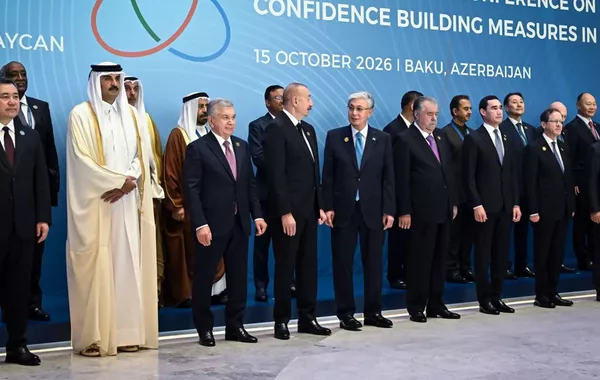
Türkiye is also intensifying engagement across other regional formats, including Conference on Interaction and Confidence-Building Measures in Asia and the Shanghai Cooperation Organisation, using multi-format diplomacy to align security confidence-building with transport corridor coordination. In January 2026, a Joint Strategic Planning Group meeting co-chaired by the foreign ministers of Uzbekistan and Türkiye reaffirmed coordination across the UN, OSCE, OIC, and ECO-transforming bilateral ties into a pillar of global diplomacy.
Economics: trade momentum to strategic investment
Since 2018, Central Asia-Türkiye trade has more than doubled-from $6 billion to $14.5 billion in 2025-with Ankara targeting $30 billion. Investment growth is even stronger: Turkish FDI in the region rose 2.5x (2016-2024) to $3 billion, far outpacing overall Eurasian growth. Central Asia now accounts for 24% of Turkish FDI stock in Eurasia. The number of Turkish firms climbed from 4,000 to 7,000, while in Uzbekistan Türkiye ranks third-largest investor after China and Russia.
Within the OTS, landmark roadmaps-“Strategy-2026” and “Strategy-2040”-envision a common economic space, including an integrated energy system and a regional development bank. Uzbekistan’s push to expand the Turkic Investment Fund and adopt an AI and Creative Economy Roadmap signals a shift to high-tech cooperation.
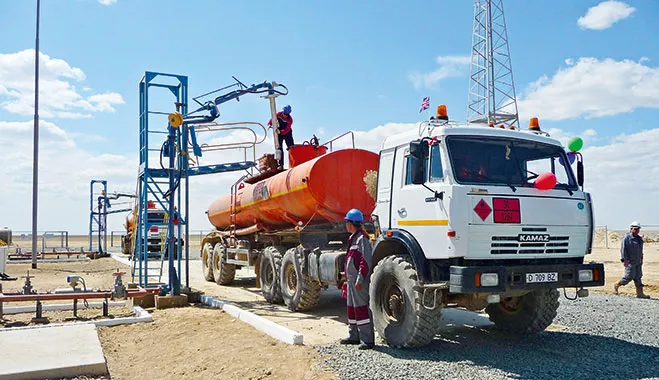
photo: World Finance
Energy: hydrocarbons to green transition
Central Asia’s hydrocarbon base-Kazakhstan’s 30 billion barrels of oil, Turkmenistan’s top-five gas reserves, and Uzbekistan’s untapped fields-pairs with Türkiye’s ambition to be an energy hub offering access to Europe amid decarbonization. The Baku-Tbilisi-Ceyhan pipeline has become a Trans-Caspian export route for Kazakhstan (since 2008) and Turkmenistan (since 2010). Talks continue on exporting Turkmen gas via Trans-Anatolian Natural Gas Pipeline, potentially doubling capacity to 32 bcm.
Green energy is accelerating. In Uzbekistan, Turkish investments have delivered 460 MW across two plants, with 500+ MW underway in Jizzakh. A flagship is the Trans-Caspian Green Energy Corridor, developed by the Green Corridor Alliance with financing from the Asian Infrastructure Investment Bank, linking Kazakhstan and Uzbekistan to Azerbaijan across the Caspian for exports to Türkiye and Europe-formalized at COP29 (Baku, 2024).
The Middle Corridor: growth artery
The Trans-Caspian “Middle Corridor” has emerged as a strategic land bridge from China to Europe via Central Asia, the Caspian, the South Caucasus, and Türkiye. Freight volumes could double by 2030, deepening interdependence and geostrategic relevance. Uzbekistan strongly backs the corridor as a catalyst for sustainable regional growth and security.
Human, cultural, and digital ties
Shared Turkic heritage underpins education and culture, with expanding university networks, scholarships (including Türkiye Bursları), and joint programs. Digital cooperation-AI, e-government, creative industries-adds a forward-looking layer, while tourism and media exchanges foster a common information space.
Bottom line: Central Asia-Türkiye ties are shifting from episodic cooperation to a systemic partnership built on complementary resources, infrastructure, and strategic interests. The roadmap ahead centers on deeper economic integration via the OTS, cross-border energy and transport projects, and a green-digital agenda-forming a resilient platform for regional stability and shared prosperity in a multipolar world.