Cove Kaz Capital’s CEO has outlined a forward-looking vision for investment and resource development in Central Asia as the United States places critical minerals at the center of its regional strategy, according to an analysis published by Alexander Thompson on Eurasianet. The piece highlights how growing US interest in minerals is reshaping economic priorities and opening new opportunities for private capital across the region.
A US-Central Asia business forum that concluded February 5 in Kyrgyzstan highlighted the significant inroads Washington has made into the region’s mining sector. But it also has shown that much remains to be done if the United States is to gain a larger share of the region’s abundance of critical minerals and rare earths, The Caspian Post republishes the article.
A central focus of the second B5+1 forum -- which promotes public-private collaborations by bringing together policymakers and business leaders from across Central Asia and the US -- was on critical minerals. And within that sphere, much attention was paid to the $1.1-billion, US government-backed deal revealed by California-based Cove Capital to develop two tungsten deposits in Kazakhstan south of Karaganda. Cove’s portfolio entity, Cove Kaz Capital Group LLC (Cove Kaz), will oversee the project.
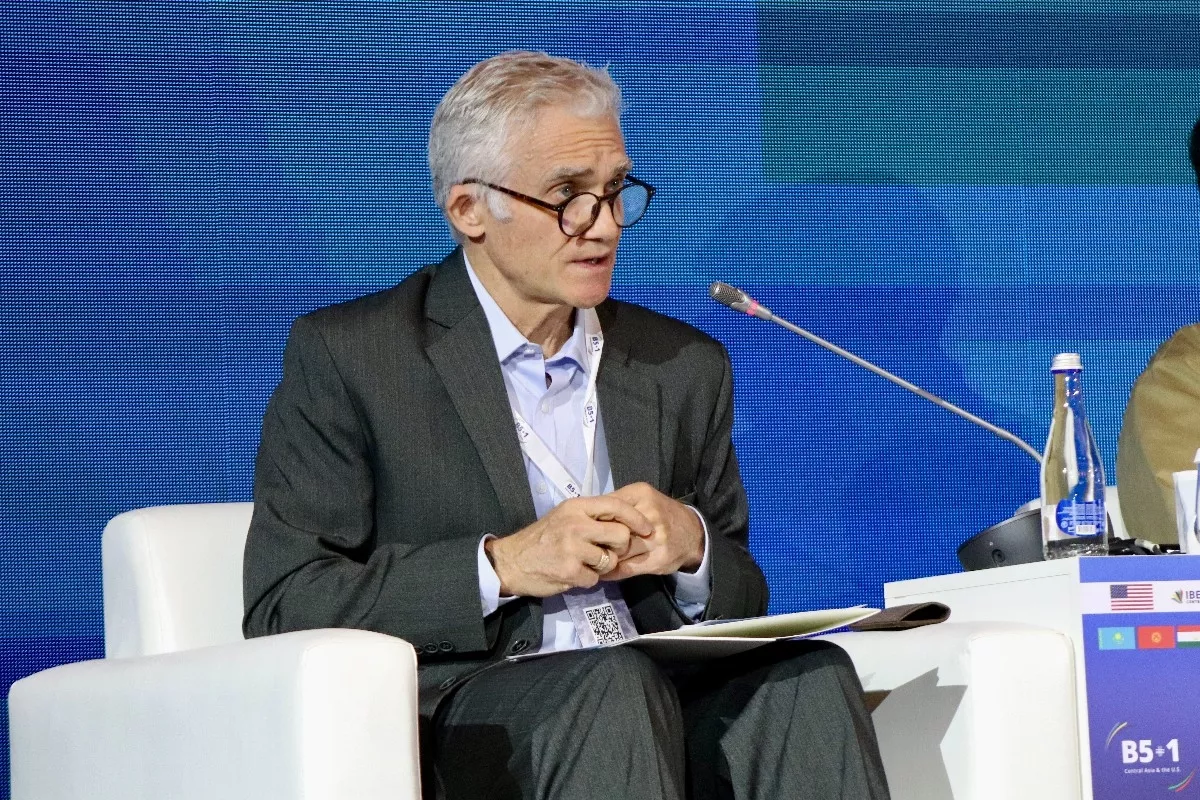
Announced at President Trump’s November summit with the five Central Asian leaders, the Cove Kaz project represents the first major American foray into the Central Asian critical minerals sector. Dominic Heaton, who was named CEO of Cove Kaz in late November, laid out the vision for the project in an interview with Eurasianet.
“The US, like most of the western world, grew comfortable with taking raw materials and intermediates from China,” he said. “The present administration, building on previous administrations, has recognized that this needs to be actioned as a priority. … It will take some time, but they are being proactive and moving toward being more resource focused.”
As business leaders and ministry officials hobnobbed in Bishkek, Secretary of State Marco Rubio and Vice President JD Vance announced a sweeping plan for a US-led critical mineral trading bloc following a White House meeting of foreign officials that included Kazakhstan and Uzbekistan.
With China in control of more than 80 percent of the world market for tungsten, the Cove Capital deal plays an important role in the US global strategy.
photo: tks.kz
Cove Kaz is forming a partnership with the Kazakh national mining company Tau-Ken Samruk to develop two neighboring tungsten deposits with a 70 percent stake for the American firm and 30 percent for the Kazakhs. To de-risk the deal and enable Cove to outmaneuver Chinese bidders for the project, the US Export-Import Bank signed a letter of interest for up to $900 million in financing. In addition, the US International Development Finance Corporation has issued letters of intent for up to $700 million for debt financing and project development funding.
The first mine is expected to produce about 5,000 tons of tungsten annually, while the second mine will yield 7,000 tons a year, Cove has said.
If the mines were exploited sequentially, that would represent approximately 50 years of supply, with the potential to “underpin” US consumption, said Heaton, a soft-spoken Australian who previously oversaw the development of a tungsten mining and processing complex in Vietnam that is the largest of its kind outside China.
A final deal with the Kazakhs is “imminent,” after which Cove will conduct a feasibility study that will take about two years, Heaton said. If the outcome of the feasibility study is positive, something the company is “reasonably confident” about, Cove Kaz will lock down financing and do engineering work before two years of construction. Production is expected to begin in approximately five years, Heaton said.
Despite concerns about logistics, Heaton said shipping the envisioned amounts of tungsten to Europe and North America is “eminently achievable,” adding that regulations and customs procedures are not “overly problematic.” Kazakh authorities are improving the consistent interpretation of the rules and aligning them with western standards, he said.
The price of tungsten has soared recently, reaching $1,100 a ton in late January 2026, up from $320 in spring of 2024. China, currently the main producer, caused the price spike by decreasing export quotas.
China’s actions have bolstered Cove Capital executives’ confidence in their project.
The company has already received several letters of support from potential customers, who are “major players” in North American industry, “suggesting that not only are financiers interested, we’ve got our customer base who’s willing to, at the appropriate time, engage on financing discussions,” Heaton said.
Cove Kaz plans to build tungsten refining capacity near the mines, but discussions about the processing plant’s timing and structure within the joint venture are ongoing, he said.
Yet, even with all the enthusiasm, Cove’s project stands as a lonely example of an American critical minerals venture in the region.
Many other American efforts are still in early days. When it comes to deals, both sides are still feeling each other out.
Jim Mooney, the CEO of the Mooney Group, a boutique mining firm with operations in Montana and Armenia, was at the Bishkek forum to get the lay of the land.
Mooney is focused on antimony, an element vital for semiconductors, batteries and the defense industry, and he is examining Tajikistan in particular. The substantial deposits there are advantageous because they are often found along with gold, offering miners a sort of insurance policy against price fluctuations in the fickle rare earth minerals markets, he said.
But at this stage, Mooney is still looking into how cooperative Central Asian governments would be and how efficient the licensing and exploration processes are.
“We’ve been cut off,” he said, referencing on-again-off-again Chinese export restrictions on antimony. “So, we have to get it. And we have to get it with the speed of relevance. We can’t go through a five-year licensing program.”
From the Central Asian side, there is concern about US follow-through. While there has been lots of enthusiastic, positive talk coming out of Washington, many in Central Asia want to see more actions accompany encouraging words.
Almaz Ashirov, investor relations manager at Almaty-based Dala Resources, a Kazakh company developing two lithium deposits southwest of Ust-Kamenogorsk, told Eurasianet that interest in Dala’s project has been limited from US investors.
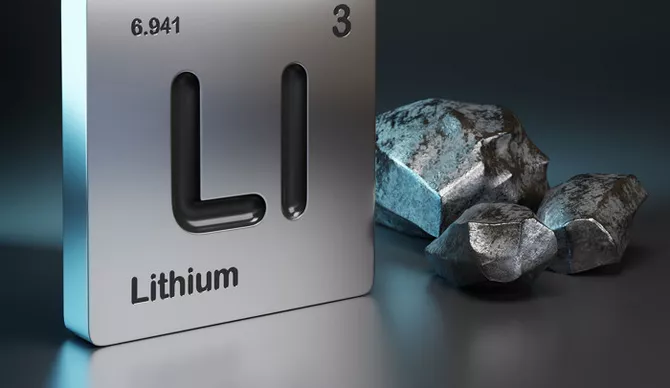
photo: lithium harvest
The price of lithium collapsed in 2024, but consumption has continued to grow, and the metal is a Trump administration priority.
“Bilateral banks make big announcements about $1 billion investments, but that doesn’t get down to us,” he said. “They just need to hear about us.”
Chinese companies by contrast have heard, and they are interested.
“They constantly write and call us, but we haven’t made a partnership, because we’ve got hope to find a western partner,” Ashirov said. Chinese companies are only interested in extracting raw materials, not in developing processing capacity as the US and Europe have promised to do, he added.
Those in Central Asia’s mining sector are still enthusiastic about the Trump administration’s stepped-up engagement on minerals.
In September of last year, negotiations over Cove Capital’s deal in Kazakhstan were “a bit delayed, going a bit slowly” when US Commerce Secretary Howard Lutnick brought the project up in a meeting with Kazakhstan President Kassym-Jomart Tokayev, Heaton said.
“Then Mr. Lutnick was able to close out their meeting by getting President Trump on his personal phone,” to talk, in part, about the project, he said.
It shows the project is a “strategic imperative” for the White House that provides “an example that engagement is possible here,” Heaton added.