Over the past two decades, Azerbaijan has transformed from a near-exclusive arms importer to a budding manufacturer and exporter of military hardware. Driven by the imperatives of national security and bolstered by oil-fueled economic growth, the country invested heavily in building a domestic defense industry.
Since 2004, Azerbaijan’s defense-industrial base has evolved to produce a wide array of military equipment, from small arms and ammunition to armored vehicles and unmanned drones. This evolution has been underpinned by strategic government initiatives, the creation of new institutions, and robust international partnerships. Notably, close defense cooperation with countries like Türkiye and Israel enabled technology transfers and joint ventures that accelerated Azerbaijan’s industrial and technological development in military production.
Historical Overview: From Importer to Manufacturer
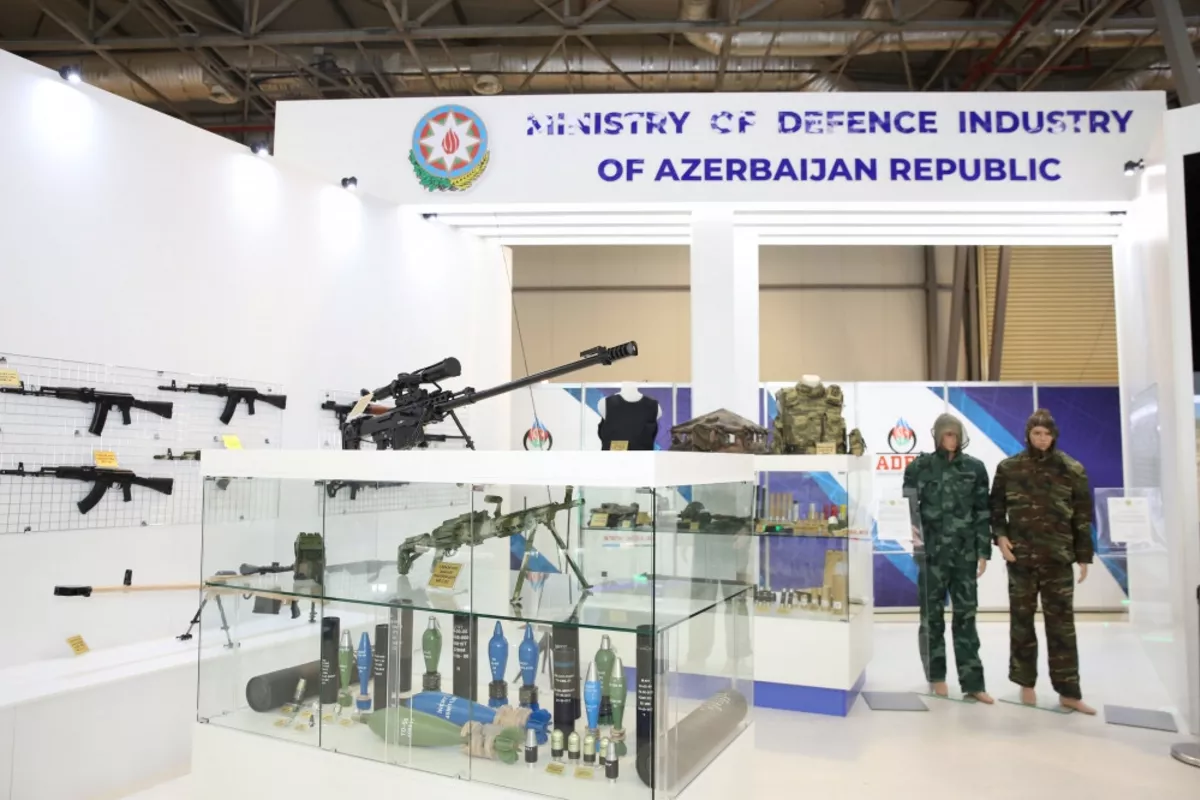
In the early 2000s, Azerbaijan’s armed forces were almost entirely equipped with imported or inherited Soviet-era weaponry. The first Karabakh war in the 1990s had exposed the country’s dependence on foreign arms. By the mid-2000s, buoyed by a surge in oil revenues, Azerbaijan’s leadership embarked on a deliberate strategy to develop a domestic military-industrial capacity. A cornerstone of this effort was the establishment of the Ministry of Defense Industry (MDI) in December 2005, a dedicated government body to oversee defense production. This new ministry consolidated existing military factories and research centers under one umbrella and set an ambitious agenda: to meet the “urgent needs” of Azerbaijan’s own armed forces and to create arms “competitive for export.”
Through the late 2000s, Azerbaijan methodically built up its production infrastructure. Several state-owned enterprises and plants were refurbished or created to manufacture military goods, initially focusing on light weapons, ammunition, and support equipment. By 2008-2010, the country unveiled its first indigenously developed weapons. For example, an anti-materiel sniper rifle called the Istiglal IST-14.5 was developed in 2008 and publicly showcased in 2009 as one of the earliest symbols of Azerbaijan’s local engineering prowess. Around the same time, factories began producing ammunition from small caliber rounds up to mortar shells and refurbishing older armored vehicles. These early steps were modest in scale but significant, since they signaled Azerbaijan’s intent to shift from being simply an arms customer to becoming a producer.
A dramatic increase in defense spending enabled this initial industrial push. Azerbaijan’s military budget reportedly climbed from around $175 Million in 2004 to well over $3 Billion by 2011, an increase made possible by oil wealth and motivated by the unresolved conflict with Armenia. A portion of this budget was funneled into domestic arms projects and the establishment of production lines.
Expansion and Diversification in the 2010s
The evolution of Azerbaijan’s defense industry has been guided by strong state involvement and gradually augmented by private sector participation. The Ministry of Defense Industry (MDI), since its creation in 2005, has been the central institution steering this growth. Throughout the 2000s and 2010s, the MDI directly managed numerous state-owned factories and design bureaus inherited from the Soviet era or newly established. Some of the key enterprises include plants like Avia-Agregat (making aviation components and ground support equipment), Radiogurashdirma (electronics and communications gear), and munitions factories in Şirvan and elsewhere. The ministry’s enterprises not only produce end-use military goods but also supply parts and subsystems for other industries (e.g., specialized electronics for oil and gas infrastructure), illustrating a degree of dual-use industrial capability.
During the 2010-2020 period, Azerbaijan’s defense industry diversified into a broad spectrum of product categories and grew in sophistication. What began with small arms and basic equipment soon expanded to include armored vehicles, unmanned aerial vehicles (UAVs), anti-tank weapons, and more. By the mid-2010s, the MDI was turning out hundreds of different military products and even began limited series production of complex systems.
A major milestone was the creation of joint ventures and licensed production agreements with foreign defense companies. In 2011, the Azerbaijani government partnered with Israel’s Aeronautics Defense Systems to establish AZAD Systems Co., a joint venture to produce unmanned aircraft. This led to local assembly of Israeli-designed UAVs, such as the Aerostar and Orbiter 2M surveillance drones. Azerbaijan’s first domestically built loitering munition (a type of armed drone) was the Zərbə (“Strike”) UAV, essentially a locally produced version of the Israeli Orbiter-1K. By the mid-2010s, Azerbaijan was manufacturing dozens of these small drones and proudly announcing that they had become an integral part of its military’s capabilities.
In parallel, the country started producing small arms under license. In 2011, Azerbaijani factories began licensed manufacturing of the Russian AK-74M assault rifle for its armed forces, rebranded locally as the “Khazri” rifle. The MDI, often in collaboration with foreign partners, introduced machine guns and pistols as well. Local workshops also began turning out RPG-7 type grenade launchers (designated Qaya series) and various mortar systems (60 mm and 82 mm calibers) to equip infantry units.
Perhaps the most visible sign of diversification was in armored vehicle production. In 2009, Azerbaijan struck a deal with South Africa’s Paramount Group to license-produce mine-resistant ambush protected vehicles. A joint production facility was set up to assemble the Matador and Marauder 4x4 armored vehicles in-country. By 2012, the MDI had delivered an initial batch of 15 Matadors and 15 Marauders to the Azerbaijani Army, and subsequent orders brought the total to dozens of vehicles. These heavy armored troop carriers, equipped with V-hull blast protection, gave Azerbaijan a domestic capability to build modern armored platforms for the first time.
Local industry also focused on developing original armored vehicles. One example is the “Tufan” mine-resistant vehicle, first unveiled as a prototype in 2017. The Tufan is an indigenous MRAP design, developed in a short timeframe of about six months of design work and by 2024 was being prepared for serial production. Another example is the “İldırım” MRAP (“Lightning”), a locally built armored vehicle that Azerbaijan introduced to its inventory. By the late 2010s, Azerbaijan not only assembled foreign-designed armored vehicles but also produced its own, integrating weapons like remote-controlled machine gun turrets and anti-tank missile launchers onto these platforms.
2010s also saw Azerbaijan focusing on artillery and missile technology. By 2016, the MDI announced it had begun domestic production of short-range rockets and missiles, including projects aimed at developing air-to-ground and ground-to-ground missiles. A notable achievement was the opening of a specialized munitions plant (the “Sharg” Production Association) in 2017, which produces 40×46 mm grenade launcher rounds of various types such as fragmentation, HEAT, illumination, smoke to NATO standards. This facility signaled Azerbaijan’s intent to meet Western military standards in manufacturing, reflecting a drive to make products that could be used and sold internationally. Additionally, local enterprises started modernizing Soviet-made rocket launchers and developing indigenous multiple-launch rocket systems in smaller calibers for ground forces.
Crucially, by the end of the 2010s, Azerbaijan’s industry was not just prototyping but also exporting. The government claimed that a growing number of locally made products were finding buyers abroad. In 2016, officials stated that the defense ministry had signed export contracts worth over $100 Million with countries in Asia, Africa, and beyond. While much of Azerbaijan’s own heavy weaponry was still imported such as advanced tanks, jets, etc., it was clear that numerous domestically produced items were sufficiently mature to be marketed overseas.
By 2020, Azerbaijan had effectively established a core defense-industrial base that could produce 400+ types of military products. Many of these products were already in service with the Azerbaijani Armed Forces, and some had been tested in real combat. Notably, during brief clashes with Armenia in April 2016, the Azerbaijani Army employed several locally made weapons (such as the Zərbə drones and Istiglal rifles) alongside imported high-tech systems, demonstrating the growing role of homegrown hardware in its arsenal.
A significant institutional development came in September 2023, when President Ilham Aliyev decreed the establishment of the “Azersilah” Defense-Industrial Holding (Azersilah meaning “Azer-weapon”). Azersilah is a state-owned holding company under the MDI, structured as a closed joint-stock company. This reorganization essentially consolidated many of the ministry’s production facilities and factories into a corporate framework. The aim was to adapt Azerbaijan’s defense industry to modern management practices, increase efficiency, and perhaps allow greater flexibility in partnering with foreign firms (since a joint-stock company can more easily form joint ventures or accept investment than a traditional ministry department). Azersilah now serves as the umbrella organization managing the production of arms and military equipment, with the MDI providing strategic oversight and policy direction. This move mirrors trends in other countries where defense industries are given corporate structures to improve competitiveness and innovation.
Under Azersilah’s management in the 2020s, Azerbaijani defense factories have installed modern automated production lines, incorporating digital control and high-precision machinery. Reports indicate that many facilities are now equipped with technology that minimizes human labor, using computer-controlled machining, advanced fabrication techniques, and quality control systems compliant with international military standards. This modernization of infrastructure has enabled the industry to take on more sophisticated projects (such as precision-guided weapons or communications systems that require clean-room electronics assembly). The end result is a more agile industrial base capable of both mass production (e.g., churning out thousands of rifles or rounds of ammo) and specialized manufacturing (e.g., assembling an unmanned aircraft or a laser weapon prototype).
International Defense Partnerships: Focus on Türkiye and Israel
Azerbaijan’s closest and most strategic defense industry partnerships have been with Türkiye and Israel. Both relationships have been pivotal in supplying Azerbaijan with advanced weaponry and in jointly developing production capabilities. These partnerships are characterized by deep levels of trust, geopolitically aligned interests, and practical cooperation ranging from procurement to co-production.
Ties between Türkiye and Azerbaijan are often described as “one nation, two states,” reflecting a bond that extends to military affairs. Starting in the early 2000s, Türkiye became a natural mentor for Azerbaijan’s NATO interoperability efforts and later for its defense industry. Turkish defense firms have actively assisted Azerbaijan in establishing local manufacturing. For instance, Türkiye’s state-owned MKEK (Mechanical and Chemical Industry Corporation) signed early contracts to help Azerbaijan produce ammunition and even set up chemistry labs for explosives. Turkish company ASELSAN, known for electronics, partnered with Azerbaijan to produce night-vision devices and thermal sights locally, enhancing Azerbaijan’s ability to equip its infantry with modern optics. Joint projects were also pursued in land systems: Türkiye’s Otokar and FNSS discussed armored vehicle collaborations, and at one point Türkiye’s defense undersecretary even suggested that next-generation tanks for Türkiye could be co-produced in part in Azerbaijan (though Azerbaijan has not yet built tanks, this highlights the level of strategic thinking in cooperation).
Perhaps the most game-changing collaboration in recent years is with Türkiye’s Baykar Makina, the renowned drone manufacturer. After witnessing the effectiveness of Turkish BAYRAKTAR TB2 drones (which Azerbaijan purchased and used in the 2020 Second Karabakh War with great success), Baku was keen to not only buy drones but also gain the capacity to produce them. In 2021-2022, discussions led to action: Baykar and the Azerbaijani government agreed to establish a local subsidiary. By 2025, BAYRAKTAR TEKNOLOJİ Azerbaijan LLC was set up in the Sumqayıt Industrial Park, aiming to manufacture UAVs on Azerbaijani soil. This facility is poised to assemble and eventually build advanced drones like the TB2 or even the newer AKINCI high-altitude drone. The local production will give Azerbaijan faster access to drones and the ability to self-sustain its fleet, while also transferring aerospace engineering skills to local workers. It is a bold example of co-production that enhances Azerbaijan’s strategic autonomy. Additionally, Türkiye and Azerbaijan have engaged in technology sharing for missile systems (Azerbaijan has shown interest in Turkish-made smart rockets and loitering munitions) and space/satellite cooperation (Azerbaijan’s first military satellites were built with foreign help, including Türkiye’s assistance in training operators).
On a broader level, Türkiye provides extensive military training and doctrinal exchange, which complements industrial ties. Turkish military academies and contractors often host Azerbaijani officers and engineers. Joint military exercises frequently incorporate testing of equipment from both countries, fostering interoperability. All of this means Turkish-Azerbaijani cooperation is not a one-way street - Azerbaijan’s needs and feedback have also influenced Turkish companies’ offerings. The result by 2024 is a defense partnership that has moved from a simple buyer-seller dynamic to co-development and co-production. Azerbaijan is now sometimes an investor in Turkish defense projects (for example, it reportedly invested in the development of some Turkish missile programs) and Türkiye, in turn, sees Azerbaijan as a forward base to project defense technology into the Caucasus and Caspian region.
Another major partner for Azerbaijani defense industry is Israel. Despite the geographical distance, Israel has become one of Azerbaijan’s most important defense partners since the late 2000s. The relationship is built on mutual strategic interests: Azerbaijan gains access to some of the world’s most advanced military technology, and Israel gains a reliable partner (and oil supplier) in a sensitive region, as well as a market for its defense exports. Azerbaijan’s military procurement from Israel has included high-profile systems like aerial drones (Hermes 450, Heron, etc.), loitering munitions (the Harop “kamikaze” drone), anti-tank missiles (Spike family), and even surface-to-surface missiles (the LORA ballistic missile). But beyond purchases, Israel has been instrumental in helping Azerbaijan develop domestic production.
The joint venture AZAD Systems formed in 2011 is a prime example: Israel’s Aeronautics delivered not just finished UAVs but also the assembly kits, training, and technical assistance for Azerbaijan to start producing the Orbiter-2M and Orbiter-1K (Zərbə) drones locally. This gave Azerbaijan a foothold in UAV manufacturing that it later expanded with other models. Israeli companies have also been involved in upgrading Azerbaijan’s older weapons - for instance, Elbit Systems helped modernize T-72 tanks and Shilka SPAAGs by outfitting them with modern electronics and fire control, and likely imparted technical skills in the process.
Another area of cooperation is small arms and infantry equipment. By the 2020s, Azerbaijan was looking to diversify its small arms away from purely ex-Soviet calibers. In 2024, an important memorandum was signed between Azerbaijan’s Azersilah holding and an Israeli defense firm (identified in local news as Israel’s Elbit Systems working via a partner called “AS Holdings”). This agreement focuses on joint production of NATO-standard light weapons in Azerbaijan. It underscores how Azerbaijan values Israel not just as an arms vendor but as a collaborator to improve its manufacturing standards and range of products. If Azerbaijan begins producing 5.56×45 mm NATO-caliber rifles or machine guns in collaboration with Israel, it could potentially supply those to countries that use Western calibers, boosting export prospects.
Moreover, Israel has shared expertise in fields like border surveillance, cyber defense, and intelligence equipment with Azerbaijan - though much of that is behind the scenes. One visible project was a plan for Azerbaijan to manufacture smart bombs or guidance kits with Israeli input, allowing the conversion of unguided munitions into precision-guided weapons.
A unique feature of the Israel-Azerbaijan partnership is the degree of high-tech involved. For example, Azerbaijan’s first high-power military laser (Fireforce) reportedly had input from Israeli technology, given Israel’s advancements in laser air defense. In reciprocal fashion, Azerbaijan’s experience in operating Israeli drones in actual combat conditions has provided valuable feedback to Israeli manufacturers to refine their products.
Beyond Türkiyeand Israel, Azerbaijan has cultivated defense ties with several other nations., most notably Pakistan. A close political ally, Pakistan has supported Azerbaijan diplomatically and in defense training. While direct co-production has been limited, Pakistan and Azerbaijan have cooperated on ammunition production (for example, discussions about jointly producing aerial bombs and artillery shells). Pakistan has also been a client for some Azerbaijani products like the Istiglal sniper rifles. In 2021, Azerbaijan decided to purchase Pakistani/Chinese-made JF-17 Thunder fighter jets to modernize its air force. This deal, realized by 2024 with deliveries of JF-17 Block III fighters, is more a buyer-seller relationship, but it could open doors to joint aircraft maintenance or future co-production of munitions for those jets in Azerbaijan. Strategic ties with Pakistan also encompass training exchanges and could evolve to include joint R&D in areas of mutual interest (both countries, for instance, operate similar tanks and may collaborate on tank upgrades).
While Russia has been a major arms supplier to Azerbaijan, it has not been as actively involved in helping Azerbaijan build things locally (perhaps for fear of losing a customer). One exception is Russia’s allowance for Azerbaijan to produce AK-74M rifles under license. Additionally, Azerbaijan has worked with Belarus and Ukraine to modernize systems like tanks and aircraft - these partnerships were more about upgrading finished products than co-producing new ones, but they did transfer valuable technical know-how. Ukraine at one point offered Azerbaijan a joint production project for 100 helicopters, and talks have occurred about cooperating on aircraft maintenance or even building components of Antonov transport planes, though no major joint production of aircraft has occurred as of 2024.
South African Paramount Group partnership stands out, leading to local vehicle production and even helicopter upgrade programs. This shows Azerbaijan’s openness to working with non-traditional partners when there’s a clear benefit. South African engineers helped Azerbaijan set up capability in armored vehicles, and in return Paramount gained a foothold in the Caucasus region.
Conclusion
In the span of twenty years, Azerbaijan’s defense industry has grown from virtually non-existent to a multifaceted enterprise capable of producing a broad array of military technology. This journey was fueled by heavy state investment, smart use of oil revenues, and above all, strategic international partnerships that allowed Baku to piggyback on advanced technologies. Today, Azerbaijan manufactures everything from rifles and cartridges to armored vehicles and drones, and it has taken the first steps into the realm of precision weaponry and high-tech systems. The country has achieved a level of military-industrial self-reliance that enables it to supply its own armed forces with many essentials and even contribute to the inventories of allied nations.
Azerbaijan shows no sign of slowing down its military-industrial modernization. Budget plans for 2025 allocate a substantial portion (nearly 17% of state expenditure) to defense and national security, indicating sustained funding. This financial commitment will likely lead to further upgrades of production facilities and the initiation of new projects, for example in drone swarming technology, artificial intelligence for military applications, or next-generation communications.
The collaborative model with Türkiye and Israel will likely deepen. With Türkiye, one can anticipate Azerbaijan playing a role in jointly developing certain systems (for instance, components of the next iteration of Baykar drones or Turkish missiles might be produced in Azerbaijan). With Israel, the relationship may expand into new areas like space (satellite technology) or air defense (beyond the current capabilities). Azerbaijan might also seek additional partnerships - perhaps with European or East Asian defense firms - to keep diversifying its technology sources. The recent MoUs with countries like China and Spain hint at Azerbaijan’s intent to cast a wider net for cooperation.
As the industry matures, Azerbaijan is likely to focus on quality over quantity in certain areas. Competing with giant arms producers in sheer volume is unrealistic, but carving out a niche in specific high-tech products is feasible. The development of the Fireforce laser weapon, for example, suggests Azerbaijan’s interest in futuristic defense tech. Similarly, the unveiling of autonomous naval drones and advanced loitering munitions points to a strategy of being at the cutting edge in unmanned systems. By investing in these niches, Azerbaijan could become one of the few suppliers in those categories among developing nations.
Azerbaijan will continue to import big-ticket items that it cannot produce (such as fighter jets, advanced air defense systems, etc.), but it will do so strategically with offsets - meaning whenever it buys, it will negotiate for local production of parts or maintenance. Every import deal is seen as an opportunity to enhance domestic skills. Simultaneously, for exports, Azerbaijan will likely prioritize selling to friendly nations and those where it can establish long-term relationships (training, support, future upgrades), rather than just one-off transactions.
The government has been careful to keep the focus of its defense industry on technical and strategic needs, avoiding political controversy. This trend should persist, as Azerbaijan would want its arms sales to be viewed as legitimate defense cooperation rather than destabilizing proliferation. By maintaining a relatively neutral stance (for instance, not exporting to embargoed regimes and ensuring end-use agreements are respected), Azerbaijan’s defense industry can grow its reputation responsibly.
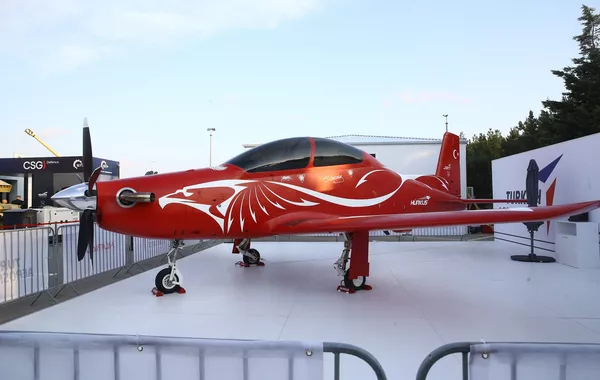
In conclusion, Azerbaijan’s defense-industrial base in 2024 is a testament to what a determined small state can achieve in a short time with proper vision and partnerships. From assembling drones in modest workshops to unveiling indigenous armored carriers and lasers at international expos, the progress has been remarkable. The industry’s evolution has not only enhanced Azerbaijan’s military readiness - making it less dependent on foreign arms suppliers - but also given the country a new form of soft power and economic diversification through arms exports. The next decade will likely see Azerbaijan consolidating these gains, striving to produce even more advanced systems domestically (such as higher-end drones, smart munitions, or maybe trainer aircraft), and cementing its role as a regional hub for defense technology. While full self-sufficiency in defense production is an elusive goal for any small nation, Azerbaijan is charting a path of self-reliance through collaboration, ensuring that its defense industry will continue to thrive and innovate in the years to come.
See the original article here