Poland and Azerbaijan are entering a period in which their bilateral relationship could expand beyond traditional political dialogue and energy cooperation. As Europe reshapes its economic and energy policies in response to geopolitical shifts, new opportunities are emerging for partnerships based on innovation, investment, institutional development and strategic connectivity.
The future of bilateral cooperation will depend not only on energy security but also on both countries' ability to identify shared long-term interests and respond to evolving regional dynamics.
A more pragmatic, demand-driven approach focused on practical cooperation rather than ideology could strengthen bilateral ties and open up new avenues for collaboration across a range of sectors in the years ahead.
Karol Wasilewski, head of the Türkiye, Caucasus and Central Asia Department at the Warsaw-based Centre for Eastern Studies (OSW), believes there is considerable potential for Poland and Azerbaijan to expand cooperation, particularly in the energy sector. However, he argues that the future of the partnership will largely depend on the direction of the European Union's energy transition and broader geopolitical developments.
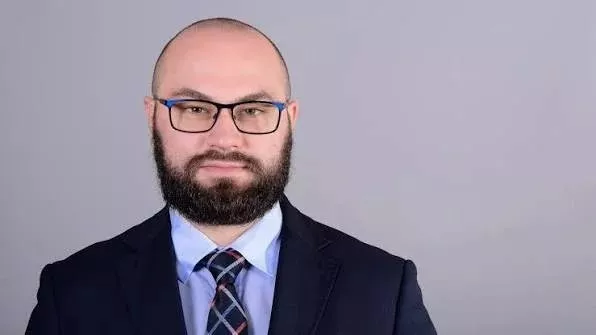
Photo: Karol Wasilewski, head of the Türkiye, Caucasus and Central Asia Department at the Warsaw-based Centre for Eastern Studies (OSW)
According to Wasilewski, Europe is undergoing a profound transformation of its energy and economic model. He noted that the previous system, which relied on inexpensive Russian energy to support European industry, has effectively collapsed.
"While reducing dependence on Russia remains one of the EU's primary strategic objectives, Europe must also respond to growing industrial competition from China, which is increasingly challenging the competitiveness of European manufacturing," he said.
He stressed that Poland has long regarded Russia's energy exports as a geopolitical instrument rather than simply a commercial commodity.
"For that reason, Warsaw was among the first European capitals to advocate reducing dependence on Russian supplies, and over the past several years Poland has invested heavily in diversifying its energy sources," the expert noted.
In his assessment, that strategy has been largely successful, and there is virtually no political support in Poland for a return to purchasing cheap Russian energy after the war.
Wasilewski said this broader context is essential to understanding the future of cooperation with Azerbaijan. Referring to remarks made by President Ilham Aliyev during an international conference earlier this year, he said Azerbaijan has raised a legitimate question about Europe's long-term energy policy.
"While the European Union continues to seek additional energy supplies from partners such as Azerbaijan, it is also publicly committed to achieving climate neutrality by 2050 and significantly reducing fossil fuel consumption," he added.
From Azerbaijan's perspective, Wasilewski argued, it is entirely reasonable to question why Europe should be regarded as a long-term strategic market when European policymakers themselves say that fossil fuels will gradually be phased out over the coming decades.
He noted that any supplier naturally seeks confidence that demand for its products will remain stable over the long term, making Azerbaijan's position understandable from both a commercial and strategic standpoint.
Given these uncertainties, Wasilewski said he could not give a definitive answer about the future of Polish-Azerbaijani energy cooperation. While he sees considerable opportunities for closer collaboration, he believes the extent of future cooperation will depend on how the European Union ultimately balances its energy security objectives with its climate ambitions.
He explained that diversification has already become a strategic priority for Poland.
"Warsaw has expanded its energy partnerships with other countries, including the United States and Norway - relationships that strengthen not only economic resilience but also broader security cooperation," the expert said, adding that energy partnerships increasingly serve geopolitical as well as commercial purposes.
Looking further ahead, Wasilewski said Poland hopes to build an economy increasingly powered by renewable energy, offshore wind, nuclear power and, eventually, hydrogen technologies. However, he cautioned that creating a viable hydrogen economy remains extremely challenging and suggested that Poland's ambitions in this area have at times outpaced what is realistically achievable in the foreseeable future.
"For this reason, cooperation between Poland and Azerbaijan should not be viewed solely through the traditional framework of energy exports and imports. Instead, both countries should identify broader areas of strategic cooperation capable of delivering long-term mutual benefits," he argued.
According to Wasilewski, Poland itself is undergoing a broader economic transformation.
"Since 1989, the country's development model has relied heavily on integration with Western markets and substantial support from European Union funding mechanisms," he said, adding that Poland now increasingly sees itself as an emerging G20-level economy seeking a more influential international role.
"Whether that ambition is fully realised remains to be seen, but it reflects an important shift in Poland's strategic thinking. The country aims to become more innovative, attract greater foreign investment, strengthen its start-up ecosystem and build more ambitious partnerships with countries such as Türkiye, Azerbaijan and the broader South Caucasus and Central Asia," the expert said.
He noted that many of Poland's international partners increasingly expect Warsaw to act in a manner consistent with its growing economic ambitions.
"If Poland wishes to be regarded as a major global economy, it must also behave like one by expanding its international engagement and developing deeper partnerships beyond its traditional Western focus," Wasilewski said.
The expert also suggested that this transformation could create entirely new opportunities for cooperation with Azerbaijan, extending beyond economic ties to include institutional development and governance.
He observed that Azerbaijani counterparts frequently emphasise that what they value most is not external advice on democratisation but practical expertise in building effective public institutions, improving governance and supporting sustainable long-term development.
"Poland, having undergone its own extensive political and economic transformation over the past three decades, possesses valuable experience in these areas that could be shared through practical cooperation," he added.
Concluding his remarks, Wasilewski said Polish foreign policy had become increasingly pragmatic and demand-driven.
"Poland focuses on responding to the priorities identified by its partners," he said.
In his view, such an approach provides a stronger foundation for mutually beneficial cooperation with Azerbaijan and other countries across the South Caucasus and Central Asia.