The reported €500 million arms agreement between Russia and Iran is more than just another military transaction buried in defense procurement statistics. It is a strategic message - aimed not only at Washington but at the broader Middle East.
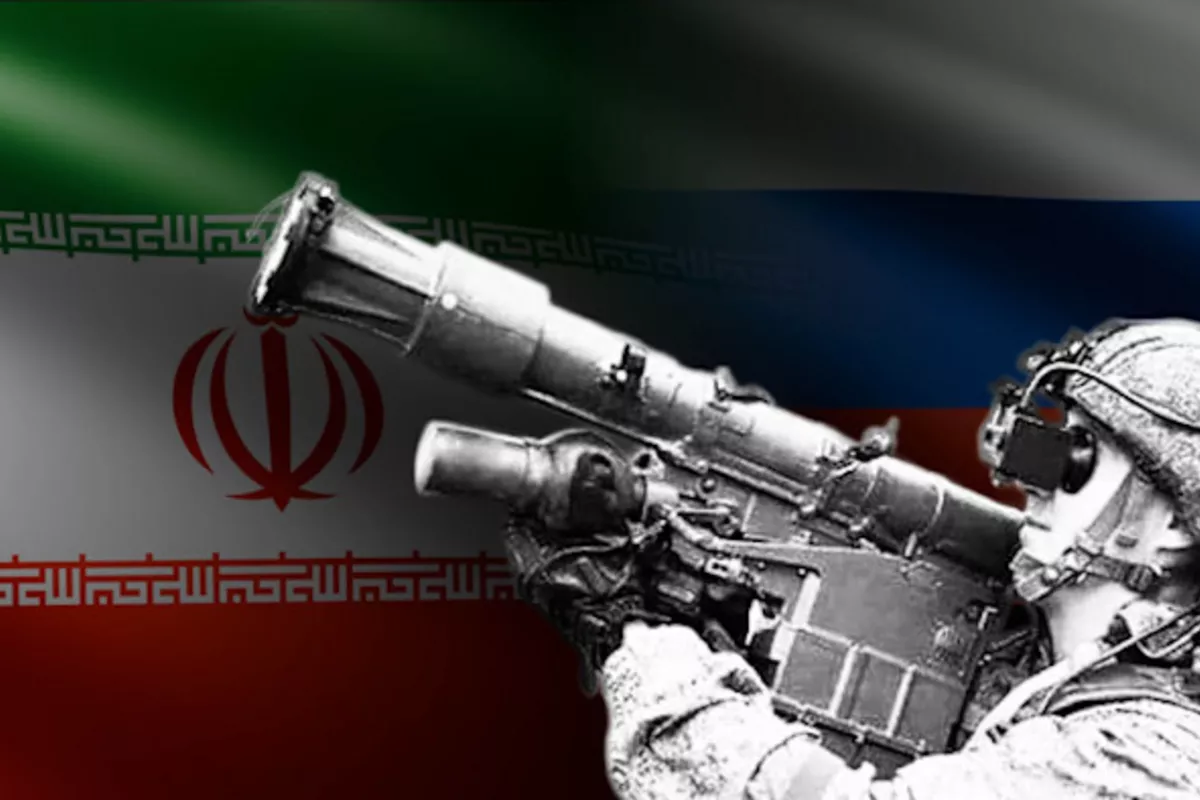
According to the Financial Times, Tehran has secured a deal to purchase 500 Verba mobile launch systems and roughly 2,500 9M336 missiles over the next three years. The agreement was reportedly signed in December 2025 and kept secret until recently. Sources familiar with the matter told the newspaper that Iran first approached Moscow in July last year - precisely when the United States was conducting strikes against Iranian nuclear facilities.
The timing alone is telling.
Iran’s leadership recognized its vulnerabilities. During the 12-day war in June last year, Israeli air power destroyed a significant portion of Iran’s air defense infrastructure and established air superiority. The episode was more than a tactical setback; it was a psychological and strategic shock. Tehran could not ignore that key military and nuclear assets were left exposed to precision air strikes.
In that context, turning to Russia for portable air defense systems was a calculated move to fill immediate gaps.
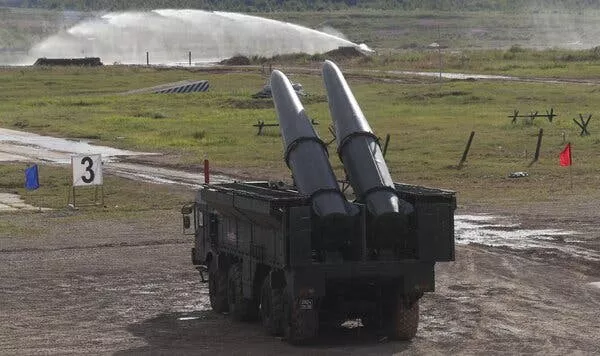
Photo credit: TASS
The Verba (9K333) is a fourth-generation Russian man-portable air defense system designed to engage low-altitude aerial targets. Equipped with advanced counter-countermeasure technology, it offers high resistance to decoys and optical interference. Its improved homing head allows it to effectively target low-visibility threats, including unmanned aerial vehicles, even amid heavy electronic or optical disruption.
Russian media claim that the Verba surpasses previous generations, such as the Igla, due to enhanced sensitivity and improved electronic resistance. Russia sells each missile for approximately €170,000 and each launcher for €40,000. The contract also includes 500 Maugli-2 night vision devices, underscoring an intent to strengthen tactical capabilities in low-visibility and nighttime operations.
Militarily, these systems will not neutralize U.S. air superiority. Strategically, however, they introduce friction, and in modern warfare, friction matters.
Washington is not standing still. The Wall Street Journal reports that the United States has assembled its largest military presence near Iran since the 2003 Iraq invasion. Advanced F-35 and F-22 fighter jets are being deployed to the region. A second aircraft carrier, equipped with strike aircraft and electronic warfare capabilities, is heading toward the Middle East. Airborne command and control aircraft - critical for coordinated air operations - are already on station. Additional air defense systems have been deployed in recent weeks.
U.S. officials stress that, unlike the limited June operation Midnight Hammer, which targeted three Iranian nuclear facilities, the current concentration of firepower would allow for a prolonged, multi-week air campaign if necessary. This is no longer about symbolic strikes. It is about sustained operational capability.
In this environment, Russia’s role becomes significant. The Financial Times reports that some Verba systems may have been delivered ahead of schedule due to Washington’s threats. In recent weeks, Il-76 cargo aircraft reportedly made multiple flights from Mineralnye Vody to Iran - analysts view this as part of an accelerated transfer process.
Experts note that Verba systems alone will not shift the overall balance of power. The U.S. retains overwhelming advantages in stealth technology, precision-guided munitions, and integrated command structures. Iran’s broader air defense network was heavily degraded by Israeli strikes last year. However, in a prolonged confrontation, Iran retains meaningful retaliatory capabilities. Its missile arsenal remains substantial and capable of targeting U.S. bases and regional allies. Iran also maintains forces that could disrupt maritime traffic through the Strait of Hormuz, the Persian Gulf’s only outlet to global waters - a move that would have immediate consequences for global energy markets. A conflict would not be cost-free.
Russia appears to be positioning itself as Iran’s only meaningful military-technical partner. No other state is willing to openly defy Washington by supplying Tehran with advanced air defense systems. The Russia-Iran partnership has deepened precisely because of U.S. regional policy.
On January 17, 2025, Moscow and Tehran signed a 20-year strategic partnership agreement. In mid-February 2026, the naval forces of both countries conducted joint exercises in the Gulf of Oman. Russian media reported that these maneuvers took place near the U.S. aircraft carrier USS Abraham Lincoln, which arrived in the region in January. The symbolism was unmistakable. Tehran demonstrated that it is not isolated, while Moscow signaled that it remains an active geopolitical pole.
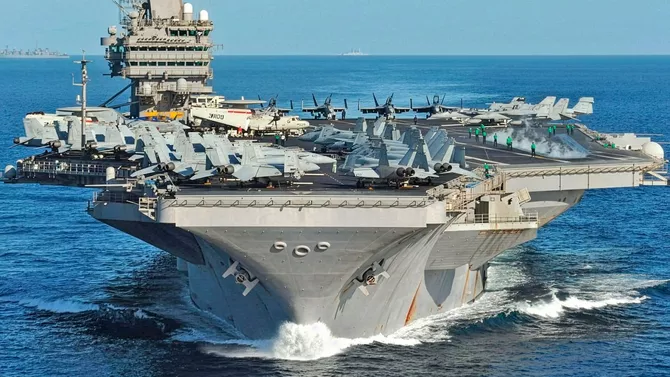
Photo credit: Reuters
Yet the partnership remains carefully calibrated. The strategic agreement does not include a mutual defense clause. About one-third of its articles concern expanded military-technical cooperation, but there is no binding obligation of direct military assistance in case of attack. Instead, the document stipulates that neither party should assist an aggressor and that both will contribute to de-escalation efforts. This contrasts sharply with Russia’s agreement with North Korea, which includes explicit provisions for military support. Moscow is signaling support without committing to automatic war. Tehran is strengthening its position without securing formal guarantees.
If a large-scale U.S. attack on Iran does not occur, Russia can present its involvement as stabilizing - proof that deterrence worked. If confrontation escalates, Moscow retains plausible deniability while still benefiting from a weakened U.S. position in the region.
Iran appears to be operating from a different calculus. Facing mounting military pressure, Tehran may conclude it has little to lose. Strengthening tactical air defenses, even if they do not alter strategic parity, complicates any adversary’s operational planning. Russia’s missiles will not defeat American airpower. But they may increase costs, raise risks, and deny Washington the quick, easy victory some political circles, including Donald Trump, may expect. In geopolitics, denying an opponent an easy victory can be strategically significant.
Ultimately, the most rational outcome for all parties is to avoid military confrontation. A direct U.S.-Iran war would not remain confined to bilateral hostilities. It would reverberate across energy markets, maritime trade routes, and already fragile regional balances.
The Verba systems themselves are tactical tools. The logic behind the deal reflects something much larger: a Middle East moving toward hardened blocs, escalating deterrence, and narrowing diplomatic space. That, far more than any single missile shipment, is what should concern the world.
By Tural Heybatov