Visit of Turkmen President Serdar Berdimuhamedov to Baku is far more than a routine diplomatic event. It reflects the profound transformation of relations between Azerbaijan and Turkmenistan, which in recent years have evolved from rivalry into a full-fledged strategic partnership.
At a time when Eurasia’s transport and logistics map is undergoing a major transformation, the Azerbaijani-Turkmen tandem is emerging as one of the key pillars of the developing Middle Corridor. This is particularly significant given that Turkmenistan initially sought to remain outside major regional integration projects.
In July 2025, Gurbanguly Berdimuhamedov, Chairman of the Halk Maslahaty of Turkmenistan and National Leader of the Turkmen people, paid his first official visit to Azerbaijan. After years of distancing itself from Baku’s initiatives, this visit - during which the distinguished guest also toured Azerbaijan’s liberated territories - became a historic milestone and marked the beginning of genuine rapprochement between the two Caspian neighbors, driven by shared interests.
Not long ago, relations between Baku and Ashgabat could hardly be described as smooth. For many years, the two countries disagreed over the delimitation of the Caspian Sea and ownership of several hydrocarbon fields. Ashgabat consistently aligned itself with Iran, which had delayed efforts to reach an agreement on the legal status of the Caspian Sea. Today, however, that issue belongs to history. The Convention on the Legal Status of the Caspian Sea has been signed and ratified by Turkmenistan’s parliament.
The political will demonstrated by the leadership of both countries made it possible to overcome long-standing disagreements. A turning point came in 2021 with the signing of an agreement on the joint development of the Dostlug (Dostyk) field, which became a symbol of a new era in bilateral relations. Today, Azerbaijan and Turkmenistan have virtually no major political disagreements. On the contrary, the two countries demonstrate a high level of mutual trust, reflected in regular high-level contacts and intensive political dialogue.
While energy once formed the foundation of bilateral relations, transportation has increasingly taken center stage.
Following the global reorientation of trade routes between Asia and Europe, the importance of the Trans-Caspian International Transport Route, also known as the Middle Corridor, has grown significantly. Within this framework, Turkmenistan and Azerbaijan are natural partners. Turkmen ports on the eastern coast of the Caspian Sea and Azerbaijan’s transport infrastructure on the western shore together form an integrated logistics network connecting Central Asia with the South Caucasus, Türkiye, and European markets.
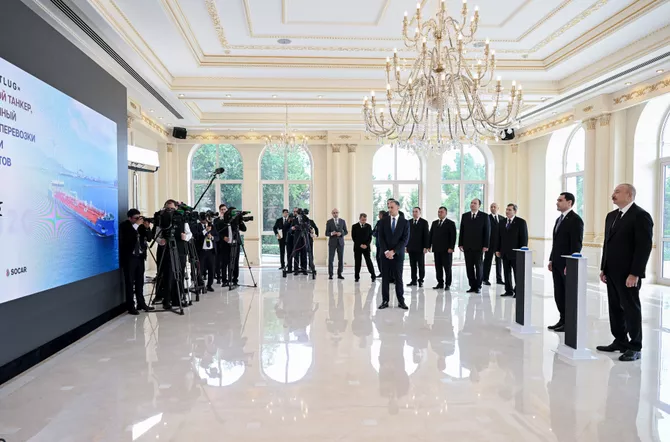
Photo: AZERTAC
For Ashgabat, Azerbaijan offers the shortest route to the Black Sea and the Mediterranean. For Baku, Turkmenistan serves as a crucial gateway to Central Asia and a key participant in the Middle Corridor.
This is why many experts view Berdimuhamedov’s current visit primarily through the lens of further coordination of the two countries’ transport policies.
At the same time, the energy sector continues to play a vital role in bilateral relations, sharing prominence with transport connectivity. Energy remains a major driver of cooperation. SOCAR has been steadily expanding its presence in Turkmenistan, opening a representative office in Ashgabat in November 2023.
Turkmenistan possesses some of the world’s largest natural gas reserves, yet its export infrastructure remains largely oriented eastward, particularly toward the Chinese market. Azerbaijan, by contrast, has more modest gas reserves but benefits from a unique supply network to Europe through the Southern Gas Corridor.
For many years, experts have discussed the possibility of transporting Turkmen gas across the Caspian Sea to Azerbaijan and onward to Europe. Although such projects would require substantial investment and political coordination, the growing rapprochement between Baku and Ashgabat creates fundamentally new opportunities for energy integration.
It is worth recalling that the idea of the Trans-Caspian Gas Pipeline, originally promoted by the United States, failed to gain strong support from Ashgabat at the time. Consistent with its traditional cautious approach, Turkmenistan treated the proposal with skepticism. Today, however, the absence of such infrastructure is increasingly felt on the eastern side of the Caspian Sea. Recently, the United States has once again revived discussion of the long-dormant project.
Beyond economics, cultural and civilizational ties also contribute to the growing closeness between the two nations. Most importantly, both countries belong to the Turkic world. They share closely related languages, similar historical traditions, and common cultural roots.
In recent years, humanitarian cooperation has expanded considerably. Turkmenistan regularly hosts Azerbaijani cultural events, while collaboration in education and culture continues to grow. These ties facilitate political cooperation and create favorable conditions for implementing major interstate projects.
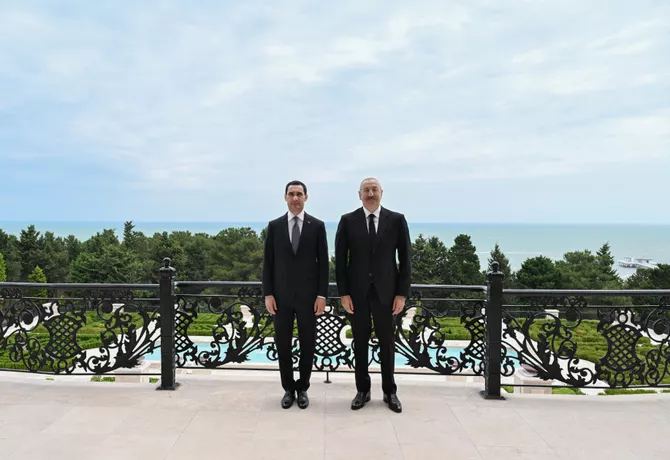
Photo: AZERTAC
Particular attention should be given to Turkmenistan’s construction of a mosque in the liberated city of Fuzuli. On October 7, 2025, during the 12th Summit of the Council of Heads of State of the Organization of Turkic States, held in Gabala, the foundation stone for the large-scale mosque complex was laid via an online ceremony.
The mosque complex will cover more than one hectare and include two 40-meter minarets. Its main dome will rise 30 meters high, and the mosque will accommodate up to 500 worshippers at a time.
A distinctive feature of Azerbaijan-Turkmenistan relations is that they are developing without being directed against any third country.
Both Baku and Ashgabat pursue pragmatic foreign policies. Turkmenistan maintains its internationally recognized status as a neutral state, while Azerbaijan continues to implement a balanced, multi-vector diplomatic strategy. Nevertheless, stronger ties between the two countries have broader regional significance.
The growing partnership between Baku and Ashgabat objectively enhances the importance of the Caspian region in international affairs. Against the backdrop of increasing interest in the Middle Corridor from China, the European Union, Türkiye, and Central Asian states, Azerbaijani-Turkmen cooperation is becoming one of the key drivers of Eurasian integration.
President Serdar Berdimuhamedov’s visit to Baku can therefore be viewed as confirmation that Azerbaijan and Turkmenistan have entered a new phase in their relationship. Whereas the focus in the past was on resolving disputes, today the emphasis is on jointly leveraging geographic advantages, energy resources, and transport infrastructure.
Most importantly, the two countries no longer view each other as competitors in the Caspian region but rather as partners in implementing major regional projects.
This was clearly reflected during Berdimuhamedov’s current visit to Baku, where both sides reaffirmed their commitment to continued cooperation and mutual support.
On June 22, Presidents Ilham Aliyev and Serdar Berdimuhamedov participated online in a ceremony marking the transfer of the oil tanker “Dostlug,” built at the Baku Shipyard, as a gift to Turkmenistan.
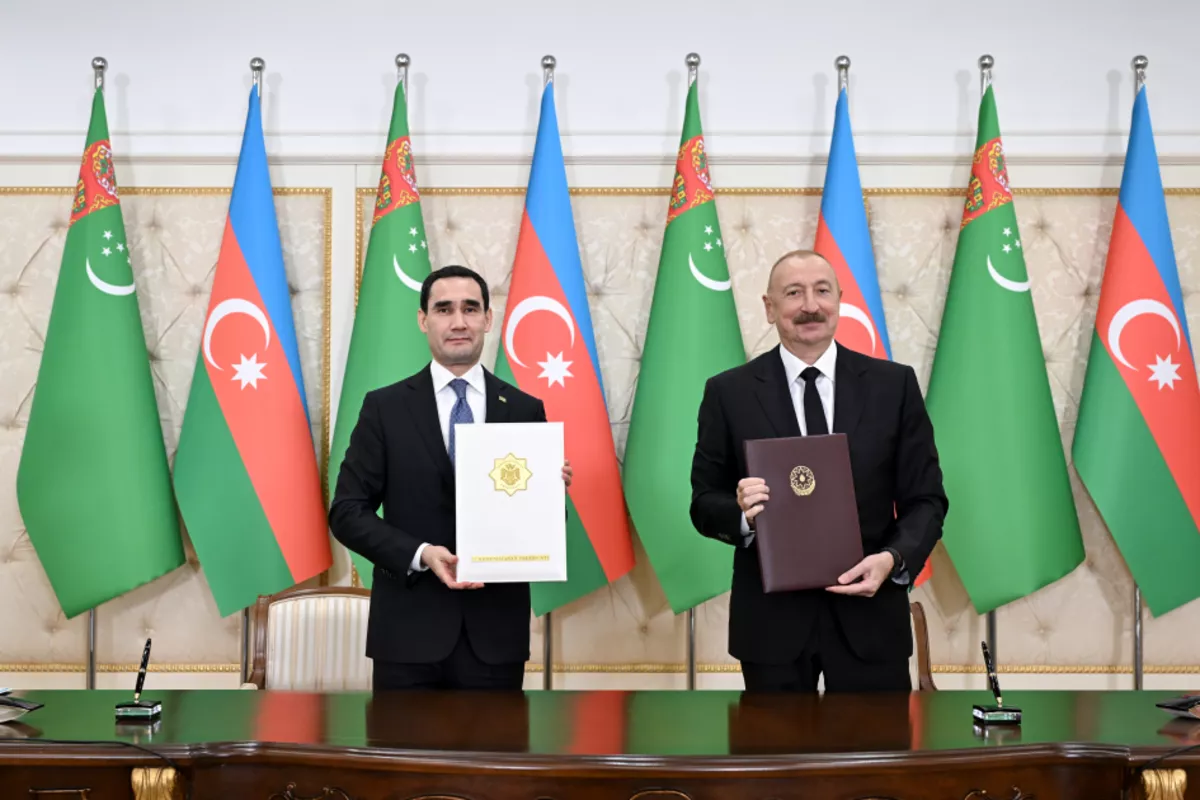
Several bilateral agreements were signed in Baku, including a Joint Statement by the heads of state.
The signed documents cover cooperation in transportation, customs affairs, social policy, banking, healthcare, security, energy, agriculture, and industry.
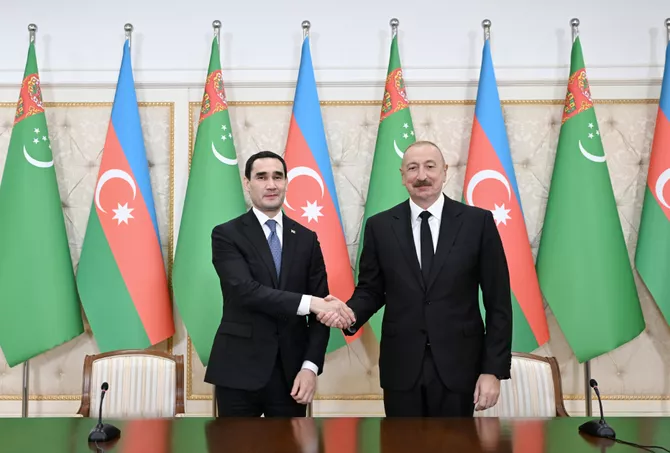
Photo: AZERTAC
Taken together, Berdimuhamedov’s latest visit to Baku demonstrates that Azerbaijan and Turkmenistan are steadily moving toward a durable strategic partnership.
At a time when traditional routes and frameworks are losing reliability and global geopolitical configurations are rapidly evolving, the two Caspian nations are finding common ground and shared interests. Their growing partnership is becoming an increasingly important factor in shaping the future economic and political landscape of Eurasia.
By Tural Heybatov