The Rising Financial Burden of the Iran War on the U.S.
The United States’ military campaign in Iran has already reached an estimated cost of $25 billion, according to a senior Pentagon official speaking on April 29.
The figure marks the first formal attempt to quantify the financial burden of the conflict, offering a clearer-though still incomplete-picture of how the war is affecting U.S. fiscal priorities, domestic politics, and global markets.
Rising Costs with Limited Transparency
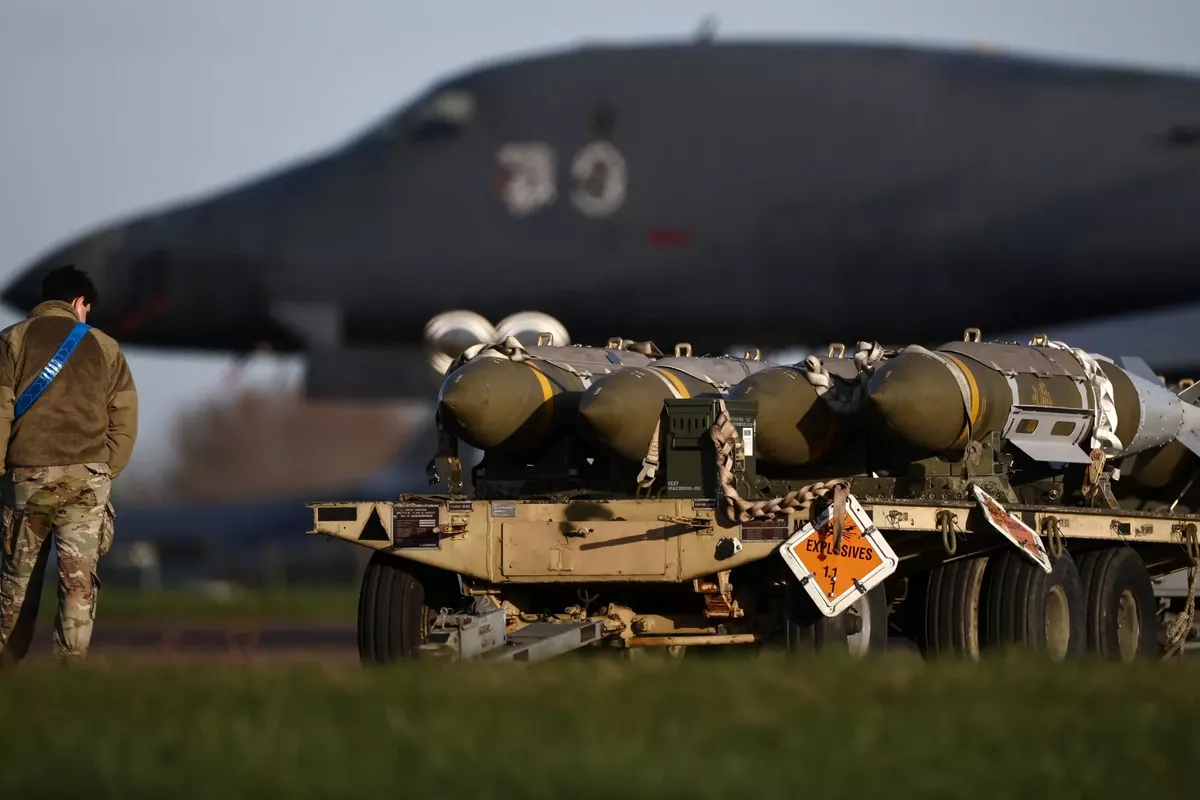
Jules Hurst, currently serving as comptroller at the Pentagon, told lawmakers on the House Armed Services Committee that the majority of the $25 billion has been spent on munitions. However, the estimate leaves significant gaps. It does not clearly specify whether long-term expenses-such as rebuilding damaged military bases in the Middle East, equipment replacement, or extended troop deployments-are included. Historically, early wartime cost estimates tend to understate the eventual financial burden, particularly when reconstruction and veterans’ care are factored in.
The lack of transparency has already become a political issue. Representative Adam Smith, the committee’s top Democrat, underscored congressional frustration by noting that lawmakers had been requesting such figures for an extended period without receiving clear answers. This suggests that the $25 billion figure may serve more as a baseline than a comprehensive accounting.
Strategic Scope and Operational Intensity
Since the United States launched strikes on February 28, the scale of military engagement has expanded significantly. The Pentagon has deployed tens of thousands of additional troops to the Middle East and maintained three aircraft carriers in the region-an indicator of both operational intensity and deterrence strategy. Even with a fragile ceasefire currently in place, sustaining this level of force projection is inherently expensive, particularly when factoring in logistics, fuel, maintenance, and personnel costs.
Casualties have also begun to accumulate, with 13 U.S. troops killed and hundreds wounded. Beyond the human toll, this carries long-term financial implications tied to healthcare, disability compensation, and veterans’ services-costs that often extend decades beyond the end of active hostilities.
Domestic Political Pressure Ahead of Elections
The timing of the cost disclosure is politically significant. With mid-term elections approaching, Donald Trump and his Republican Party face increasing scrutiny over both the financial and strategic rationale for the war. Democrats are actively framing the conflict as a contributor to domestic economic strain, linking military spending abroad to rising costs at home.
This argument appears to be gaining traction amid weak public support. A Reuters/Ipsos poll shows that only 34% of Americans approve of the operation, a steady decline from 38% in mid-March. Sustained low approval ratings could amplify pressure on policymakers to either justify the costs more convincingly or seek a clearer path to de-escalation.
Economic Ripple Effects Beyond the Battlefield
The financial burden of the war is not limited to direct military expenditures. The conflict has disrupted global energy markets, particularly through its impact on oil and natural gas shipments. These disruptions have contributed to rising gasoline prices in the United States, feeding into broader inflationary pressures.
Agriculture has also been affected. Higher energy costs have increased the price of fertilizers and other inputs, placing additional strain on farmers and, ultimately, consumers. This creates a feedback loop in which geopolitical instability translates into tangible economic hardship domestically-strengthening critics’ arguments that the war’s costs extend far beyond the Pentagon’s budget.
A Conflict with Open-Ended Costs
At $25 billion and counting, the financial trajectory of the U.S. campaign in Iran remains uncertain. Key variables-including the durability of the ceasefire, the scale of future deployments, and potential reconstruction obligations-will determine whether this figure stabilizes or expands dramatically.
What is already clear, however, is that the war’s cost is multidimensional. It encompasses not only immediate military spending but also long-term fiscal commitments, political consequences, and economic disruptions. As more detailed data emerges, the challenge for U.S. policymakers will be to balance strategic objectives abroad with mounting financial and political pressures at home.