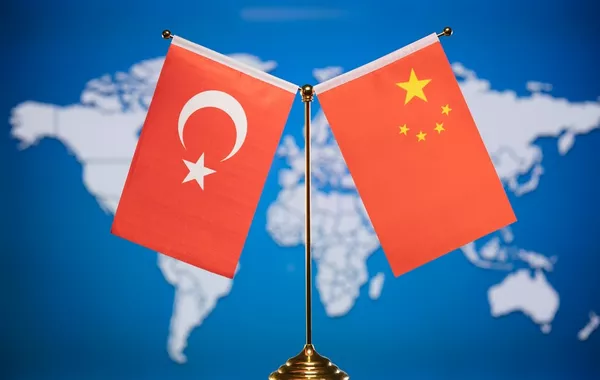
President Donald Trump’s planned visits to Türkiye and China may become more than just part of the diplomatic calendar in 2026. They could signal a deeper shift in Washington’s foreign policy. If these trips take place in the announced format, they will show that the White House is placing less emphasis on traditional multilateral diplomacy and more on direct deals with key centers of power - allies, rivals and countries capable of influencing several crises at once.
For Trump, foreign policy has always been highly personalized. He prefers to speak directly with leaders who hold real power, control strategic decisions and can quickly turn political agreements into practical steps. That is why Türkiye and China are now at the center of attention in 2026. Ankara is a crucial NATO member, controls access to the Black Sea and plays an important role between Russia, Ukraine, the Middle East and the South Caucasus. Beijing is Washington’s main economic competitor, and no serious solution to issues such as trade, critical minerals, technology and global supply chains is possible without China.
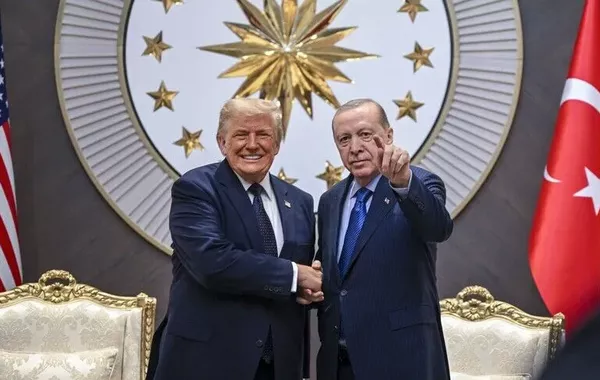
The first possible turning point is linked to Türkiye. Trump’s visit to the NATO summit in Ankara could change the tone of U.S. relations not only with Türkiye, but with the entire North Atlantic Alliance. In recent years, NATO has faced growing internal tension: European allies demand more predictable American leadership, Washington wants Europe to contribute more to its own defense, while Türkiye seeks to prove that it is not a peripheral actor, but a central player within the alliance. The Ankara summit could become the moment when the United States effectively recognizes Türkiye’s growing role as an independent strategic hub.
For Ankara, this is especially important. Türkiye remains a NATO member, maintains dialogue with Russia, strengthens its influence in the South Caucasus, controls key energy routes and claims a role as a mediator in the Middle East. Trump’s visit could give President Recep Tayyip Erdoğan an opportunity to reinforce Türkiye’s image as a country without which it is impossible to discuss Black Sea security, the future of Ukraine, stability in Syria, the situation around Iran and transport corridors between Asia and Europe.
The economic background also strengthens the importance of the Turkish track. According to the Office of the United States Trade Representative, trade in goods between the United States and Türkiye reached $36.8 billion in 2025. U.S. exports to Türkiye amounted to $20.4 billion, up 32.7% compared with 2024, while U.S. imports from Türkiye fell by 2% to $16.4 billion. Even more importantly, the trade balance shifted in Washington’s favor: instead of a $1.4 billion deficit in 2024, the United States recorded a $4 billion surplus in 2025.

Source: Getty Images
These figures matter not only for economists. They show that Türkiye is becoming not just a difficult but also a necessary ally for the United States. Politically, Ankara often acts independently and does not always fully align with Washington’s position. Economically, however, it is turning into a partner with which the United States can demonstrate concrete results: rising exports, a positive trade balance and wider opportunities for American business. For Trump, who traditionally views foreign policy through the lens of deals, jobs and trade balances, this is especially important.
This also benefits the United States because the previous model, in which Europe was seen as the main partner on all security issues, no longer works in full. In 2026, U.S. foreign policy requires more flexibility: in some cases, pressure is needed; in others, deals; and in some situations, intermediaries who can speak to actors with whom Washington itself cannot always negotiate effectively. Türkiye is exactly such an intermediary. It does not fully coincide with the American line, but this is precisely why it can be useful.
The second major shift is linked to China. Trump’s trip to China could become an attempt to move U.S.-China rivalry from open confrontation to managed competition. This does not mean a thaw in the classic sense. The United States and China will remain rivals in trade, technology, artificial intelligence, chip production, control over maritime routes and influence in Asia. But Trump may try to achieve what he considers the main result of diplomacy: a major deal that can be presented as a victory for the American economy.
The scale of the China track is incomparable with the Turkish one. In 2025, trade in goods between the United States and China totaled $414.7 billion. U.S. exports to China reached $106.3 billion, but fell by 25.8% compared with the previous year. Imports from China amounted to $308.4 billion, down nearly 29.7%. The U.S. trade deficit with China fell to $202.1 billion, $93.4 billion less than in 2024.
At first glance, this may look like a success for Washington’s pressure policy against Beijing. The deficit has indeed narrowed. But a deeper analysis shows a different picture: the decline was driven mainly not by a sharp increase in U.S. exports, but by a fall in imports of Chinese goods. In other words, the United States bought less from China, but it did not dramatically expand sales to the Chinese market. That is why a possible Trump visit to Beijing would not be symbolic. It would be an attempt to secure a new trade formula: less dependence on Chinese supplies, more access for American goods and tougher guarantees in strategic sectors.
The China issue is especially important because of critical minerals and global supply chains. Washington wants to reduce its dependence on Beijing in areas of strategic importance: rare earth elements, batteries, microelectronics, defense technologies and energy equipment. But complete economic decoupling from China is nearly impossible without serious costs for the United States, Europe and the global market. Therefore, Trump’s possible trip may become a search for a new balance: tough competition in technology and security, but limited agreements in trade, investment and supplies.
This is where the main difference in possible U.S. foreign policy in 2026 becomes visible. Washington may be moving away from the ideological formula of “democracies versus autocracies” and returning to a more pragmatic model: whoever can help solve a specific problem must be part of the negotiations. In this sense, Türkiye and China represent two different but connected tracks. Türkiye is an ally that demands respect for its autonomy. China is a rival with which it is impossible not to negotiate.
Such an approach may irritate traditional U.S. allies. In Europe, there are concerns that Trump could make decisions through personal agreements with individual leaders, not always taking into account the common position of the EU or NATO. If Washington begins to rely more actively on Ankara, some European capitals may see this as a weakening of the traditional transatlantic balance. If Trump reaches economic agreements with Beijing without fully considering the interests of allies in Asia and Europe, it could strengthen suspicions that the United States is pursuing foreign policy under the principle of “America First,” even if partners have to adapt to the consequences.
Source: Getty Images
For Trump, however, this is precisely the advantage. He sees foreign policy not as a system of obligations, but as a field of negotiations. Allies must pay more, rivals must concede more, and intermediaries must deliver results. In this sense, visits to Türkiye and China could become a symbol of a new American diplomacy: fewer moral declarations, more pressure, more deals and more personal channels between leaders.
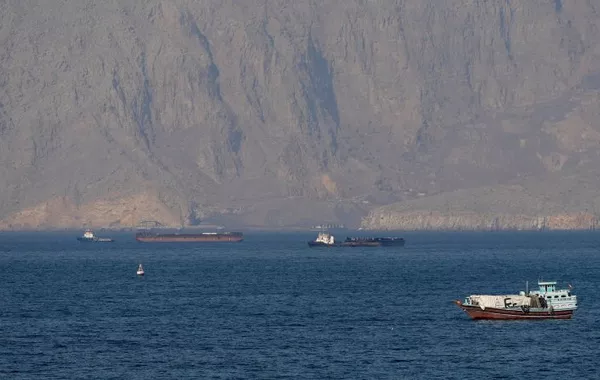
There is also a Middle Eastern factor. Türkiye has influence in Syria, maintains contacts with different sides of regional conflicts and closely follows the situation around Iran. China, in turn, is interested in the stability of energy routes, including the Persian Gulf and the Strait of Hormuz. If the United States in 2026 is trying to maintain balance in the Middle East after a period of sharp escalation, Ankara and Beijing become not secondary players, but necessary participants in the larger game.
The factor of transport corridors is no less important. Türkiye is a key link between Europe, the Caucasus, Central Asia and the Middle East. China, meanwhile, remains the main driver of Eurasian logistics and one of the largest players in global trade. If Washington wants to compete with Beijing not only through tariffs and sanctions, but also through infrastructure, routes and investment, it will have to work more actively with countries located at the intersection of these corridors. In this sense, Türkiye is becoming not just a NATO ally, but a gateway to a broader Eurasian strategy.
A visit to Türkiye could strengthen the military and political dimension of U.S. strategy. A visit to China could strengthen the economic and technological dimension. Together, they show that the United States can no longer manage the global system only through old institutions and familiar alliances. It has to speak with those who control real levers of influence: straits, markets, raw materials, production, regional conflicts and diplomatic channels.
That is why 2026 could become a turning point. If Trump’s trips result in concrete agreements, U.S. foreign policy will become even more transactional and less ideological. If they lead to conflict or disappointment, they will reveal the limits of personal deal-making diplomacy. But the very choice of destinations - Türkiye and China - already says the main thing: Washington recognizes that the new world order is being shaped not only in Brussels, London or Washington. It is also being shaped in Ankara and Beijing.