US-Armenian Nuclear Deal Has Russia Pressing Panic Button
Armenia’s growing nuclear cooperation with the US is triggering alarm in Moscow, underscoring intensifying geopolitical competition in the South Caucasus. Eurasianet features that the emerging partnership signals Armenia’s efforts to diversify its energy and security ties beyond Russia, challenging Moscow’s long-standing dominance in the country’s nuclear and strategic sectors.
During the Cold War, the Kremlin worried about the threat posed by American nuclear missiles. Now, Russian leaders seem panicked at the thought of an American nuclear reactor at their doorstep, The Caspian Post republishes the article.
Since the United States and Armenia signed a nuclear cooperation deal on February 9 during Vice President JD Vance’s visit to Yerevan, the Kremlin has seemingly gone to a civilian equivalent of DEFCON 3 with an wide-ranging effort to scuttle the construction of a US-designed nuclear plant on Armenian soil. In addition to media brickbats to discredit US reliability, the Kremlin is offering lots of economic incentives to encourage Armenian leaders to remain loyal to Russian nuclear technology.
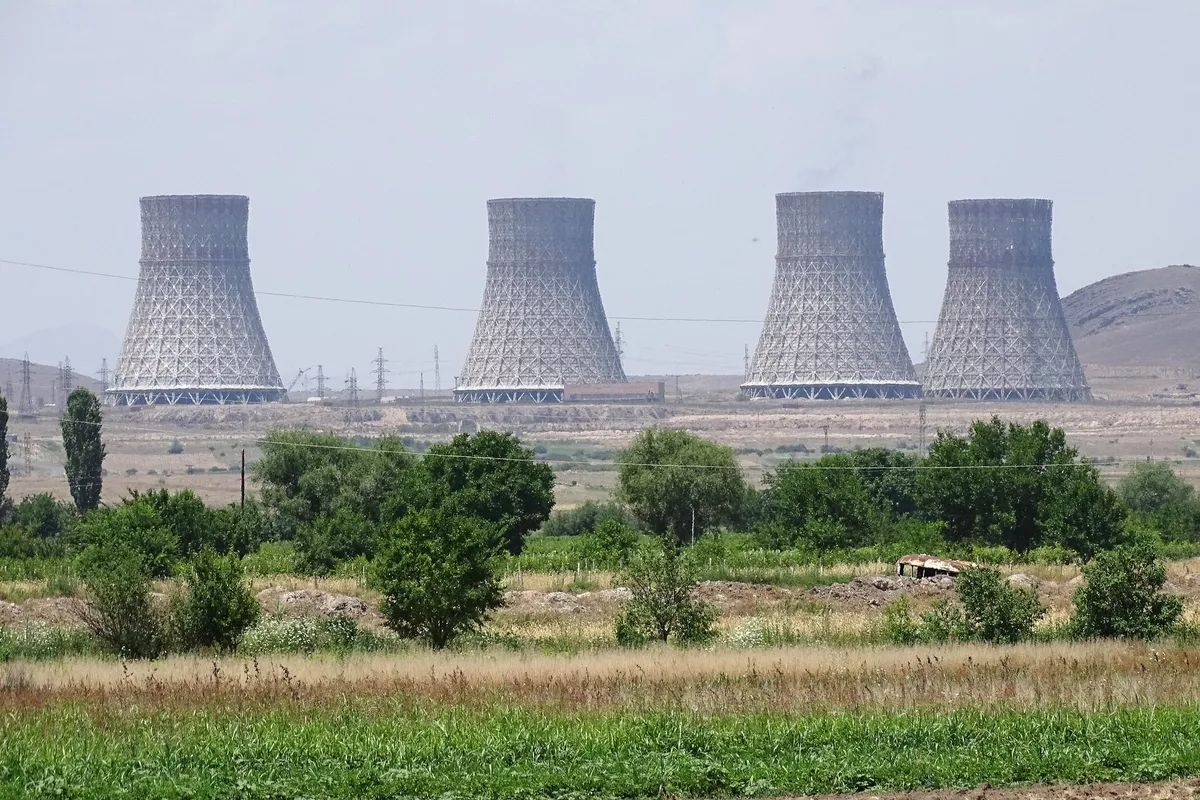
While the Armenian government has not awarded a contract to replace the aging Metsamor nuclear facility, multiple signs suggest that Prime Minister Nikol Pashinyan’s government heavily favors an American solution as part of a broader diplomatic realignment designed to reduce Russia’s economic influence over Armenia. Prior to signing the bilateral nuclear cooperation deal, Armenian officials disclosed that the country’s next nuclear plant would have a modular design. The US is seen as a global leader in modular nuclear technology.
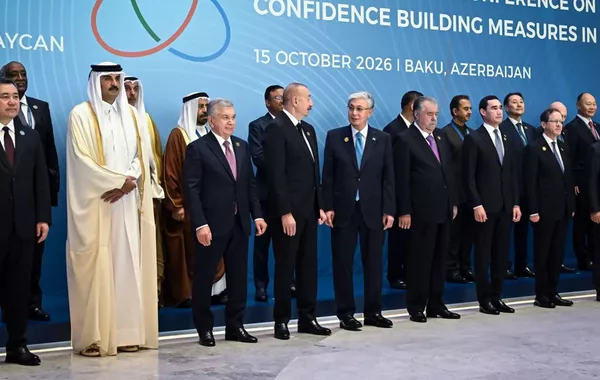
Beyond Armenia, the Trump administration is making a push to expand into what has traditionally been Russia’s nuclear market in Eurasia. Azerbaijan has committed to exploring nuclear energy cooperation as part of a strategic partnership agreement signed on February 10. And late last December, Kazakhstan indicated an interest in exploring American modular nuclear technology.
The shrill, multifaceted reaction by Russia to US-Armenian nuclear deal indicates that the Kremlin is alarmed about its teetering position in the regional atomic energy market. Moscow’s concerns are not only driven by geopolitics; financial considerations are another major factor. Rosatom, Russia’s state-controlled nuclear entity, is a cash cow for the Kremlin, generating desperately needed revenue to maintain the Ukraine war effort.
Russia is pursuing a variety of lines of attack. Kremlin spokesman Dmitry Peskov suggested that the lack of experience of US nuclear energy companies operating in Eurasia would mean that an American-built reactor would take longer and cost more than any plant built by Rosatom. “Russia is capable of providing better quality for many years to come at a lower cost,” he claimed during a February 11 press briefing.
The following day, Russian Foreign Ministry spokeswoman Maria Zakharova heaped scorn on American nuclear modular technology, hinting that it is untested and thus dangerous.
“The choice of American technology truly raises questions,” she stated at a press briefing. “The small nuclear power plants … proposed by Washington are not only not found in the US itself, but they don’t even exist - they exist only on paper.”
Armenia “will essentially be used as a testing ground for truly unproven American technologies,” she continued, adding that the cost of an American modular reactor “could be significantly higher than the estimates featured in the ‘advertising brochures.’”
After slinging arrows at the United States, Zakharova attempted to blow some kisses to Pashinyan’s government. “Given the nature of bilateral relations between our countries, we were prepared to develop preferential financial models,” she said. “All proposals remain on the table.”
In addition to offering a sweetheart deal for the next nuclear plant, Russia is pitching substantial assistance to Yerevan to improve the Armenian agricultural sector and restore the country‘s rail network.
“Based on friendly and fraternal feelings for the people of Armenia, the Russian Federation has decided to begin substantive negotiations on the restoration of two sections of Armenian railways, which will ensure their connection with the railways of the Republic of Azerbaijan near the town of Yeraskh, as well as with the railways of the Republic of Türkiye near the settlement of Akhuryan,” the Interfax news agency quoted Russian Deputy Prime Minister Alexei Overchuk as saying.