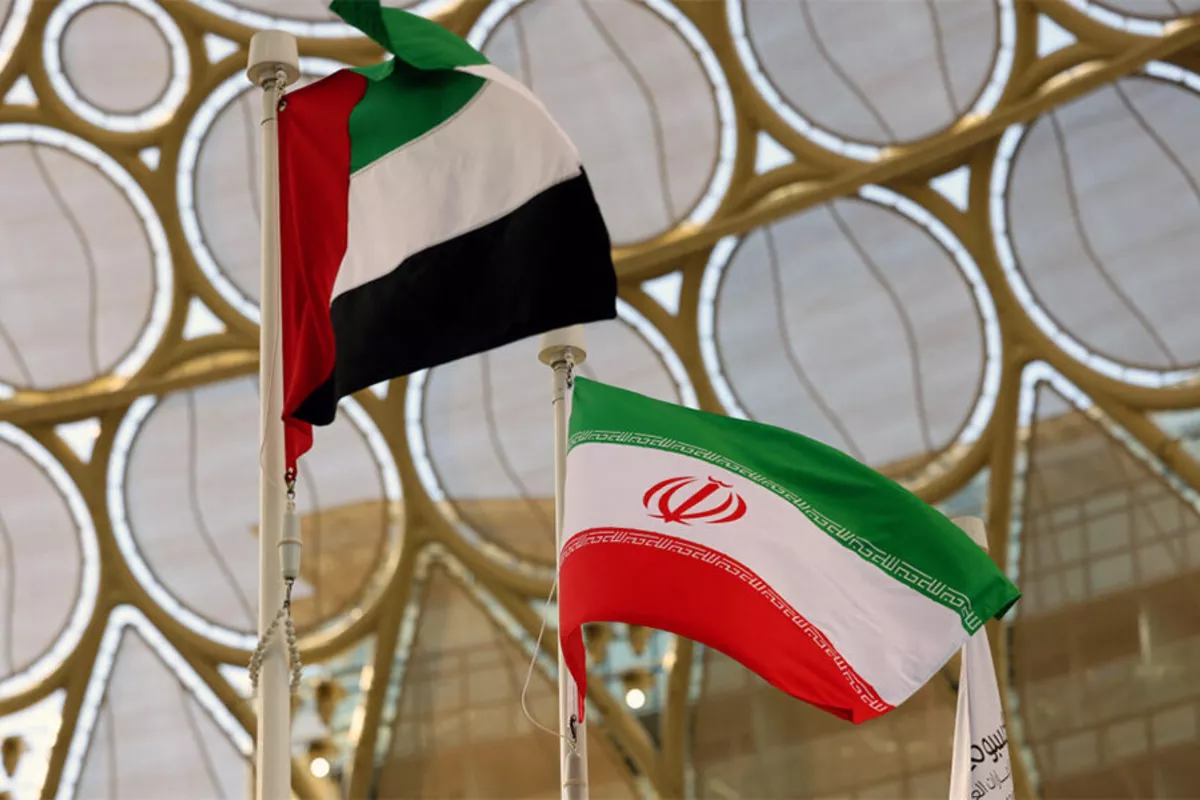
The Middle East hardly needs another flashpoint, yet one more familiar conflict is quietly heating up - this time between Iran and the United Arab Emirates. What might appear to be a dispute over three small islands in the Persian Gulf is, in reality, a collision of historical memories, national pride, and clashing regional strategies. And once again, the rhetoric emerging from Tehran shows just how raw and unresolved some of these old issues remain.
Earlier this week, Ali Akbar Velayati, the senior adviser to Iran’s Supreme Leader on international affairs, issued a forceful message accusing the UAE of making “baseless colonial claims” to the islands of Greater Tunb, Lesser Tunb, and Abu Musa. His statement, published by Mehr and widely shared across Iranian media, went far beyond routine diplomatic posturing. It was an indictment of the UAE’s foreign policy, its role in regional conflicts, and, implicitly, its strategic alignment with the United States.
Velayati questioned the UAE’s involvement in Yemen, suggested that Abu Dhabi is pursuing maritime expansion on behalf of Washington, accused it of occupying Socotra, and even implied that the UAE is helping fragment Sudan. His warning that Iran’s “patience is not unlimited” was clearly intended to elevate the stakes.
This is not the first time the islands have resurfaced as a symbol of geopolitical tension. But the timing, tone, and broader regional environment make this flare-up more revealing than usual. At its core, this is not just a legal dispute over ownership - it is a window into how both countries see themselves in a rapidly changing Middle East.
The Islamic Republic views the Persian Gulf as its natural sphere of influence, a continuation of a historical legacy stretching back to the era of the shahs. Even before the 1979 revolution, Mohammad Reza Pahlavi openly referred to himself as the “policeman of the Gulf.” Protecting the islands, therefore, is not only about geography - it is about preserving the narrative of Iran as a regional power capable of shaping its environment. Tehran’s political identity has always blended nationalism with revolutionary ideology, and territorial claims sit precisely at that intersection.
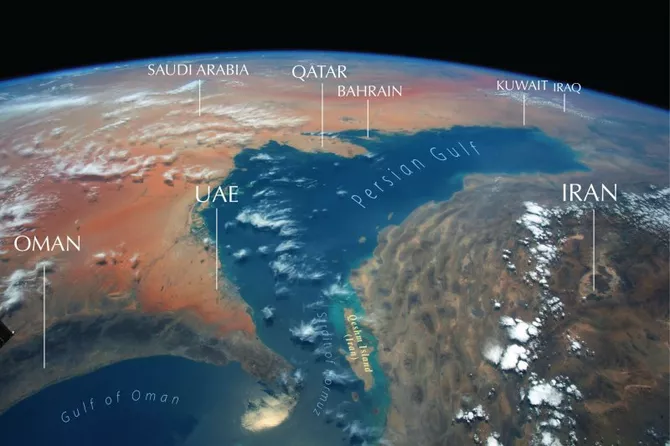
Photo credit: Nations Online Project
Abu Dhabi sees itself as a modern, sovereign, assertive state - one that refuses to accept regional hierarchies inherited from the 1970s. Its leaders do not want to be treated as junior players in a geopolitical system dominated by larger neighbors. The islands represent a historical grievance but also a marker of national dignity. In a region where symbolism matters almost as much as military power, the UAE insists on its version of history - one rooted in Arab claims, pre-1971 administrative arrangements, and the belief that the islands were unjustly taken by Iran during a moment of geopolitical vacuum as Britain withdrew “East of Suez.”
Those competing narratives would be difficult enough even in quiet times. But the Middle East today is anything but quiet.
Iran is embroiled in a multifront confrontation with Israel, facing economic pressure from U.S. sanctions, internal political discontent, and an increasingly assertive group of Arab neighbors. Opening up another front, even rhetorically, risks stretching its already thin resources and isolating it further.
Photo credit: ifpnews.com
The UAE, meanwhile, has transformed itself into a regional pivot: wealthy, globally integrated, diplomatically agile, and increasingly confident in projecting its interests abroad. It has built strong ties with the West, normalized relations with Israel, invested heavily across Africa and Asia, and positioned itself as a key node in global trade and energy flows.
In this context, the islands dispute becomes more than a relic of the past - it becomes a test of how two very different models of statehood coexist on opposite sides of the Gulf.
What’s remarkable is that despite Velayati’s heated accusations, most analysts agree that neither side wants escalation. Iran understands that military confrontation with a U.S.-aligned Gulf state could trigger consequences far beyond the islands themselves. And the UAE, prosperous and stable, has no interest in jeopardizing decades of economic progress by challenging a larger, unpredictable neighbor militarily.
But the dispute still matters because it reveals how fragile the region remains.
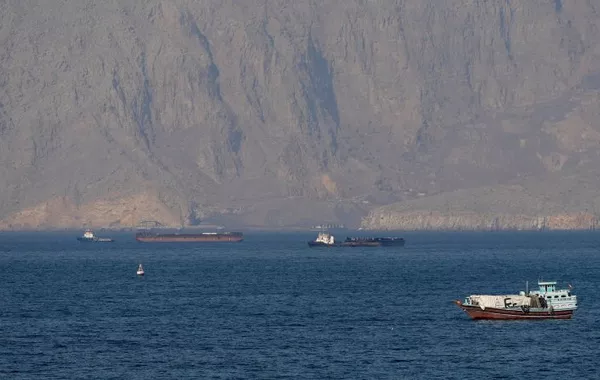
The islands sit at the mouth of the Strait of Hormuz, a chokepoint through which a third of the world’s oil trade flows. Anyone controlling the islands enjoys not just symbolic power but a potential tactical advantage. This is why the Shah of Iran seized them in 1971, and why the UAE has never stopped contesting that move.
Historical grievances also linger. The islands were intermittently inhabited by Persians and Arabs; they hosted fishermen, pearl divers, traders, and smugglers. Their sovereignty was ambiguous long before the modern states of the Gulf existed. But ambiguity breeds conflict, and when the British withdrew, the vacuum was filled by force, shaping the narrative for generations to come.
After the 1990-1991 Gulf War, the UAE hoped Iran might soften its stance. Instead, President Rafsanjani famously declared that the islands would return to the UAE only “across a sea of blood.” That statement still defines Emirati perceptions of Iran today.
Yet perhaps the most revealing dimension of the current dispute is this: the UAE has turned itself into a model of economic success, technological innovation, and global connectivity; Iran, despite its vast natural wealth, including the offshore resources near the disputed islands, has failed to transform its assets into prosperity.
The contrast is glaring. And that may explain why Tehran’s rhetoric is so sharp: it is easier to threaten, blame, and revive historical grievances than to explain why one of the most resource-rich countries in the Middle East struggles to deliver what its neighbors achieve.
AA photo
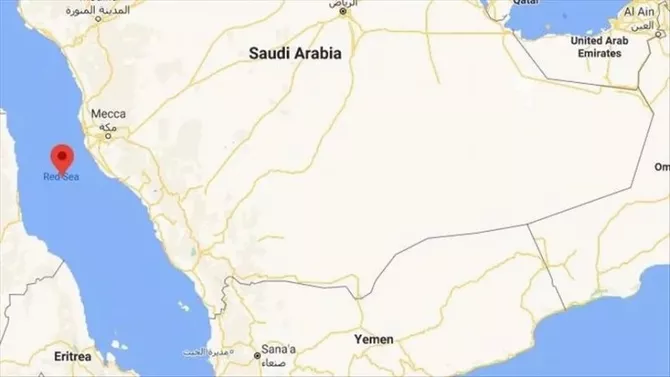
This is not to say the UAE is flawless. Its interventions in Yemen, its ambitions in the Red Sea, and its expanding geopolitical footprint have generated controversy. But its success at building stability and prosperity for its population is undeniable, and it stands in stark contrast to Iran’s trajectory.
In the end, the dispute over three tiny islands is a reminder that history in the Middle East is never fully settled. Borders still echo with the legacies of colonial withdrawal, authoritarian ambition, and shifting geopolitical alignments. But it is also a reminder of something else: in today’s Middle East, power increasingly belongs not to those who invoke ancient maps or issue the harshest warnings, but to those who build a future their citizens want to defend.
The UAE has done so. Iran still could, if it chooses a path that looks beyond threats and begins, finally, to look inward.
By Tural Heybatov