Why Türkiye is the Cornerstone of the EU's Geopolitical Compass?
The discussions at the Munich Security Conference in mid-February made it very clear that the strategic environment for global politics has changed fundamentally as a result of geopolitical power shifts.
The war on Ukraine that Russian President Vladimir Putin started is still not over, even after four years. In the Middle East, a new balance of power is emerging in the wake of Israel's massive military attacks and the ensuing regional escalation.
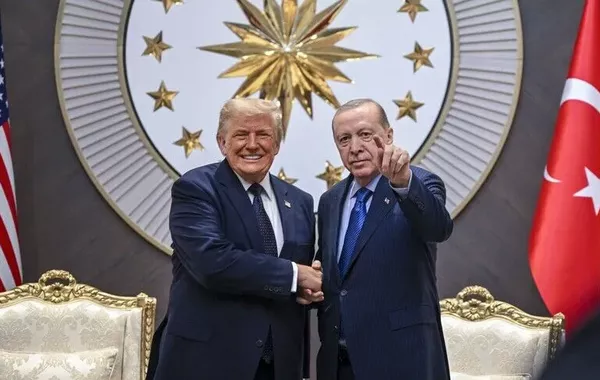
Under President Donald Trump, the US has embarked on a course that is bringing about a number of changes in its relations with allies and competitors: a protectionist tariff policy that hinders free global trade, massive pressure on NATO allies to increase their defense spending and take on more responsibility, and global interventions aimed at regime change - as in Venezuela - while containing the Iranian threat and strengthening Israel and Saudi Arabia in their region.
The ice age in relations between the US and Russia is over, and it remains unclear to what extent an agreement between the two countries on the Ukraine issue will affect the future state of the North Atlantic Alliance and thus also the relationship between America and the EU.
All this has consequences for bilateral relations with the US, for the North Atlantic Alliance, and for the EU. It also changes Türkiye's role not only in the Eastern Mediterranean region but also within the North Atlantic Alliance and in its relations with the EU.
Europe's Strategic Dilemma
However, a genuine reassessment of this role will only be possible once the EU itself has answered some fundamental questions. These include, in particular, the question of Europe's future defense and thus also its relationship with the North Atlantic Alliance; the question of enlargement, which, following the end of the war in Ukraine, will be urgently addressed with regard to the integration of Ukraine and the aspirations of the Western Balkan states to join the union; and, following on from the first two topics, the question of whether the existing EU treaty is sufficient to respond to the new challenges.
Europe’s strategic uncertainty is perhaps best illustrated by the proposal put forward in January by EU Defense Commissioner Andrius Kubilius, who proposed the establishment of a standing European force of 100,000 soldiers, citing the US' reduction of its military presence in Europe as justification. Kubilius rightly asked how Europe would defend itself in an emergency after the withdrawal of US troops, but this question remains unanswered by EU member states, as does the question of the future shape of the EU. Europe will have to change its understanding of modern warfare, but above all, it must make fundamental changes to the structures of European security and defense policy, thereby placing the partnership between the EU and the North Atlantic Alliance on a new footing.
The progress described in the enlargement package in November 2025 mentions Türkiye in the same breath as Montenegro, Albania, Ukraine, the Republic of Moldova, Serbia, North Macedonia, Bosnia and Herzegovina, Kosovo, and Georgia. This list alone shows how different the respective stages of accession preparations are in the individual countries and how complex the respective geopolitical and national situations are.
The report, which still refers to the conclusions of the European Council of 2024, identifies the resumption of the Cyprus talks as an essential element of cooperation, but at the same time describes the lack of progress in the area of the rule of law as being ‘frozen at the 2018 level’. This view will no longer be tenable if the EU is to fulfil its role as a geopolitical actor in a future enlarged form. There is no time left to move along bureaucratic lines if Europe wants to achieve the level of ambition described in the Geopolitical Compass.
Türkiye's Growing Geostrategy
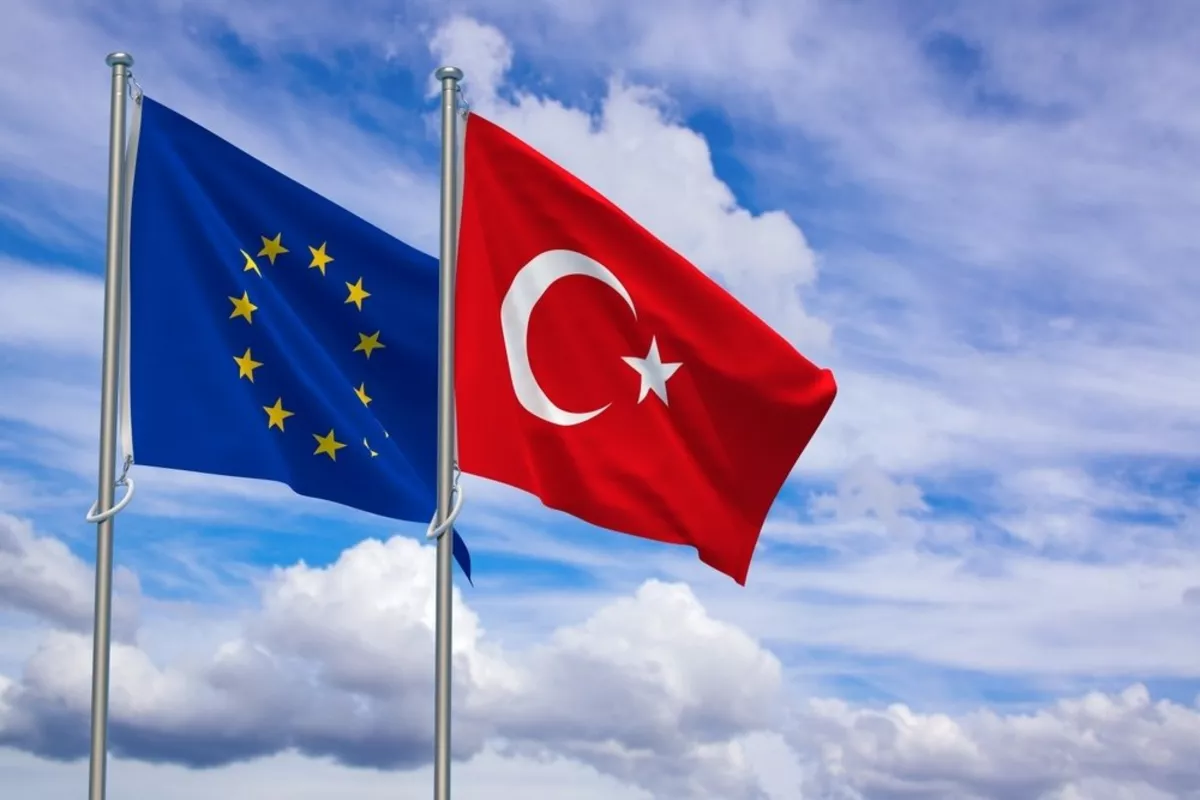
The future relationship between the EU and Türkiye has two sides. On the one hand, it depends on the EU’s ability to find a new role. This will only succeed with fundamental reforms and a new approach to enlargement policy. The current lack of agreement among member states on fundamental issues of European policy is the biggest handicap in this regard. In the past, Türkiye has been able to use changes in the basic geopolitical constellations - in 1989/90 and 2015 - to strengthen its political weight. Today, it plays a much greater role in the region and has thus further strengthened its weight within the North Atlantic Alliance. To the extent that American unpredictability and agreements between the US and Russia at the expense of third parties weaken the North Atlantic Alliance in its current constellation and transform it into a flexible, US-driven security framework, this will not be without consequences for Türkiye's weight in NATO.
Given the upcoming diplomatic negotiations between Russia and the US over Ukraine’s territorial order, the EU and NATO must coordinate closely with Türkiye. Such cooperation is essential to preserve transatlantic integrity and ensure that the future relationship between the alliance and the union remains resilient and forward-looking. Only a Europe that achieves a genuine realignment on defense issues will be able to prevent the balance of power in tomorrow's world from shifting further towards the Asia-Pacific region. Türkiye's geostrategic importance will continue to grow, but it will only be possible to exploit this to Türkiye's full advantage if the relationship between the EU and Türkiye can be placed on a new footing. In this context, the question of membership will no longer be the decisive issue.
Find the original article here