The European Commission’s approval of SOCAR’s acquisition of 99.82% of Italiana Petroli (IP) from API Holding is not merely a regulatory formality. It is a geopolitical signal. It reflects a deeper transformation in Azerbaijan’s energy strategy - one that moves the country from the periphery of Europe’s energy system to its structural core.
For years, Azerbaijan has been perceived primarily as a crude oil supplier. The model was straightforward: extract, export, and allow downstream profits to accumulate elsewhere. The real margins - refining, logistics, and retail - remained in the hands of European operators. That model is now changing.
The deal, signed on September 23, 2025, and valued, according to Reuters, at approximately €2.5 billion, with total investments potentially reaching €3-3.5 billion, represents far more than a purchase of assets. It is the acquisition of an entire downstream ecosystem: two refineries with a combined processing capacity of around 200,000 barrels per day, more than 4,500 fuel stations, storage facilities, and a nationwide logistics network. In 2024 alone, IP sold approximately 15 million tons of petroleum products and generated nearly €500 million in profit.
This is not expansion. This is repositioning.
Antitrust concerns were always likely to be limited. SOCAR does not dominate upstream or downstream markets in the EU. Italy, meanwhile, is already Azerbaijan’s largest oil customer, accounting for more than half of Azerbaijan’s oil exports in the first months of the current year. Around 7% of IP’s crude purchases were sourced from Azerbaijani oil. In practical terms, the deal formalizes and vertically integrates an existing energy relationship.
What changes now is control over the value chain. Production, transportation, refining, and retail can increasingly operate within one coordinated framework. This enhances resilience, reduces exposure to market volatility, and stabilizes revenue flows. SOCAR has already demonstrated such an integrated model in Türkiye and Georgia. However, Italy represents a different level altogether - the first large-scale entry of an Azerbaijani state company into European Union infrastructure. The political dimension is impossible to ignore.
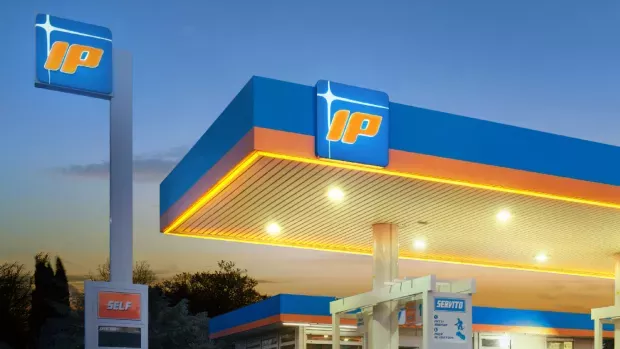
photo: Reuters
Italy is one of Azerbaijan’s key partners within the European Union. By acquiring strategic refining and retail assets, Azerbaijan is no longer just a supplier - it becomes a stakeholder in Italy’s energy security. This deepens interdependence at a moment when Europe is actively seeking alternatives to Russian energy supplies.
It is also worth noting that Rome reportedly sought guarantees prior to the transaction’s completion. These included commitments to maintain fuel supplies, potentially up to 10 million tons of crude per year via SOCAR Trading, as well as assurances regarding employment for more than 16,000 workers and compliance with environmental standards. Discussions reportedly included the possibility of a “golden share” mechanism for strategic assets. The European Commission’s approval clears the EU-level hurdle, but national oversight remains intact.
The broader context matters. Since the imposition of sanctions on Russia, European refineries that previously relied on Russian Urals crude have faced structural disruption. Many were not designed for alternative feedstocks and have required new supply chains and modernization.
Italiana Petroli has not been immune to these pressures. Analysts suggest that the company’s difficulties following the withdrawal of Russian crude supplies may have been a decisive factor in its sale.
From this perspective, SOCAR’s entry is not opportunistic - it is structural. Europe needs reliable suppliers capable of guaranteeing stable flows. Azerbaijan, with established export infrastructure and growing political capital in Brussels, positions itself as exactly that.
Domestically, however, expectations should be realistic. The acquisition will not lower gasoline prices in Azerbaijan. The immediate internal economic impact will be limited. But the strategic impact is substantial.
First, Azerbaijan reduces its dependence on raw commodity exports. Downstream participation captures higher margins and provides revenue stability. Second, the country strengthens its currency inflows through diversified product exports. Third, Baku enhances its negotiating leverage in energy diplomacy with the European Union.
The move may also be only the beginning. SOCAR has expressed interest in refining assets in the Balkans, including the Burgas refinery in Bulgaria, which Russia’s sanctioned LUKOIL has sought to divest. If such ambitions materialize, Azerbaijan’s role in Southeastern Europe’s energy architecture could expand further.
Some observers have questioned how the European Commission approved a transaction that effectively transfers parts of Italy’s fuel and energy infrastructure into Azerbaijani ownership. But this framing misses the larger picture. Europe is not surrendering infrastructure - it is diversifying partnerships.
photo: SOCAR
For Azerbaijan, this is a strategic bet: to evolve from a resource exporter into an infrastructure owner. In a world of supply shocks, sanctions, and geopolitical fragmentation, ownership matters. Infrastructure matters. Control over refining and distribution matters.
Italiana Petroli, a family-owned company founded more than 90 years ago, operates refineries in Ancona and Trecate (SARPOM), holds contractual rights related to the Alma refinery in Ravenna, produces aviation fuel and bitumen, and manages a nationwide network of 4,500 fuel stations. Integrating such assets into SOCAR’s portfolio represents a qualitative shift.
Whatever the original motivations behind IP’s sale, whether modernization costs, taxation pressures, or structural supply challenges, the outcome is clear. For the first time, an Azerbaijani company owns large-scale energy infrastructure inside a European Union member state.
This is not merely a business transaction.
It is Azerbaijan entering the European energy game as a long-term player - no longer at the margins, but at the table.
By Tural Heybatov