During the high-level event in Brussels marking the launch of the Connectivity Agenda platform, the European Commission, the European Investment Bank (EIB), and Armenia's Ministry of Territorial Administration and Infrastructure signed a joint memorandum of understanding, officially launching advisory support under the EPIC (Eastern Partnership Investment in Connectivity) initiative.
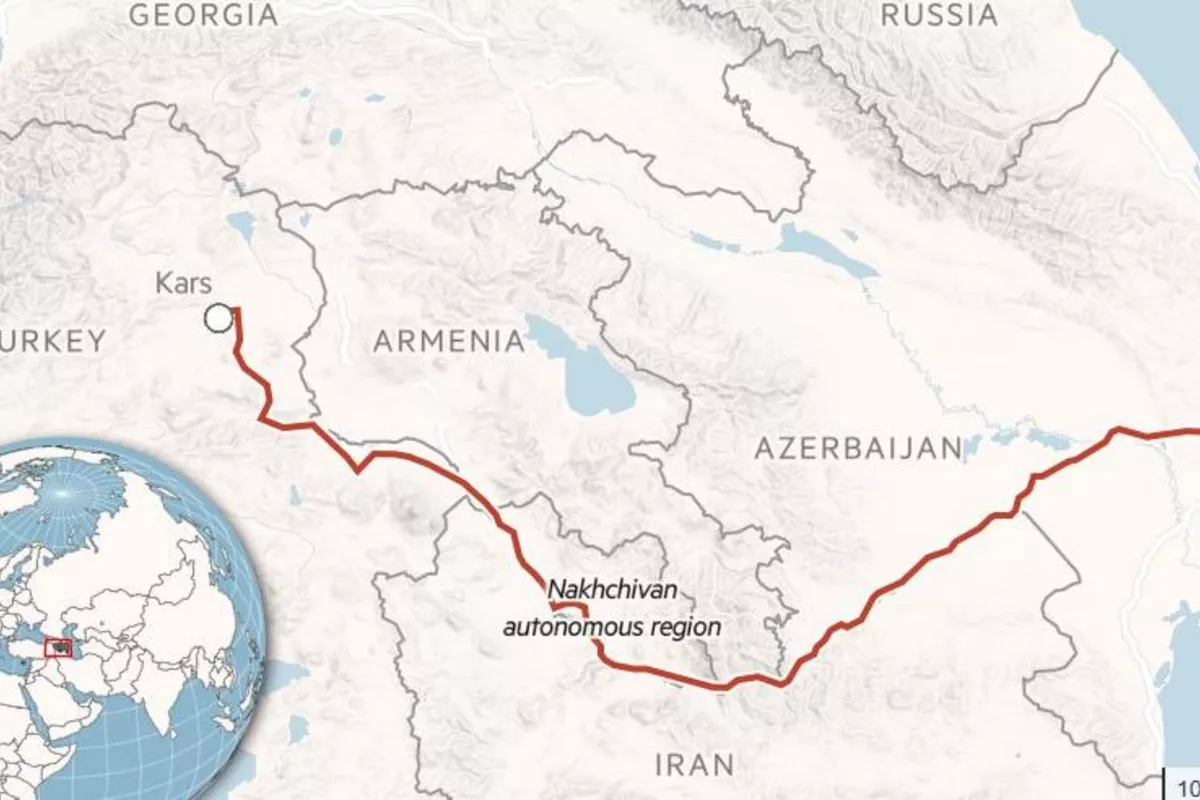
According to a statement issued by Armenia's Ministry of Territorial Administration and Infrastructure and cited by Armenian media, the initiative will support preparatory work on the strategic Akhurik-Kayan and Margara-Kayan road corridors, which are intended to connect Armenia's border crossing points with the country's national road network.
For now, however, no investment commitments have been announced. This is the first project of its kind that the European Union is considering financing in Armenia, and European partners first intend to assess its feasibility. At the initial stage, the European Investment Bank will provide technical expertise and advisory services to prepare the necessary studies and practical solutions.
Importantly, this cooperation concerns road infrastructure rather than railways. Armenia's railway network remains under the concessionary management of Russian Railways (RZD), meaning Yerevan cannot conclude agreements concerning rail infrastructure until its concession agreement with RZD is terminated.
The Akhurik-Kayan project envisages the design and modernisation of a 212-kilometre highway connecting Armenia's border checkpoints with Azerbaijan (Kayan) and Türkiye (Akhurik) to the country's internal road network as part of the government's "Crossroads of Peace" initiative. Likewise, the Margara-Kayan project, spanning 258 kilometres, aims to link Armenia's borders with neighbouring countries through a modernised road system.
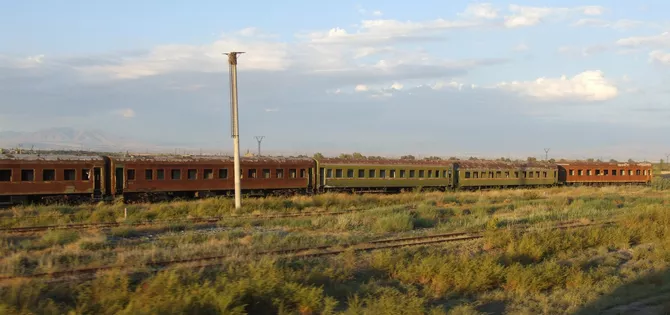
Source: eurasianet
Notably, just before signing the memorandum with its European partners, Armenia's Minister of Territorial Administration and Infrastructure David Khudatyan met Turkish Minister of Transport and Infrastructure Abdulkadir Uraloğlu to discuss road and railway connectivity. According to Armenian media, the talks focused on progress towards restoring road and rail links. In effect, Armenia sought additional confirmation from Türkiye regarding its willingness to reopen the border.
The Armenian side appears optimistic, expecting the border with Türkiye to reopen in the foreseeable future. Earlier this year, officials suggested this would happen "soon", later revising the timeline to "after the elections". This week, Armenian Deputy Foreign Minister Vahan Kostanyan presented a more realistic target date of 2030.
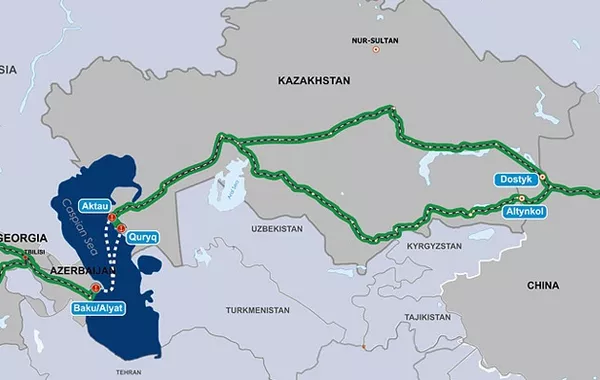
Speaking in Brussels, Kostanyan said Armenia expects its borders and transport links with Türkiye and Azerbaijan to be open by 2030, allowing the South Caucasus to become a key transport bridge between Europe and Central Asia. At the same time, he did not rule out an earlier reopening, saying, according to Armenian media, that "Yerevan continues working on regional transport projects and sees signs of greater openness from neighbouring countries."
Armenia is also reportedly completing the legal preparations, together with its American partners, for launching the TRIPP project. At the same time, work is underway on a feasibility study for the railway component of the project.
"Armenia intends to ensure the unhindered movement of cargo through its section of the Middle Corridor," Kostanyan said.
Azerbaijan, however, maintains that the full reopening of borders and restoration of transport links will only become possible after the conclusion of a comprehensive peace agreement. Achieving this, Baku argues, requires Armenia to take several politically difficult but necessary steps.
Armenia may build roads, but those roads will ultimately end at closed borders. Removing political and diplomatic obstacles is often considerably more difficult than constructing a 250-kilometre highway. In this context, the 2030 timeframe appears realistic.
Armenia has long sought to establish a functional transport network, something it has historically lacked. During the Karabakh conflict, Yerevan attempted to attract investors for transport infrastructure, but few were willing to finance roads leading to closed borders with Azerbaijan and Türkiye.
Following the Second Karabakh War, amid discussions on border delimitation and the possible reopening of transport routes, Prime Minister Nikol Pashinyan introduced the "Crossroads of Peace" initiative, envisioning Armenia as a regional transit hub. With the conflict largely concluded, Armenia gained opportunities that had previously seemed unattainable.
Despite the positive aspect of greater EU involvement in the Middle Corridor, the transport project outlined in the memorandum is arguably not the most effective solution for regional connectivity. Critics view it as another attempt to diminish the strategic importance of the Zangezur Corridor, also referred to in this context as TRIPP.
Virtually all of Armenia's prospective transit routes ultimately converge at the Azerbaijani border. Rebuilding roads without restoring their full Soviet-era routes offers limited practical value.
Previously, Pashinyan proposed three alternative transport routes connecting mainland Azerbaijan with the Nakhchivan Autonomous Republic instead of the route through Zangezur. However, all three alternatives were considered inefficient and unsuitable for large-scale international freight transport.
The difference is evident in the distances involved. The proposed TRIPP route is approximately 40 kilometres long, whereas the alternative route stretching from the border with Kalbajar to Yeraskh in Armenia's Ararat Province extends nearly 300 kilometres. The disparity is significant.
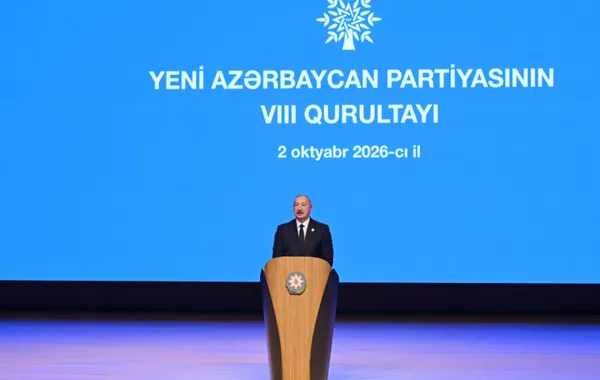
Azerbaijan has repeatedly rejected Armenia's proposed alternatives to the route through Meghri. President Ilham Aliyev described Yerevan's proposed transport route to Nakhchivan as impractical, accusing Armenia of attempting to manipulate the issue.
"The route they propose from mainland Azerbaijan to Nakhchivan is completely unsuitable for use. It would be impossible to operate year-round because of the harsh terrain and severe weather conditions," Aliyev said, adding that the most practical solution remains the Soviet-era route through Meghri.
Source: Trend
The European Union's willingness to engage in the development of the Middle Corridor is generally welcomed. However, for such involvement to genuinely strengthen regional connectivity, the projects must also reflect Azerbaijan's transport interests. Otherwise, there is a risk that the planned infrastructure in Armenia will become little more than a domestic road network with limited international relevance.
Baku continues to emphasise its support for TRIPP, arguing that overlooking this reality could result in investments that fail to deliver meaningful regional transit benefits.
Although Armenian officials regularly state that construction of the so-called "Trump Route" is nearing launch in cooperation with American partners, little tangible progress has been observed. Against this backdrop, Armenia's growing cooperation with the European Union under the "Crossroads of Peace" initiative suggests that Yerevan has not abandoned its intention of postponing the implementation of the Zangezur Corridor.
Nevertheless, there are reasons for cautious optimism.
Earlier this year, Azerbaijan and the European Union discussed incorporating the Zangezur Corridor into the Trans-European Transport Network (TEN-T). The EU, Azerbaijan, and the European Investment Bank also agreed to begin preparing a feasibility study for the railway network of the Nakhchivan Autonomous Republic, which is expected to become part of the future TRIPP route.
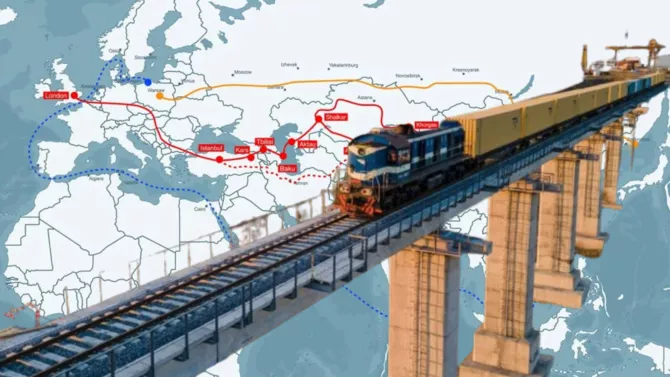
Moreover, the European Union is currently preparing its transport infrastructure for the planned expansion of the Trans-Caspian International Transport Route (Middle Corridor) by 2030, according to recent remarks by European Commission spokesperson Bakran Marčič.
For now, however, little has been heard regarding the practical implementation of those earlier agreements.
By Tural Heybatov