Zelenskyy’s Gabala Visit Upgrades Ukraine–Azerbaijan Bilateral Relations
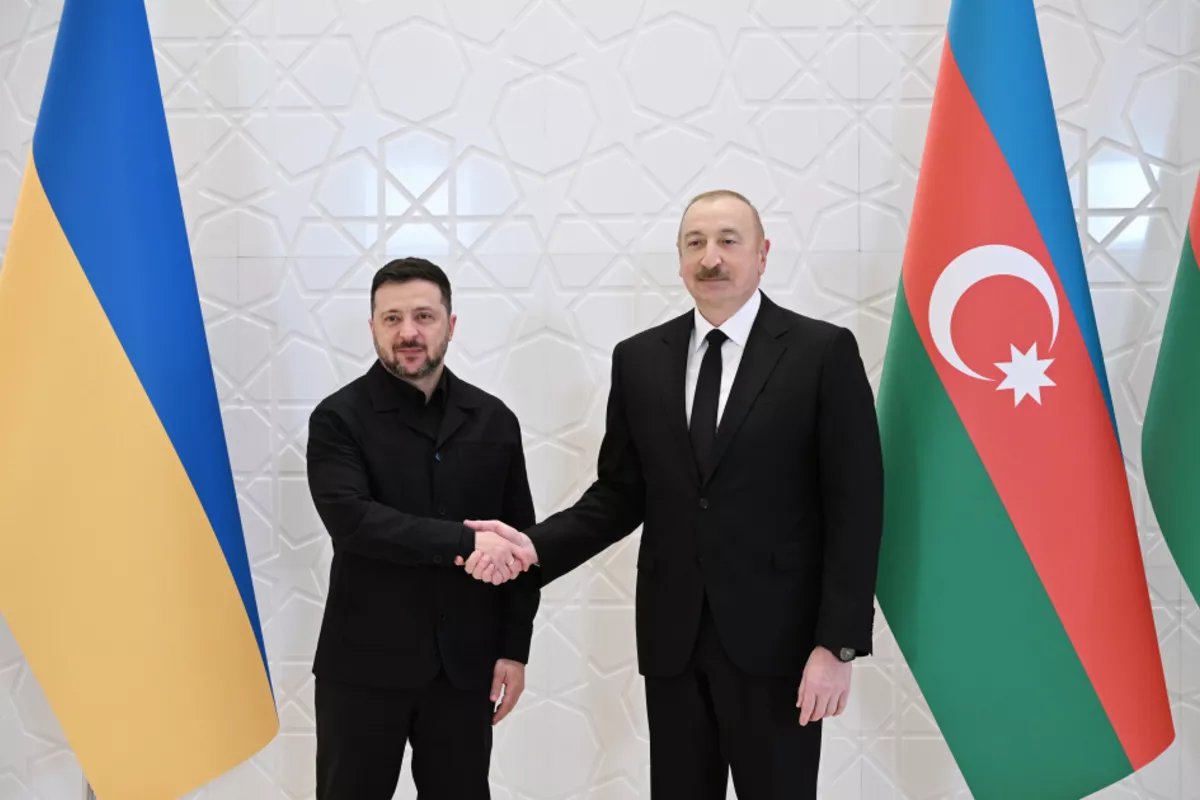
On April 25, Ukrainian President Volodymyr Zelenskyy visited Azerbaijan and held substantive talks with Azerbaijani President Ilham Aliyev in the northern city of Gabala. The meeting was the seventh between the two leaders in more than four years, but it was the first to produce a package of six bilateral agreements.
Documents were signed during the visit, spanning defense and security cooperation, energy, trade, and humanitarian engagement. Zelenskyy was accompanied by Ukrainian Foreign Minister Andrii Sybiha, who held parallel talks with his Azerbaijani counterpart Jeyhun Bayramov.
The visit elevated bilateral ties in the security and military-industrial spheres. At the joint press conference, Zelenskyy highlighted the signing of documents on the joint development of the two countries’ defense industries and emphasized that security was the top priority among the six agreements. For the first time, the Ukrainian president publicly confirmed that Ukrainian military experts had already been deployed to Azerbaijan to share their experience in defending against drone and missile attacks and protecting critical infrastructure.
The cooperation announced in Gabala was not just an aspirational document. It reflected operational engagement already underway. The military-industrial dimension acquires special significance in the context of the Iranian drone attacks against Azerbaijan’s Nakhchivan exclave on March 5. Few countries have comparable battle-tested expertise in countering Shahed-class loitering munitions and similar systems compared to Ukraine. It has refined doctrine, hardware, and electronic warfare techniques under sustained drone warfare, providing a model for how Azerbaijan can respond to similar threats.
Aliyev’s response framed the same agenda from Azerbaijan’s perspective. He stated that military-technical cooperation and the development of the military-industrial complex in both countries offer “significant prospects” for collaboration and that both sides discussed joint production opportunities at length. The Ukrainian side brings a defense ecosystem that has expanded dramatically under wartime conditions to joint production opportunities. According to Ukraine’s Defense Ministry, the country had fewer than ten specialized defense companies in 2022, but now has more than 500 dedicated to drone production. Output has risen from a few thousand units in 2022 to four million in 2025, with the 2026 target exceeding seven million. Kyiv has also reported intercepting around 90 percent of Russian Shahed-type drones at a fraction of the cost of Western air-defense missiles, an achievement that has turned Ukraine into a sought-after partner for Gulf and Middle Eastern states facing similar threats. The Gabala agreement with Azerbaijan is part of a broader Ukrainian strategy to transform Ukraine into a major security provider and military supplier. In mid-April, Zelenskyy had announced ten-year defense agreements with Saudi Arabia, the United Arab Emirates, and Qatar, and signaled that Kyiv was turning its attention to the Caucasus.
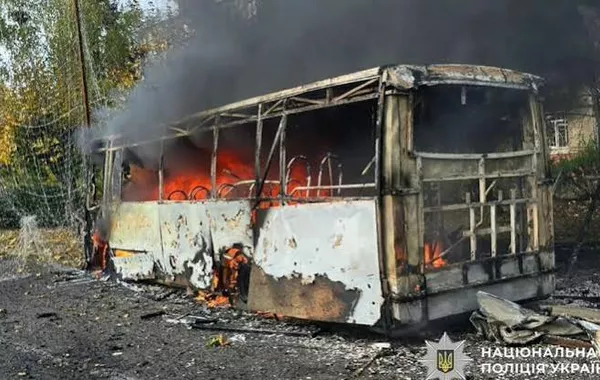
The energy and humanitarian dimensions of the Azerbaijan-Ukraine talks in Gabala, while less novel, complemented the newly expanded security cooperation. Zelenskyy thanked Aliyev for eleven packages of energy assistance provided to Ukraine since the start of the full-scale war, while Sybiha noted that since 2022, Azerbaijan’s humanitarian aid to Ukraine has exceeded $45 million, including high-capacity generators, transformers, and critical equipment that have helped sustain Ukraine’s energy grid under sustained Russian strikes. During the visit, Baku delivered five passenger buses to Ukrainian frontline communities. More than 500 Ukrainian children from war-affected regions have undergone rehabilitation in Azerbaijan, and the leaders agreed to expand cooperation in education, including hosting Azerbaijani students in Ukraine.
On the energy track, Aliyev highlighted that the State Oil Company of the Azerbaijan Republic (SOCAR) has been operating in the Ukrainian market for years and that “very good prospects” now exist for joint projects and investments. Bilateral trade has exceeded $500 million, and both presidents committed to expanding it further. The Gabala meeting also took place against the backdrop of a notable diplomatic win for Baku in Brussels. On April 22, five Azerbaijani tankers belonging to SOCAR and the State Shipping Company were removed from the European Union’s 20th sanctions package, after having been initially targeted for alleged links to Russia’s “shadow fleet.”
A central political element of the joint statement of the two leaders concerned mutual recognition of sovereignty and territorial integrity. Zelenskyy stated, “I thank Azerbaijan for its support of our sovereignty and territorial integrity. Without a doubt, Ukraine has always supported the territorial integrity and sovereignty of Azerbaijan”. Aliyev, for his part, recalled his January 2022 visit to Kyiv and announced that the next meeting of the Ukraine-Azerbaijan Intergovernmental Commission will be held in Ukraine.
On the diplomatic front, Zelenskyy used the meeting in Gabala to propose Azerbaijan as a venue for U.S.-Ukraine-Russia trilateral talks. He stated, “We are ready for negotiations in Azerbaijan … if Russia is ready for diplomacy,” adding that previous rounds had taken place in Türkiye and in Switzerland. This proposal positions Baku as a potential venue alongside Istanbul and Geneva for future negotiations-an achievement made possible by Baku’s multi-vector foreign policy and balanced relations with all major global powers, including Russia.
The Gabala summit thus marks a clear shift rather than a continuation of previous cooperation. By moving cooperation into joint defense production, formalizing the exchange of operational military expertise, and elevating Baku to the role of potential peace-process host, the visit institutionalizes a partnership previously more rhetorical than substantive. For Azerbaijan, it consolidates a foreign policy posture of strategic autonomy and middle-power positioning. For Ukraine, it secures a new partner in the South Caucasus.
See the original article here