President Ilham Aliyev’s Comments In His Interview With Euronews At The Davos Forum, Where He Voiced Concern Over Internal Instability In Iran, Offer A Key Insight Into Azerbaijan’s Evolving Security Doctrine.
His emphasis on the triad of stability, predictability, and peace reflects a rational-realist understanding of security, grounded not in ideological posturing but in strategic risk management and regional responsibility, The Caspian Post reports, citing Think Tank.
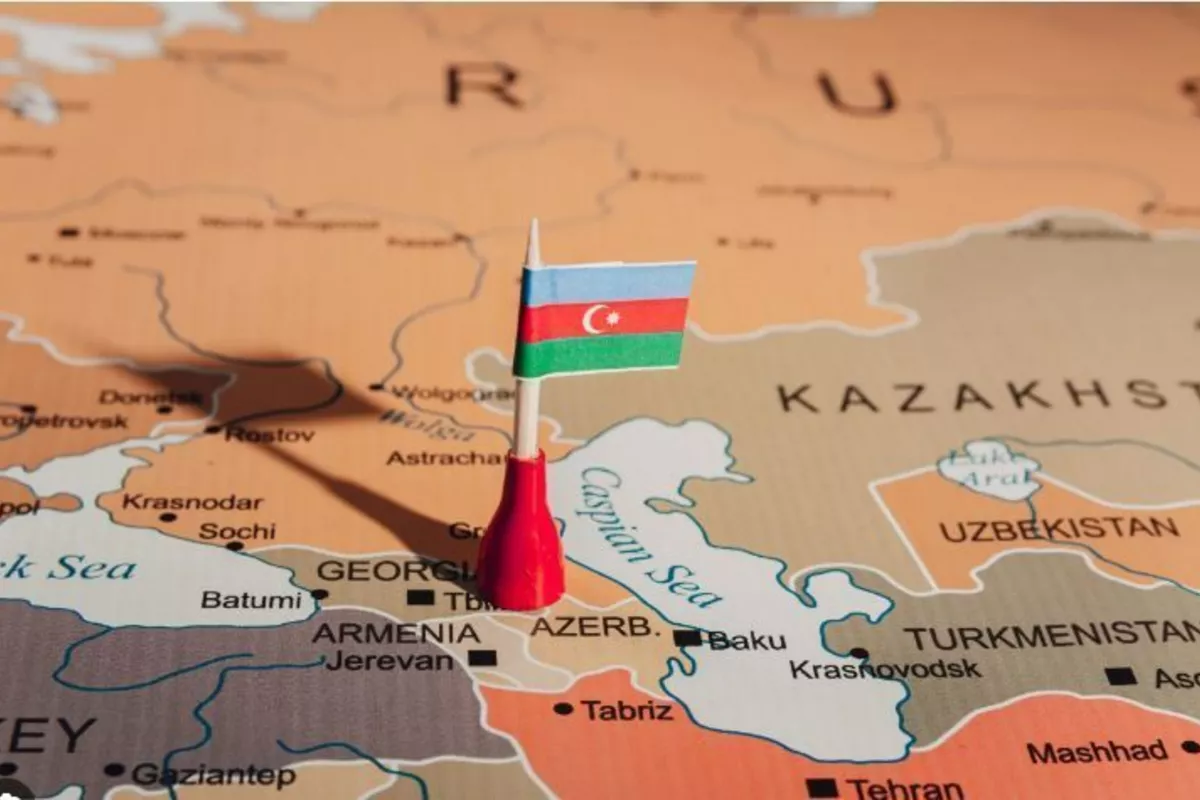
Iran occupies a pivotal geopolitical position at the crossroads of the South Caucasus, the Middle East, the Caspian basin, and Central Asia. It functions simultaneously as an energy hub, a transit corridor, a political influencer, and a security variable. Any shift in Iran’s internal dynamics inevitably projects outward, reshaping the regional security environment and triggering cascading effects across neighboring states. From this perspective, domestic turbulence in Iran is not merely a national issue but a systemic regional factor.
For Azerbaijan, the Iranian vector carries heightened sensitivity due to geographic proximity and infrastructural interdependence. A 765-kilometer shared border forms a dense zone of economic exchange, transportation connectivity, and social interaction. Strategic projects such as the North-South International Transport Corridor, cross-border logistics hubs, and future energy transit initiatives are directly affected by Iran’s internal stability. President Aliyev’s cautious rhetoric therefore signals not alarmism, but strategic foresight: regional stability is framed as an integral extension of national security planning.
This approach aligns closely with the logic of the “security dilemma.” Uncertainty, political fragmentation, or governance erosion in neighboring states tend to be interpreted as latent threats, encouraging preventive behavior and hedging strategies among adjacent actors. Azerbaijan, however, deliberately avoids escalation-driven postures. Instead, it prioritizes diplomatic balance, conflict containment, and the neutralization of systemic risks. Stability is not treated as a passive condition but as an actively cultivated strategic asset.
President Aliyev’s statement that Azerbaijan has “suffered from occupation and war, losing thousands of lives” carries deep strategic meaning beyond its emotional dimension. It represents a form of institutionalized historical memory that directly shapes political decision-making and national security culture. War experience functions as a cognitive framework through which risks are evaluated, costs are internalized, and long-term consequences are calculated.
The tangible socio-economic burdens of conflict - human losses, infrastructure destruction, humanitarian recovery, and fiscal strain - have transformed security thinking in Azerbaijan from reactive crisis management toward structured risk governance. This has contributed to the emergence of a strategic sequence centered on stability, reconstruction, and development. Security is no longer understood merely as territorial defense, but as the protection of societal resilience and economic continuity.
In this context, peace acquires a normative and strategic dimension simultaneously. It strengthens domestic legitimacy, reinforces Azerbaijan’s international credibility as a responsible stakeholder, and enhances its attractiveness as a reliable partner. From a liberal institutionalist perspective, a predictable security environment lowers investment risks, stabilizes energy supply chains, and improves the sustainability of regional trade corridors. Peace, therefore, is not idealism; it is a functional instrument of national competitiveness and institutional consolidation.
The coexistence of war memory and peace orientation creates a balanced strategic synthesis: heightened sensitivity to threats combined with a long-term commitment to institutional stability and cooperative engagement.
The deliberate emphasis on predictability reveals Azerbaijan’s commitment to strategic planning in an era characterized by fragmented geopolitics, intensified great-power competition, and declining global governance coherence. Under such conditions, the ability to shape a predictable regional environment becomes a proactive security objective rather than a passive expectation.
Baku’s core priority lies in transforming uncertainty into manageable risk. Azerbaijan actively contributes to the institutional architecture of regional stability through energy diplomacy, infrastructure connectivity, and multilateral engagement. The Southern Gas Corridor, diversification of export routes, and integration of Caspian energy markets into European supply chains serve not only commercial objectives but also geopolitical stabilization. Interdependence increases the cost of conflict and incentivizes rational behavior among regional stakeholders.
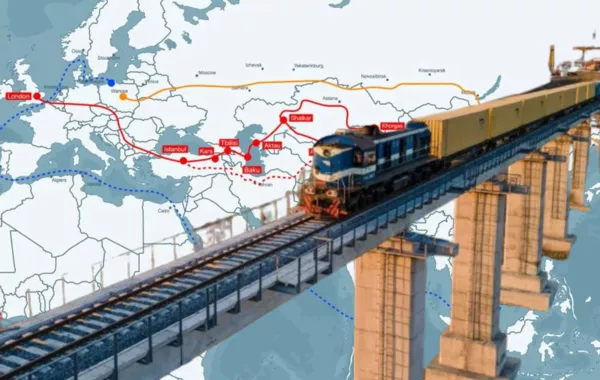
Transport and logistics connectivity further reinforce this logic. The Middle Corridor, East-West transit routes, and the North-South axis collectively position Azerbaijan as a strategic hub linking Eurasian markets. This connectivity embeds Azerbaijan within regional value chains and elevates its role as a stabilizing intermediary.
Multilateral diplomacy complements these material instruments. Balanced partnerships, pragmatic coalitions, and active participation in regional platforms expand Azerbaijan’s strategic maneuverability while reducing dependency risks. Predictability thus becomes both a political product and a security multiplier.
President Ilham Aliyev’s observations regarding Iran ultimately illuminate the structural pillars of Azerbaijan’s security doctrine.
First, regional stability constitutes a core component of national security architecture. Azerbaijan evaluates its security not in isolation, but through the continuity of geopolitical balance, transit reliability, and institutional interdependence.
Second, war experience reinforces strategic rationality and risk sensitivity in decision-making. Post-conflict realities encourage preventive behavior, cost-benefit calculation, and institutional discipline rather than emotional or reactive policy impulses.
Third, peace and predictability serve as indispensable foundations for sustainable economic growth and geopolitical consolidation. Energy security, transit credibility, and investment attractiveness remain inseparable from a stable security environment.
The synthesis of these pillars confirms Azerbaijan’s foreign policy model as rational, balanced, and strategically adaptive - a model designed to navigate volatility while preserving national resilience and regional responsibility.