Fitch Affirms SOCAR’s Long-Term Rating
Fitch Ratings has affirmed State Oil Company of the Azerbaijan Republic's (SOCAR) Long-Term Issuer Default Rating (IDR) and senior unsecured rating at 'BBB-'. The Outlook on the Long-Term IDR is Stable.
SOCAR is fully owned by the state and its rating is equalised with that of Azerbaijan (BBB-/Stable) under our Government-Related Entities (GRE) Rating Criteria. The rating equalisation is underpinned by state support provided to the company through financial guarantees, cash contributions and equity injections, plus SOCAR's social functions and its importance as a state vehicle for the development of oil and gas projects, according to Fitch.
Fitch Ratings has revised SOCAR's Standalone Credit Profile (SCP) up to 'bb' from 'bb-' due to improved leverage metrics. SOCAR's SCP reflects its mid-scale oil and gas production, integrated business model, strong financial profile and corporate governance limitations.
Key Rating Drivers
Rating Equalisation: Fitch's assessment of SOCAR under its GRE Rating Criteria results in a GRE score of 40 out of a maximum 60, which means support is extremely likely. Combined with SOCAR's SCP of 'bb', this leads to the equalisation of SOCAR's rating with Azerbaijan's sovereign rating.
Strong Decision-Making and Oversight: The Azerbaijani government has significant control over SOCAR's operations, financial performance and strategic decisions, demonstrating robust oversight. The company's top management is appointed by the President of Azerbaijan. The state has also significant influence over SOCAR's strategy and operations.
Strong Precedents of Support: The government has a history of considerable support, including capital injections and debt guarantees. According to SOCAR, state guarantees covered 25% of its debt at end-2025, following the consolidation of Southern Gas Corridor (SGC). The ratio has historically been much lower (4% at end-2023) and we estimate to have decreased to around 12% following repayment of SGC's eurobonds. SOCAR's standalone profile remains solid, supported by favourable hydrocarbons prices, reducing the immediate need for support. Nonetheless, we believe the government would provide direct support if required.
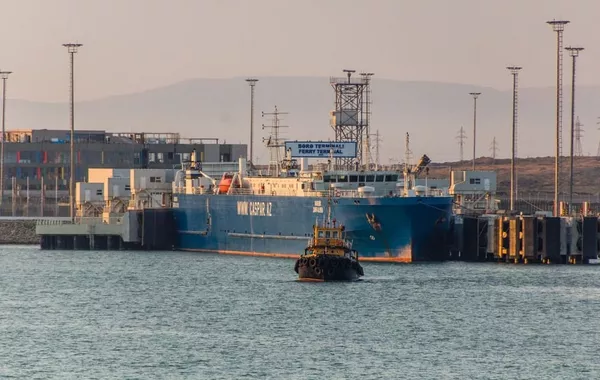
Strong Preservation of Government Policy Role: SOCAR has an important role in Azerbaijan's economy as an oil and gas producer and seller of refined products on the domestic market and its involvement in major energy projects, such as the SGC, which are vital for the country's strategic interests and its energy security. SOCAR also holds stakes in and represents the government in various oil and gas joint ventures vital to the country's hydrocarbon output. SOCAR is the largest employer, taxpayer, and the state's vehicle for the development of oil and gas industry in the country.
Very Strong Contagion Risk: We assess contagion risk as strong. This reflects the potential negative impact on the Azerbaijani government's access to capital markets should SOCAR default. We view SOCAR as a reference issuer for the financing market relevant to its government.
Production Declines: SOCAR's own-operated oil production fell 5% in 2025, and the decline continued in 1H26. Gas production rose 1% in 2025 but has declined in 2026. Production from production-sharing agreements also fell. Azeri-Chirag-Deepwater Gunashli (ACG) gross production declined about 4% in 2025 and about 2% in 2026, while Shah Deniz (SD) gross production fell 4% in 2025.
Development Initiatives Pick Up: In response to the decline, drilling at SOCAR-operated fields increased by one-third in 2Q26. Other measures include improved recovery and development of previously untapped non-associated gas in the ACG production sharing agreement (PSA). A new development stage at the SD PSA involving a USD3 billion project that is expected to add 50 bcm of gas and 25 million barrels of liquids from 2029. Separately, Total, SOCAR and ADNOC, expect to make the final investment decision in 2026 on stage 2 development of the Absheron field. This would raise production to 140 kboe/d from about 30 kboe/d-40 kboe/d.
Italian Acquisition Diversifies Operations: SOCAR completed the acquisition of italiana petroli S.p.A. (IP). SOCAR funded the acquisition with cash. IP generated EUR616 million of adjusted EBITDA and EUR395 million of reported EBITDAR. We view the acquisition positively for SOCAR as it diversifies and adds downstream integration to its international footprint. IP's assets include two operated refineries in Ancona and Novara with total refining capacity of 10 million tonnes, 4.5 thousand retail stations in Italy selling about 8.5 million tonnes of fuel, and wholesale fuel sales of 7.3 million tonnes supported by storage and logistics assets.
Ambitious Growth Plans in Türkiye: SOCAR outlined an ambitious USD7 billion expansion plan in early 2025 to build new facilities aimed at reducing Türkiye's polyolefin import dependence and boosting competitiveness. We understand from management that it intends to make the final investment decision by end-2026. We have not incorporated potential project capex or its impact into our forecasts, pending the project's final key details.
Comfortable Leverage: SOCAR'S 2025 EBITDA after dividends to non-controlling interests was AZN9.3 billion, up from AZN5 billion in 2024, reflecting the full-year impact from the consolidation of SGC and the STAR refinery. As a result, EBITDA net leverage was low at 1.0x. We expect leverage to remain stable at about 1.0x in 2026 as increased capex and M&A spending is offset by high oil and gas prices and refining margins. We forecast EBITDA after dividends to non-controlling interests at AZN12 billion in 2026 before declining to AZN8-7.5 billion by 2028-2029. This leads to EBITDA net leverage normalising to about 2x by 2029.
Peer Analysis
SOCAR's SCP is similar to that of JSC National Company KazMunayGas (BBB/Stable; SCP: bb). SOCAR's scale is somewhat larger than KazMunayGas's but the latter maintains lower leverage. SOCAR's business profile is also constrained by weaker financial transparency.
JSC Uzbekneftegaz's (BB/Stable) 'b' SCP reflects its weaker profitability relative to SOCAR and higher leverage. JSC National Company QazaqGaz's (BB+/Stable) 'b' SCP reflects the weak profitability of its consolidated operations. However, its cash flow generation is supported by large dividends from joint ventures.
SOCAR's SCP is two notches below OQ S.A.O.C.'s (BBB-/Stable) 'bbb-' SCP reflecting OQ's lower leverage, somewhat smaller scale and better financial transparency.
The ratings of KazMunayGas, SOCAR, OQ and Uzbekneftegaz are equalised with their respective sovereign ratings (Kazakhstan, Azerbaijan, Oman and Uzbekistan); QG is rated two notches below the Kazakhstani sovereign.