U.S. Advances Critical Minerals Push in Central Asia
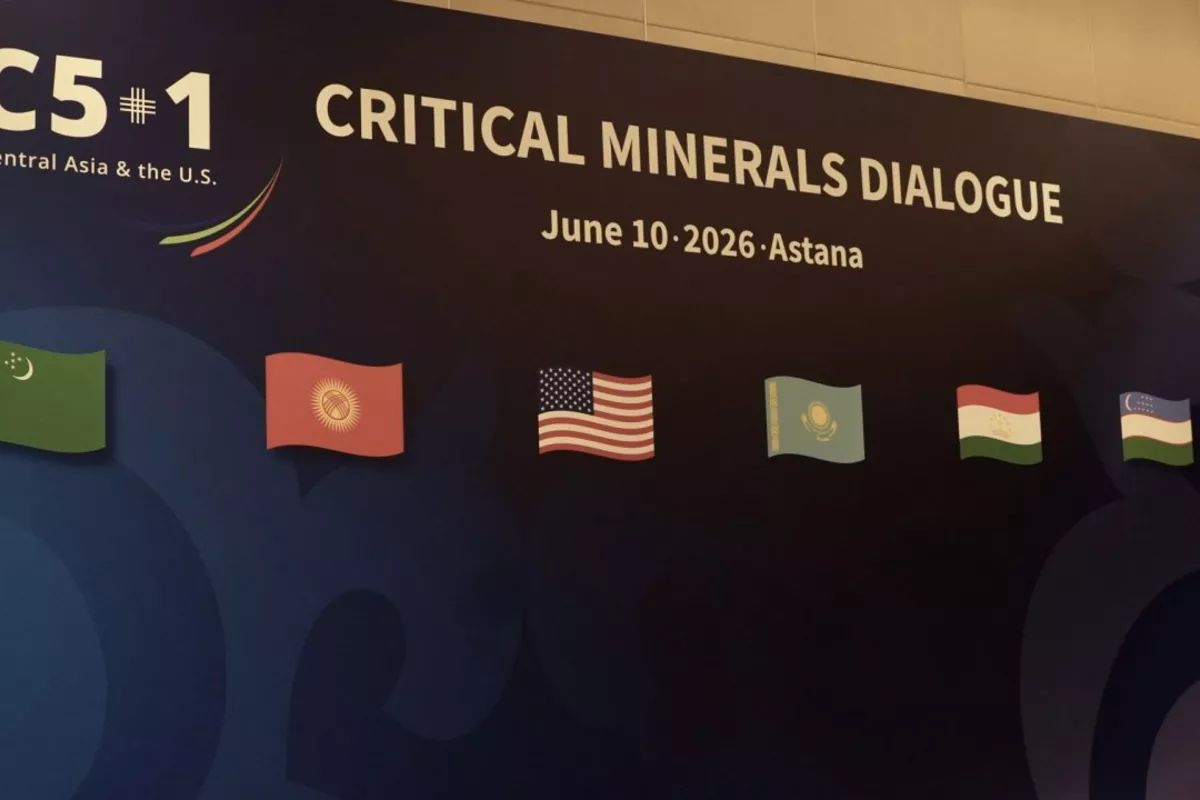
The United States was at the centre of a high-level C5+1 Critical Minerals Dialogue in Astana yesterday, marking a significant step in deepening economic and strategic ties with Kazakhstan, Kyrgyzstan, Tajikistan, Turkmenistan, and Uzbekistan. U.S. Special Envoy Sergio Gor emphasized that Central Asia has not received the attention it deserves and that the current administration is committed to building “win-win” partnerships focused on secure supply chains.
The dialogue, hosted by Kazakhstan at the Ritz-Carlton, featured sessions on geological exploration, mining, processing, and integration into global value chains. Kazakh officials, including Industry and Construction Minister Yersain Nagaspayev, highlighted the country’s vast resources - over 9,500 mineral deposits, including more than 100 with rare and rare earth metals - and recent reforms such as the Subsoil Code, digital licensing platforms, and adoption of CRIRSCO standards that have tripled exploration investment since 2018, The Caspian Post reports via EUalive.net.
Both sides stressed moving beyond raw exports toward joint processing, technology transfer, workforce training, and industrial clusters. Gor underscored U.S. tools like the Development Finance Corporation (DFC) to support American companies and transform the region’s deposits into foundations for industrialization, while linking the agenda to the Middle Corridor (Trans-Caspian route) for diversified connectivity.
Is the EU Losing the Competition for Central Asia’s Critical Raw Materials?
This renewed U.S. momentum raises a pressing question for Brussels: is the European Union falling behind in securing access to Central Asia’s critical raw materials (CRMs), despite earlier overtures from the region?
Kazakhstan has repeatedly positioned itself as a reliable alternative supplier to Europe. In late 2022-2023 briefings in Brussels, Kazakh officials stated the country could eventually supply all 30 critical raw materials on the EU’s 2020 list - already producing 16, with deposits for nine more and potential for the rest. They pointed to existing supplies of copper, chromium, titanium, beryllium, tantalum, and manganese, and ambitions in cobalt, nickel, and graphite.
Kazakhstan has urged the EU to cut red tape, accelerate permitting and financing, and move faster on joint projects, warning that Central Asia’s infrastructure window is closing fast amid competition from other global players. While political agreements like the 2022 Strategic Partnership on raw materials, green hydrogen, and batteries exist, implementation has lagged compared to the tangible investment momentum now visible on the U.S. side.
What, then, holds the EU back from playing a bolder, more decisive role in this unfolding scramble for Central Asia’s critical raw materials? On paper, the bloc has the tools: the Critical Raw Materials Act, the Global Gateway initiative, strategic partnerships with Kazakhstan and Uzbekistan, and repeated high-level declarations of intent.
Yet the gap between ambition and delivery remains wide. Is it primarily a failure of implementation - strategies eloquently adopted in Brussels but left to languish amid fragmented coordination across Directorates-General, member-state divergences, and slow disbursement of promised funds? Or does the deeper problem lie in structural weaknesses: a chronically risk-averse bureaucracy that layers environmental, social, and permitting hurdles so thick that even domestic European mining projects take 15 years on average, while European-listed companies hold only marginal stakes in global CRM operations? Decades of controversial “not-in-my-backyard” policies, green activism, and investor flight have left Europe with a hollowed-out mining sector and few champions capable of moving quickly abroad. As Washington operationalises concrete dialogues, financing mechanisms, and joint ventures in Astana, one wonders whether the EU’s hesitation stems more from institutional inertia and domestic political caution than from any lack of strategic vision - and whether that caution, however understandable, risks ceding ground in a region that has explicitly offered Europe a diversified, rules-based alternative. The window, as Kazakh officials have warned, may not stay open indefinitely.
As Washington operationalizes a Critical Minerals Dialogue Roadmap with concrete financing signals and high-level political backing, the EU risks ceding ground in a region eager for diversified partnerships. Central Asia offers Europe not only resources but also a strategic Middle Corridor route less dependent on traditional eastern paths. The pace of follow-through on existing EU-Kazakhstan roadmaps and Global Gateway initiatives will determine whether Brussels can match the current U.S. drive - or watch key opportunities shift westward across the Atlantic.