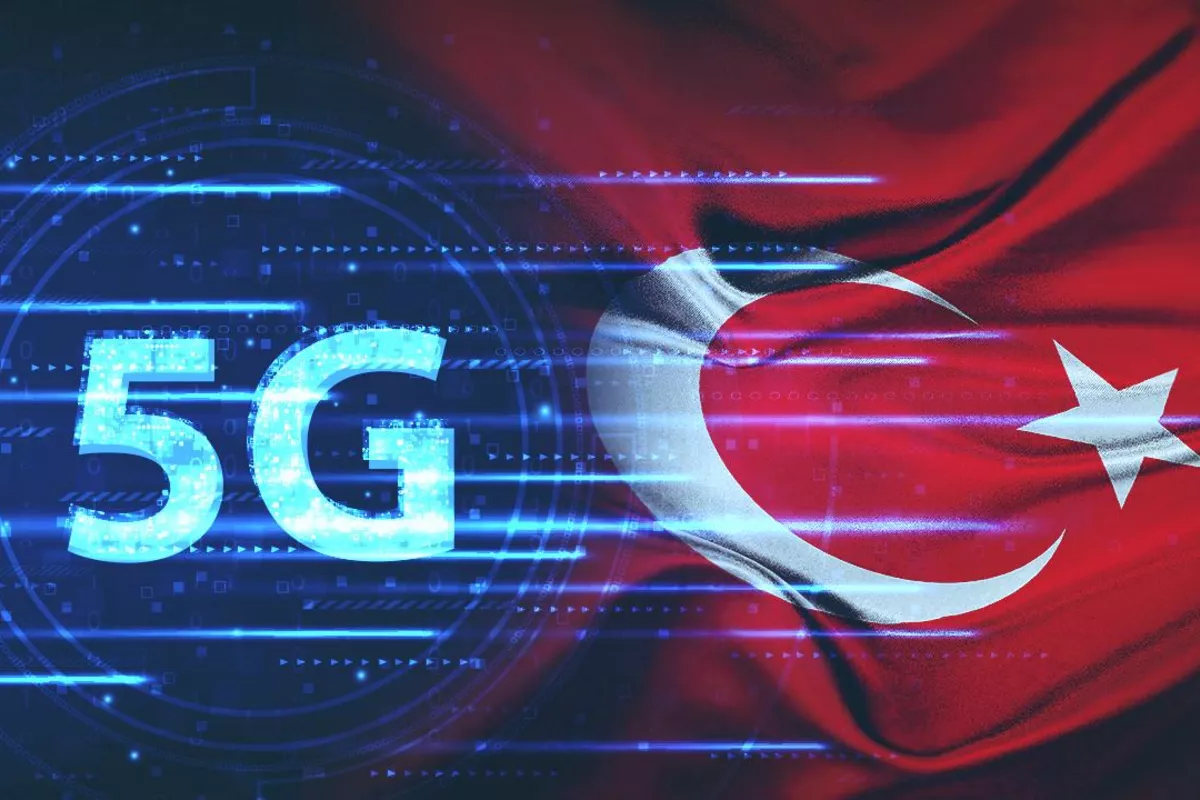
Türkiye's investments in the electronic communications sector reached a record 263 billion Turkish lira ($5.6 billion) in the first quarter of 2026, representing a dramatic 1,300% increase compared with the same period last year.
The surge was largely driven by the country's transition to fifth-generation (5G) mobile technology and the expansion of digital infrastructure, according to Transport and Infrastructure Minister Abdulkadir Uraloglu.
What caused the sharp rise in telecom investments?
The unprecedented increase in investment spending was primarily linked to the rollout of Türkiye's 5G network, which officially launched on April 1 following a spectrum auction held in October 2025.
Telecommunications operators made substantial investments to acquire 5G frequencies and upgrade their infrastructure to support the new generation of mobile services. These investments included expanding fiber-optic networks, modernizing mobile base stations and improving digital connectivity nationwide.
How quickly has 5G been adopted?
According to Uraloglu, adoption of the new technology has been rapid. Since the commercial launch of 5G services, the number of subscriptions has exceeded 43 million across the country.
The strong uptake reflects growing consumer and business demand for faster internet speeds, lower latency and enhanced connectivity, which are among the main advantages offered by fifth-generation mobile networks.
Why is fiber-optic infrastructure important?
To support the increasing demand generated by 5G services, telecommunications companies significantly expanded Türkiye's fiber-optic network infrastructure.
The country's total fiber-optic cable network increased by 12.8%, growing from 618,000 kilometers in the first quarter of 2025 to 697,000 kilometers in the same period this year.
Uraloglu noted that the total fiber network length is now sufficient to circle the Earth approximately 17 times, underscoring the scale of the infrastructure expansion.
Fiber-optic networks play a critical role in supporting 5G technology because they provide the high-capacity backhaul connections necessary to handle large volumes of mobile data traffic.
How is Türkiye's broadband market performing?
Türkiye's broadband market continued to expand during the first quarter, with the total number of broadband internet subscribers reaching 99.5 million.
Fiber broadband services recorded the strongest growth within the sector, with subscriptions increasing by 29.2% year-on-year, reflecting rising demand for faster and more reliable internet connections.
What does the data show about mobile communications?
The country's mobile communications market also remained robust, with approximately 86 million individual mobile subscribers and 12.3 million machine-to-machine (M2M) connections.
Mobile users generated around 71.8 billion minutes of voice traffic during the period, vastly exceeding the 1.3 billion minutes recorded on fixed-line networks.
Türkiye also maintained its position as the European country with the highest average monthly mobile call duration, with subscribers spending an average of 439 minutes per month on mobile calls.
Is competition in the telecom market increasing?
According to Uraloglu, competition among mobile operators remained strong, with approximately 3.5 million subscribers transferring their phone numbers between GSM providers during the reporting period.
The high level of number portability activity indicates continued competition among telecommunications operators as they seek to attract customers through expanded network coverage, faster data speeds and improved service offerings.
expand article
Explained: How 5G Drove Türkiye's Record Telecom Investment Boom in 2026
Türkiye's electronic communications sector recorded a historic surge in investment during the first quarter of 2026, with spending reaching 263 billion Turkish lira ($5.6 billion), a staggering increase of 1,300% compared with the same period last year. The sharp rise was fueled primarily by the country's long-awaited transition to fifth-generation mobile technology (5G), which officially entered commercial operation in April.
Transport and Infrastructure Minister Abdulkadir Uraloglu said the record investment levels reflected both the cost of acquiring 5G licenses and the substantial infrastructure spending required to support the next generation of digital connectivity.
Why did telecom investments increase so dramatically?
The main catalyst behind the investment surge was Türkiye's 5G spectrum auction, which took place in October 2025. Following the auction, telecommunications operators launched large-scale investments to deploy the infrastructure necessary for nationwide 5G services.
Unlike previous generations of mobile technology, 5G networks require significantly denser infrastructure, including upgraded mobile base stations, expanded fiber-optic networks and advanced data transmission systems capable of handling vast amounts of information with minimal delay.
As a result, telecommunications companies accelerated spending on both wireless and fixed-line infrastructure, leading to the highest level of investment ever recorded in Türkiye's communications sector.
How successful has the 5G rollout been?
According to Uraloglu, Türkiye's commercial 5G services officially launched on April 1, 2026, and adoption has been rapid. Within just a few months, the number of 5G subscriptions exceeded 43 million nationwide.
The rapid uptake reflects growing demand from consumers, businesses and industrial users for faster internet speeds, lower latency and improved network reliability. Fifth-generation networks enable applications that were previously difficult to support on older systems, including advanced industrial automation, artificial intelligence applications, autonomous systems and smart city technologies.
The government views the deployment of 5G as a strategic priority for supporting Türkiye's broader digital transformation agenda and improving the country's technological competitiveness.
Why has fiber infrastructure become increasingly important?
A major portion of the investment boom has been directed toward expanding Türkiye's fiber-optic infrastructure, which serves as the backbone of modern telecommunications networks.
Uraloglu said the country's total fiber-optic cable network expanded by 12.8% over the past year, increasing from 618,000 kilometers to 697,000 kilometers.
To illustrate the scale of the expansion, the minister noted that Türkiye's fiber network is now long enough to circle the Earth approximately 17 times.
Fiber-optic infrastructure is particularly important for 5G deployment because high-speed mobile networks rely heavily on fiber connections to transport large volumes of data between mobile towers, data centers and core network systems. Without extensive fiber coverage, many of the speed and capacity advantages promised by 5G cannot be fully realized.
Industry experts generally consider fiber deployment to be one of the most expensive but also one of the most critical components of next-generation telecommunications infrastructure.
How is Türkiye's internet market evolving?
The country's broadband market also continued to grow strongly during the first quarter of 2026.
According to government data, the total number of broadband internet subscribers reached 99.5 million, highlighting the increasing importance of digital connectivity for households, businesses and public services.
Among all broadband technologies, fiber internet recorded the fastest growth, with subscriptions increasing by 29.2% year-on-year. The rapid expansion of fiber services reflects growing consumer demand for higher internet speeds capable of supporting streaming services, cloud computing, remote work and online education.
The continued growth of broadband subscriptions also indicates that internet access is becoming an increasingly essential component of Türkiye's economic and social infrastructure.
What do the figures reveal about mobile communications?
Türkiye's mobile communications market remained one of the largest and most active sectors of the country's digital economy.
The number of individual mobile subscribers reached approximately 86 million, while machine-to-machine (M2M) connections totaled around 12.3 million. M2M connections are increasingly used in sectors such as manufacturing, transportation, energy and logistics, supporting the development of the Internet of Things (IoT).
Mobile communication continued to dominate traditional voice services as well. During the first quarter, mobile subscribers generated approximately 71.8 billion minutes of call traffic, compared with only 1.3 billion minutes on fixed-line networks.
Türkiye also retained its position as the European country with the highest average monthly mobile call duration, with subscribers spending an average of 439 minutes per month on mobile calls. This figure significantly exceeds the averages recorded in many European Union countries and reflects the continuing importance of voice communications despite the rapid growth of internet-based messaging services.
What does subscriber mobility indicate about competition?
The Turkish telecommunications market also remained highly competitive during the first quarter of the year.
According to Uraloglu, approximately 3.5 million subscribers transferred their phone numbers between GSM operators during the reporting period. High levels of number portability are often viewed as an indicator of strong market competition, as customers can switch providers while retaining their existing phone numbers.
The continued movement of subscribers suggests that operators are competing aggressively through pricing strategies, network quality improvements, expanded coverage areas and new digital services.
What does this mean for Türkiye's digital future?
The record level of investment underscores the strategic importance that Türkiye places on digital infrastructure development as a driver of economic growth and technological modernization.
The deployment of 5G networks, expansion of fiber-optic infrastructure and growing adoption of broadband services are expected to support future developments in artificial intelligence, industrial automation, smart manufacturing, autonomous transportation systems and digital public services.
As Türkiye continues to invest heavily in telecommunications infrastructure, policymakers hope the country will strengthen its position as a regional technology hub while accelerating its transition toward a more digitally connected economy.