Soaring oil and gas prices are reverberating across global markets, pushing governments to curb inflation while reinforcing calls in Europe to stay the course on renewable energy as a long-term solution, The Caspian Post reports, citing Anadolu Agency.
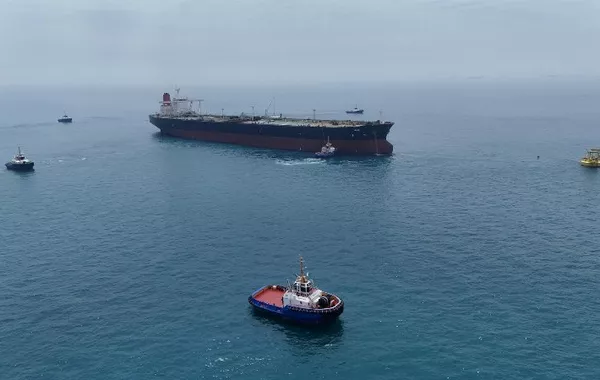
The blockade of the Strait of Hormuz -- a key transit route for around a fifth of the world’s oil and liquefied natural gas (LNG) -- amid US and Israeli strikes on Iran has rattled energy markets and fueled price volatility.
With further increases seen as largely unavoidable, European countries are scrambling to cushion the impact on households and industry while prioritizing energy security.
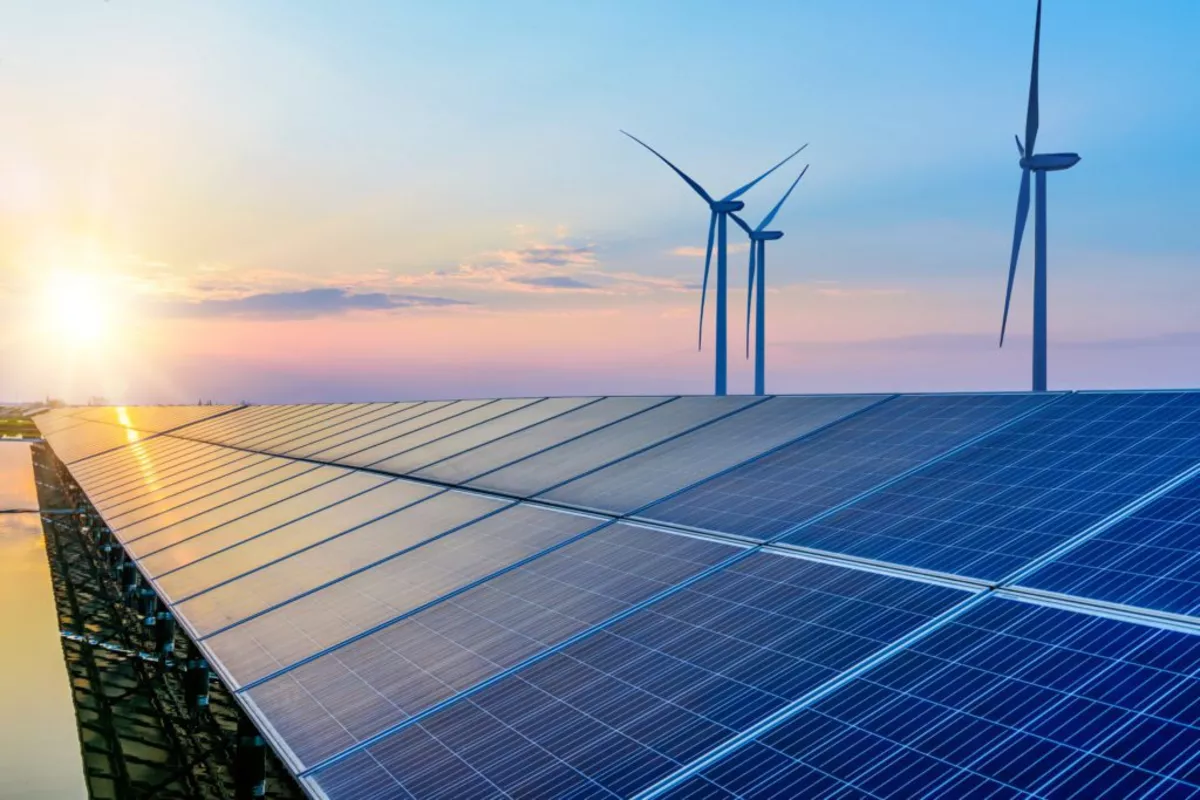
As policymakers seek effective responses to the energy crisis amid ongoing debates over the bloc’s climate policies, one solution continues to gain momentum: renewable energy.
‘Fragile and Volatile Market’
Ana Maria Jaller-Makarewicz, energy analyst at the US-based Institute for Energy Economics and Financial Analysis (IEEFA), told Anadolu that supply disruptions, import dependency and price volatility are jeopardizing Europe’s energy security.
The energy crisis triggered by the war in Iran has exposed how “fragile and volatile” the market is, Jaller-Makarewicz said, adding that “this is a wake-up call” to shift to renewables.
“The more we depend on gas and energy imports, the more our security is at risk,” she said.
Although Europe’s overall reliance on Qatari LNG is limited, she noted that Qatar still represents a notable share of imports, leaving countries such as Italy, Belgium and Poland more exposed to potential supply risks.
According to Eurostat, Qatar is the EU’s third-largest LNG supplier, accounting for 8.9% of imports.
As a major global LNG exporter, Qatar relies heavily on its production hub at Ras Laffan Industrial City, which has faced disruptions in recent months. Iranian drone attacks on the complex in March damaged key infrastructure, disrupting about 17% of export capacity. State firm QatarEnergy declared force majeure on long-term contracts.
‘Fossil Fuels No Longer Cheap’
Linda Kalcher, executive director of European think-tank Strategic Perspectives, said the Middle East conflict is “a very clear sign for the Europeans that fossil fuels are no longer cheap.”
“If we look back in response to the Ukraine crisis (in 2022), we saw a structural change to less fossil fuel demand. We saw more renewables, we saw more energy savings, but also we saw diversification,” Kalcher told Anadolu.
She reaffirmed that consumers are already reducing energy use and turning to public transport, while companies are increasingly signing renewable power purchase agreements to reduce their exposure to volatile energy markets.
Meanwhile, governments, even those not typically considered green or ambitious, are pursuing energy efficiency and electrification policies due to security and economic concerns.
“So that's the structural tendency we see in response to both Ukraine, but also the Middle East crisis now,” Kalcher said and added. “The more you move out of fossil fuels, the more secure you are.”
Debate on EU’s Climate Actions
Volatile energy prices have reignited debate between supporters and critics of the EU's Green Deal, particularly over the Emissions Trading System (ETS).
Launched in 2005, the ETS aims to cut greenhouse gas emissions by setting a cap on emissions and requiring companies to buy allowances for their pollution.
Speaking after a European Council meeting this month, European Commission President Ursula von der Leyen defended the carbon pricing system, saying it reduces dependence on imported fossil fuels and exposure to external shocks.
Ahead of her remarks, several member states called for greater flexibility, with Italy’s Prime Minister Giorgia Meloni urging a temporary suspension of the system. A group of countries -- Austria, Czechia, Croatia, Greece, Hungary, Italy, Poland, Romania, and Slovakia -- sought a review, including extending free carbon allowances beyond 2034.
Kalcher interpreted such calls as a reflection of European companies’ concerns over competitiveness in the face of soaring energy prices.
Jaller-Makarewicz, in the meantime, dismissed the demands as business concerns, saying some actors want to prolong existing investments in gas infrastructure, while others are driven by a “fear of change.”
“Gas companies have been investing for a long time in pipelines, power plants, LNG terminals. They want to continue,” she said.
Kalcher noted that while carbon pricing is often targeted, it is only one part of broader cost pressures.
“If you look at the company, it's the energy prices, it's labor costs that are higher here than in many other countries. Then you have the carbon price on top of it. So, for many, it's the marginal thing that you can fastest eliminate from the cost ballot,” she explained.
She warned that weakening the ETS would not address underlying structural challenges.
Countries calling for changes tend to remain highly dependent on fossil fuels and often tax them less than domestically produced electricity, Kalcher added.
Calling current spending patterns “economically absurd,” she said governments are paying billions to import fossil fuels while artificially keeping prices low. “So if you're facing high energy prices or a low demand for your clean products, you obviously need different tools and you don't need to abolish the emission trading scheme,” she added.
Jaller-Makarewicz also emphasized that the Green Deal and ETS should be maintained.
“We need to understand the real cause of the problem. And the real cause of the problem is gas dependency,” she said.
What’s at Stake?
Kalcher warned that weakening carbon pricing in some sectors during a crisis could force deeper emissions cuts in other sectors, making climate targets harder to achieve.
She cautioned that Europe’s delayed climate action could weaken its competitiveness, particularly as countries like China accelerate investment in clean technologies. Europe would harm its own economy “out of a short-term thinking” by giving the “wrong incentives” and allowing companies more time, Kalcher added.
Meanwhile, Jaller-Makarewicz stressed the need to better communicate the long-term economic benefits of renewables compared to LNG.
She noted that LNG requires ongoing fuel spending, whereas renewables involve upfront investment with minimal recurring costs.
We have to make everybody “talk the same language” in favor of energy security while reducing costs, she said.