Türkiye-Pakistan Ties Deepen Through Offshore Energy Exploration
Pakistan and Türkiye have historically maintained strong ties in defense, as well as close political and cultural connections. Energy is now emerging as another key area in which the two countries can further strengthen their relationship, generate mutual economic benefits, and enhance energy security.
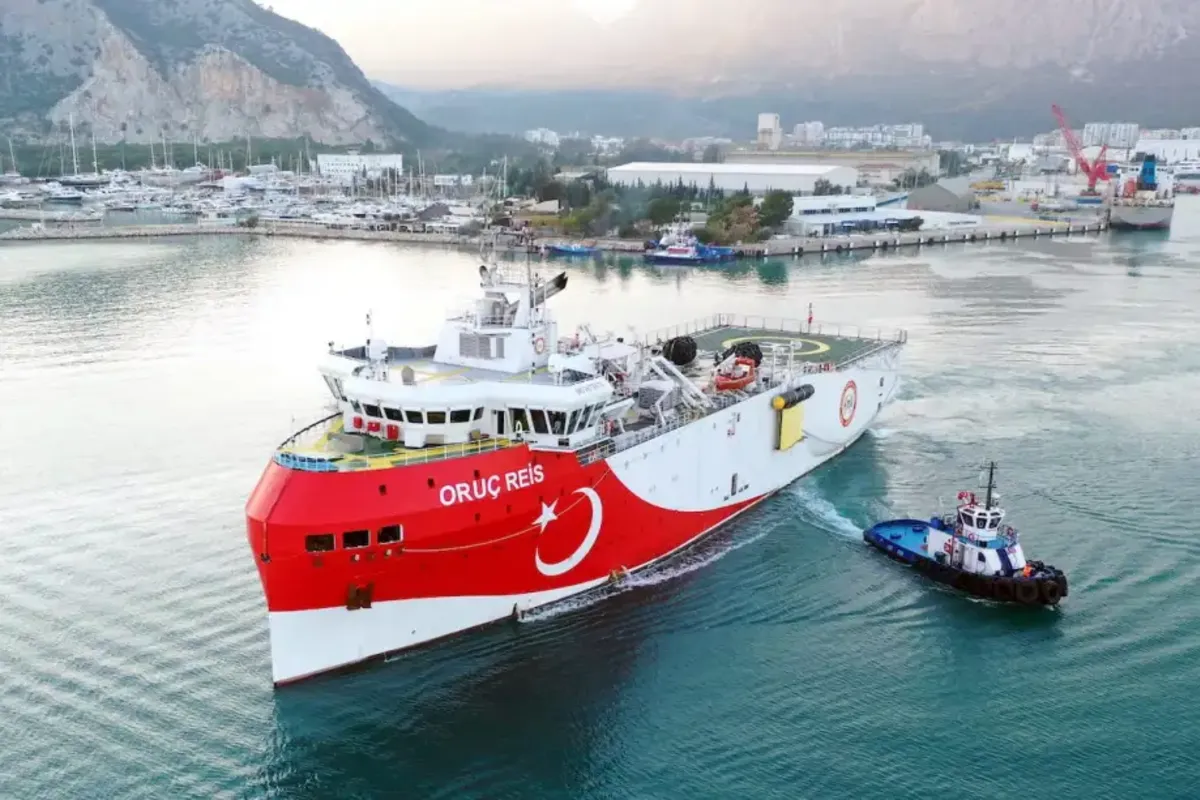
On Nov. 19, the relationship was further strengthened by the visit of Türkiye's seismic research vessel Oruç Reis to Karachi. The vessel will conduct 2D and 3D marine seismic surveys, enabling Türkiye to apply its specialized expertise to energy exploration in Pakistan, an area with significant economic potential.
For Islamabad, energy self-sufficiency and the development of energy sources are key areas for economic development. Likewise, Ankara can capitalize on its increasing energy sector expertise and share it with such a strong strategic ally.
While this visit is highly symbolic, it also demonstrates a transition from a relationship defined by good understanding between the two nations to one based on tangible collaboration. Two separate projects will be carried out. Firstly, the Marjan 3D survey in the Indus-C block and secondly, the Makran 2D survey. The former is anticipated to last around 50 days, with the latter expected to last some 25 days.
This work has important implications. Marine seismic surveys involve sending sound waves into the earth to produce images and enable experts to analyse subsurface geology. Analysis of this can then highlight where oil or gas may exist and inform decisions regarding further exploration. However, it does not establish whether there will be exploitable quantities of these resources. Further analysis must then be conducted, and in due course, exploratory drilling will be required.
Both countries are targeting 2027 to begin drilling, following the completion of seismic surveys and data analysis. Undeniably, Pakistan has significant potential for offshore energy exploration. However, turning favorable geological conditions into commercially viable fields requires time, financing, expertise and careful planning.
There are compelling reasons for Pakistan to seek to benefit from this potential. Reliance on imported fuels leaves the economy vulnerable to fluctuations in global energy prices, as well as transportation-related disruptions and geopolitical risks. Between July 2025 and March 2026, Pakistan imported approximately 13.9 million tonnes of crude oil and petroleum products, at a cost of around $8.9 billion. The country also relies heavily on imports to meet its petrol needs and a substantial proportion of its demand for diesel and crude oil.
As such, the importance of enhancing energy self-sufficiency is evident. Increased local production could alleviate import dependency. It would also bolster foreign exchange reserves and strengthen resilience to external shocks. Moreover, it could assist key sectors of the economy, including transport, agriculture and manufacturing, by underpinning secure energy provision.
While Pakistan has vast offshore regions, only 18 wells were drilled in this zone since independence in 1947. Exploration in Pakistan’s offshore areas was reinitiated in 2025 following an 18-year hiatus. Of the 40 offshore blocks put up for exploration, 23 received offers. Thus, the involvement of Türkiye’s state petroleum enterprise and its partners in this sphere is highly timely.
Institutionally, the collaboration is well established. Turkish Petroleum Corporation is collaborating with Pakistan’s Oil and Gas Development Company, Pakistan Petroleum Limited and Mari Energies.
Collaboration is also broadening to encompass other sectors besides energy. On this visit, additional bilateral accords were also signed relating to mineral exploration and exploitation. These included an agreement to explore antimony in Balochistan, alongside intentions to jointly carry out mineral exploration and to share geological information. Again, these activities can aid skill enhancement and unlock fresh avenues for investment and industry development.
Furthermore, for Türkiye, this visit allows further deployment of its evolving offshore expertise within international collaborations. The Oruç Reis successfully undertook extensive marine survey work off the coast of Somalia. This subsequently paved the way for Türkiye to conduct its initial overseas deep-water drilling activity. Thus, it exemplifies how national technical skills can be enhanced and then disseminated internationally via collaborative efforts.
Overall, both Pakistan and Türkiye are keen to strengthen the economic basis of their long-standing bilateral ties. As well as defense, other sectors, such as energy, mining, technology and commerce, can also serve as drivers for joint economic development.
While it cannot yet be guaranteed that the present survey work will result in commercially exploitable oil or gas fields, exploration is a highly involved and expensive process. Success will hinge on the quality of the geological analysis, as well as subsequent investment. Nevertheless, the decision to collaborate, to share skills and to seek out fresh areas for development is highly notable.
In addition to initiating a survey venture, the visit of Oruç Reis to Karachi can be recognized as tangible evidence of how two countries with profound historical links can jointly address future issues. Whether in defense or energy, Pakistan and Türkiye can effectively translate their robust strategic relationship into enduring economic advantages.
Find the original article here