Türkiye to Generate Over 20% of Its Electricity from Wind and Solar by 2025
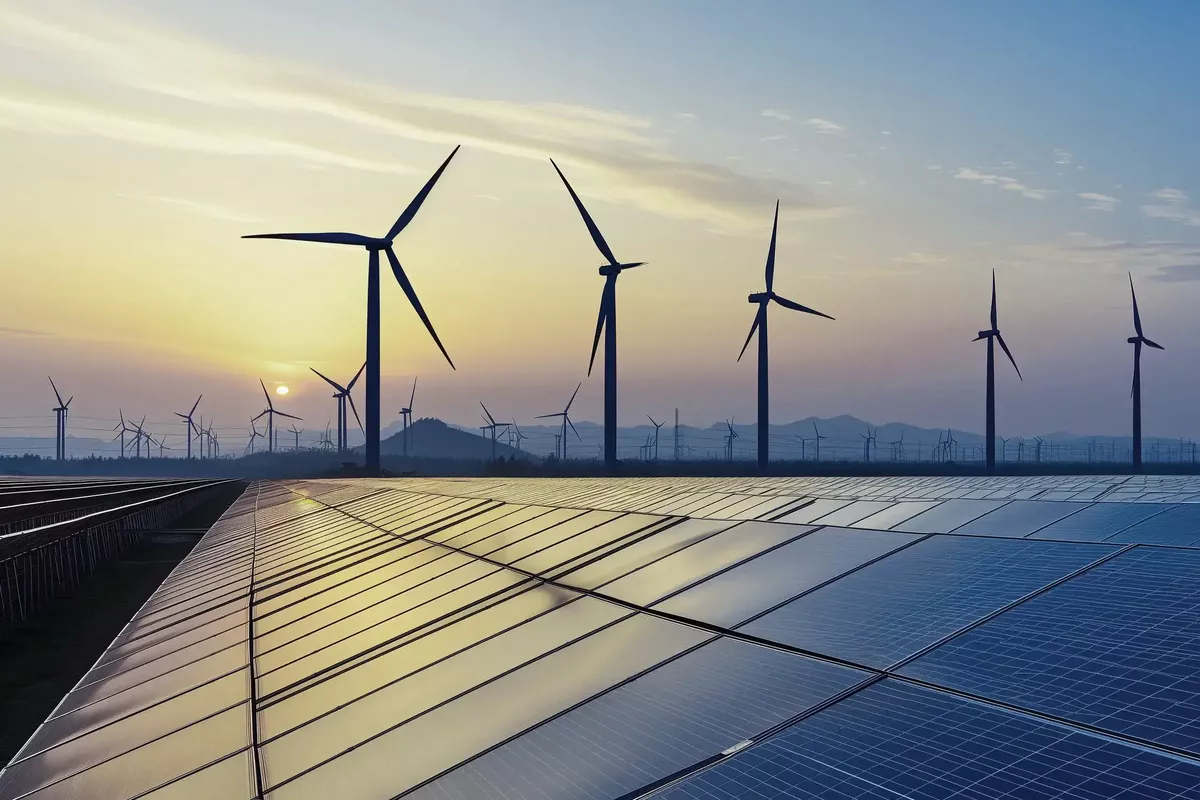
Wind and solar energy in Turkey made up over 20% of the country's electricity generation for the first time in 2025, establishing it as the regional leader, according to a report from a prominent think tank released on Wednesday.
The London-based think-tank Ember published the "Türkiye Electricity Review 2026" report, which analyzes Türkiye's 2025 electricity generation data and compares it with European and regional countries, The Caspian Post reports, citing Turkish media.
According to the fifth edition of the report, Türkiye saw its highest-ever wind installations last year with 1.9 gigawatts (GW), surpassing the previous peak of 1.8 GW in 2021, while electricity generation from solar also showed rapid growth.
"2023 marked a turning point for solar energy in Türkiye. Until then, annual solar installations had reached a maximum of 2.3 GW, but in 2023, they hit a record 4.8 GW. Since then, growth has remained strong, with solar installations holding around 4.5 GW for two consecutive years," the report said.
"As a result, in 2025, Türkiye achieved a record 6.5 GW of new wind and solar capacity combined," it added.
Thus, the total share of wind and solar in electricity generation reached 22% for the first time, the report suggested.
This milestone made Türkiye the only country among 16 in the Middle East, Caucasus, and Central Asia to surpass the 20% threshold, according to Ember.
With the simultaneous rise of wind and solar electricity generation in Türkiye, the share of natural gas in electricity generation dropped to 22% in 2025. However, despite this clean energy momentum, coal continues to hold the largest share of the electricity generation at 34%.
According to the report, since 2022, no new coal power plants have been commissioned in Türkiye, which has slowed the increase in electricity generation from coal. However, purchase guarantees to be applied to local coal plants this year could potentially increase coal generation again.
Drought-Related Losses
The report's analysis covering the past 30 years revealed that the average electricity output at the three largest dams in the country - Atatürk, Karakaya, and Keban - in the last 10 years has dropped by 29% compared to 1996-2005.
This loss in hydroelectric generation due to drought has been replaced by natural gas power plants, resulting in an extra $1.8 billion in gas imports by Türkiye every year on average. This figure can rise further in years with energy crises and higher prices.
The report emphasizes the importance of diversifying hydroelectric power plants with sources like solar for both economic and energy security reasons.
Türkiye Leads Europe in Battery Project Pipeline
Moreover, the report found that Türkiye is the leader in Europe when it comes to battery projects, which support the increasing share of wind and solar and enhance grid security.
With the introduction of wind and solar plants with storage in 2022, Türkiye reached a battery project capacity of 33 gigawatts (GW), surpassing all European Union countries.
"Since 2022, new wind and solar plants with storage must install battery capacity that equals their installed capacity. The total allocated battery capacity for these projects has reached 33 GW. In comparison, EU countries with the largest battery capacity, including both operational capacity and project pipelines, have around 12-13 GW, less than half of Türkiye’s," the report noted.
"Türkiye’s battery project pipeline corresponds to 83% of its current wind and solar capacity (40 GW)," it added.
Ufuk Alparslan, Ember’s Türkiye and Caucasus regional lead, commented that significant increases have occurred recently in Türkiye's wind and solar electricity generation.
However, Alparslan noted that when other renewables, such as hydro and geothermal, are included, the share of renewables in Türkiye's total electricity generation still lags behind European countries.
"On the other hand, Türkiye is by far the regional leader in wind and solar energy among countries in the Middle East, Central Asia, and the Caucasus. The global fossil fuel crisis experienced for the second time in the past four years has further highlighted the importance of the transition to clean energy. In this context, Türkiye - set to host the COP31 summit - has the opportunity to take on a leading role in the regional energy transition," he said.