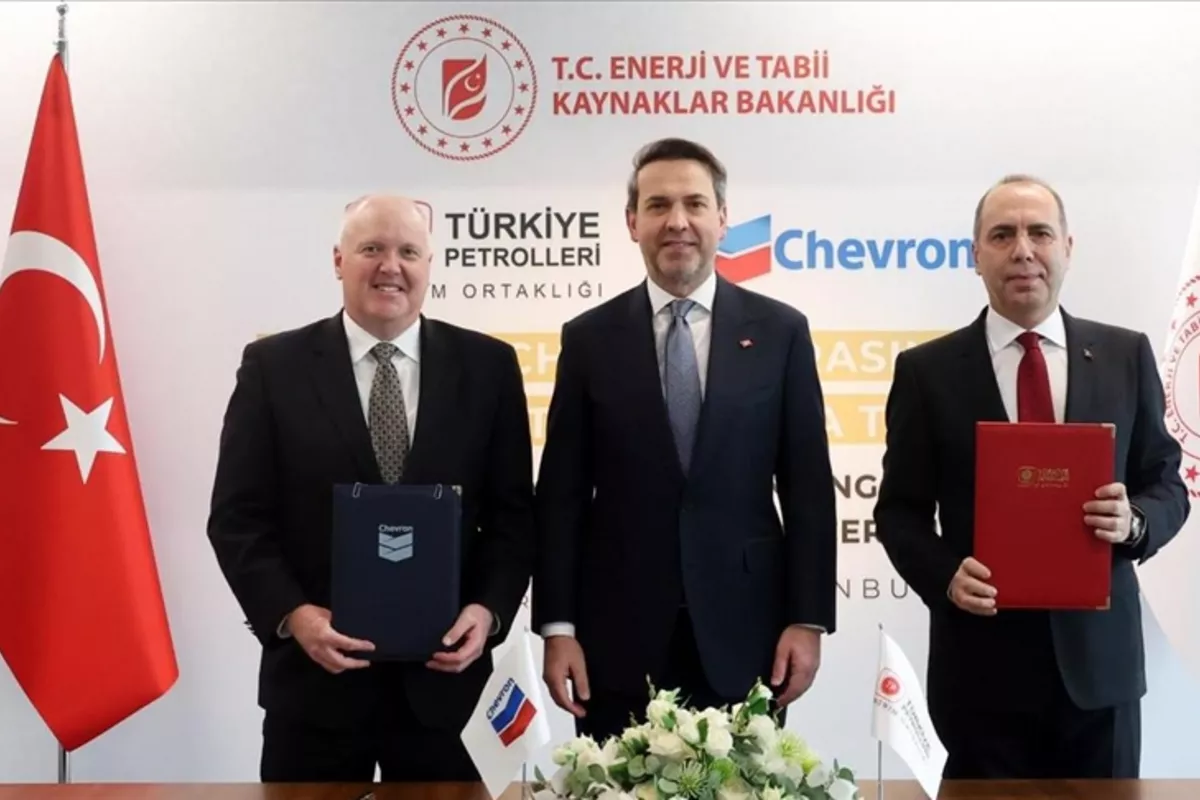
Türkiye is quietly re-engineering the way it powers itself-and how it positions itself within the global energy system. The latest sign of this longer-term shift came with the announcement that Türkiye’s national energy company, Turkish Petroleum (TPAO), and Chevron have signed a memorandum of understanding (MoU) to assess possible cooperation in oil and natural gas exploration and production. The agreement, disclosed by Türkiye’s Minister of Energy and Natural Resources Alparslan Bayraktar, does not authorize drilling or commit either side to a specific project. Yet its significance lies elsewhere. It reflects a broader strategic pattern in Ankara’s energy policy-one that combines domestic resource development, international partnerships, and long-term ambitions for TPAO to emerge as a globally active upstream company.
Rather than relying on a single discovery or one flagship partnership, Türkiye is building an expandable portfolio of relationships and project options. This approach is designed to advance three goals at once: improving energy security, strengthening industrial and technical capacity, and elevating Türkiye’s standing in global energy markets. The MoU with Chevron fits neatly into this framework, signaling intent, credibility, and direction rather than an immediate production outcome.
What the MoU Really Represents
In the oil and gas industry, memoranda of understanding are often misunderstood. They are sometimes dismissed as symbolic gestures, or conversely exaggerated as proof of imminent investment. In practice, an MoU is best understood as a structured starting point-a formal agreement to jointly evaluate opportunities before committing capital or assuming operational risk.
Such agreements typically allow companies to exchange data, conduct technical and economic assessments, review acreage or assets, and explore potential commercial structures. For upstream projects, where drilling costs are high and geological uncertainty is unavoidable, this preparatory phase is essential. Only after technical studies, seismic reinterpretation, basin modeling, and prospect screening would companies consider moving toward binding arrangements such as joint operating agreements, farm-ins, or production-sharing contracts.
Many MoUs never progress beyond this evaluation stage, and that outcome is not necessarily a failure. It simply reflects the realities of subsurface risk, shifting market conditions, or misalignment of strategic priorities. In this context, the Chevron-TPAO MoU should be read in its most accurate, evergreen sense: it signals genuine interest and willingness to explore cooperation, without pre-judging the final investment decision.
Its real importance lies in the direction of travel. Chevron’s participation indicates that Türkiye’s upstream potential-both within its borders and internationally-is being taken seriously by a top-tier global operator. That alone carries weight in an industry where time and technical attention are valuable currencies.
Photo: Bloomberg
Why Chevron, and Why Now
Chevron is among the world’s largest integrated oil and gas companies, with a global portfolio spanning conventional and unconventional resources, deepwater developments, and liquefied natural gas projects. For such a company to engage with a national oil company through an MoU, several enabling factors usually need to align: resource potential, regulatory signals, infrastructure readiness, market access, and strategic country relationships.
Türkiye offers a compelling combination of these elements. It is a major and growing energy consumer, heavily dependent on imports but actively seeking to reduce that reliance through domestic production and diversified supply routes. Geographically, Türkiye sits at the intersection of Europe, the Black Sea region, the Eastern Mediterranean, the Caucasus, and the Middle East-regions where energy flows and geopolitics are closely intertwined.
The timing of the MoU also reflects a broader reassessment of global upstream investment. Oil and gas remain central to the world’s energy mix, even as the energy transition accelerates. However, capital has become more selective. Projects are increasingly evaluated not only on resource size, but also on cost competitiveness, execution risk, carbon intensity, and speed to market. Partnerships help address these criteria by sharing risk and combining complementary capabilities.
From Ankara’s perspective, the rationale is equally clear. Energy security has become a strategic priority, reinforced by global price volatility and geopolitical disruptions. International partners can bring advanced technology, project management expertise, and access to global service networks-accelerating development timelines and improving execution quality. In that sense, the MoU reflects both opportunity and necessity.
Domestic Anchors: Southeastern Türkiye and the Black Sea
Bayraktar’s reference to the Gabar field area in southeastern Türkiye and the Black Sea is particularly telling, as it anchors the MoU in concrete geographies that are central to Türkiye’s current energy narrative.
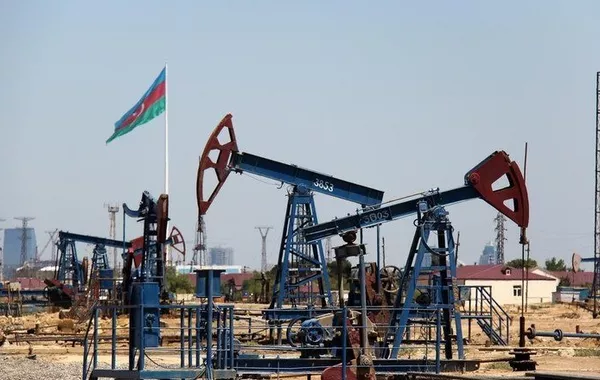
Southeastern Türkiye, especially the Gabar region, has emerged as a focal point for domestic oil production. While reserve estimates and long-term output profiles continue to evolve, the strategic significance is already established. Domestic oil production strengthens energy security, eases pressure on the balance of payments, and signals industrial and technical capability. International collaboration can support this effort by introducing advanced recovery techniques, operational best practices, and supply-chain efficiencies.
The Black Sea plays an even more prominent role in Türkiye’s long-term gas strategy. Offshore gas developments are among the most technically demanding projects in the energy industry. They require sophisticated seismic interpretation, precise drilling, subsea engineering, pipeline construction, and long-term operational discipline. They also demand robust safety and environmental standards.
By explicitly linking the MoU to the Black Sea, Türkiye signals that it remains open to optimizing its offshore strategy-whether through new prospect evaluation, technology transfer, or international projects that build experience applicable to domestic waters. In evergreen terms, the message is not about immediate production gains, but about reducing technical risk and strengthening execution capability over time.
The International Dimension and the Evolution of TPAO
Perhaps the most revealing element of Bayraktar’s remarks is the emphasis on developing projects “on an international scale.” This points to a strategic evolution in Türkiye’s approach to upstream energy.
Historically, Türkiye’s energy diplomacy has focused on transit routes, pipelines, and regional market integration. Moving into international upstream participation would represent a different form of engagement-one that involves equity production, operational exposure, and long-term asset management abroad. Such a shift could deliver several benefits: diversification of supply, protection against import disruptions, accelerated learning across different basins, and deeper integration into global deal flows.
For TPAO, international projects are not simply optional add-ons; they are a prerequisite for becoming a global player. Many national oil companies that successfully expanded beyond their borders followed a staged path-first consolidating domestic production, then entering selective international ventures, and eventually building diversified portfolios across regions and resource types.
The minister’s reference to an aspirational production capacity of 1 million barrels should be interpreted in this organizational context. It is less a short-term forecast than a strategic benchmark. Achieving such scale would require sustained investment, continuous exploration success, midstream infrastructure, regulatory stability, and a highly skilled workforce. Setting that target helps justify capability building, international recruitment, and long-term partnership strategies.
A Pattern of Partnerships, not a One-Off
The Chevron MoU does not stand alone. It follows an earlier agreement between TPAO and ExxonMobil’s subsidiary ESSO Exploration International Limited, covering exploration opportunities in the Black Sea, the Mediterranean, and potentially other regions. Together, these agreements suggest a deliberate strategy of partner diversification.
By engaging multiple leading international companies, Türkiye reduces dependence on any single counterpart and broadens its access to technical expertise. Different partners bring different strengths-whether in deepwater operations, unconventional resources, or project execution. This approach also creates optionality: Türkiye can pursue the most promising opportunities as evaluations progress, rather than committing prematurely.
Beyond the technical dimension, this pattern sends a broader signal. It indicates that Türkiye is positioning itself as an open, structured, and credible partner in upstream energy development-an important consideration for investors and service providers alike.
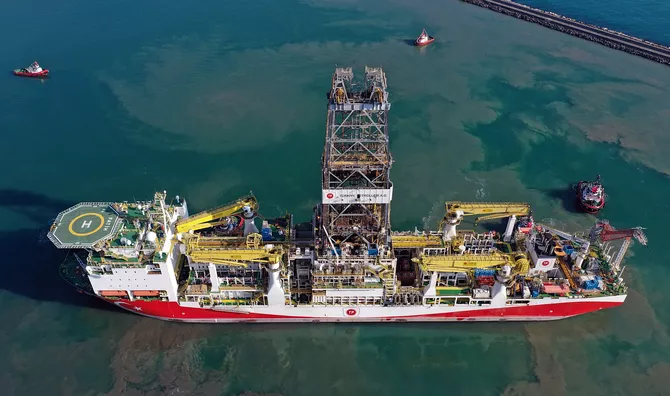
Photo: Anadolu Agency
Balancing Opportunity and Constraint
A realistic assessment must also acknowledge the challenges inherent in turning MoUs into producing assets. Many factors will determine whether these agreements translate into tangible outcomes.
On the positive side, partnerships can improve capital discipline, accelerate learning, and enhance project quality. They can strengthen global credibility and provide portfolio diversification. On the constraint side, success depends on aligning commercial terms, managing execution risk, meeting environmental and social expectations, and navigating geopolitical complexities-especially for international projects.
The decisive test will be whether evaluation phases lead to bankable, well-governed projects that enhance Türkiye’s energy resilience and build long-term institutional capacity within TPAO.
A Strategic Signal with Long-Term Implications
Viewed through an evergreen lens, the Chevron-TPAO memorandum of understanding is significant less for what it promises immediately than for what it reveals strategically. Türkiye is not treating upstream energy as a single bet or a short-term fix. Instead, it is approaching it as a platform-one built through diversified partnerships, domestic anchors, and international reach.
Whether the MoU evolves into concrete investments will depend on geology, economics, and execution. But the direction is unmistakable. Türkiye is positioning its national energy company to operate with greater confidence, capability, and global integration-reshaping not only how it powers itself, but also how it participates in the global energy arena.