Iran's Shift from Economic Grievances to Security-Centered Unrest Post-Protests
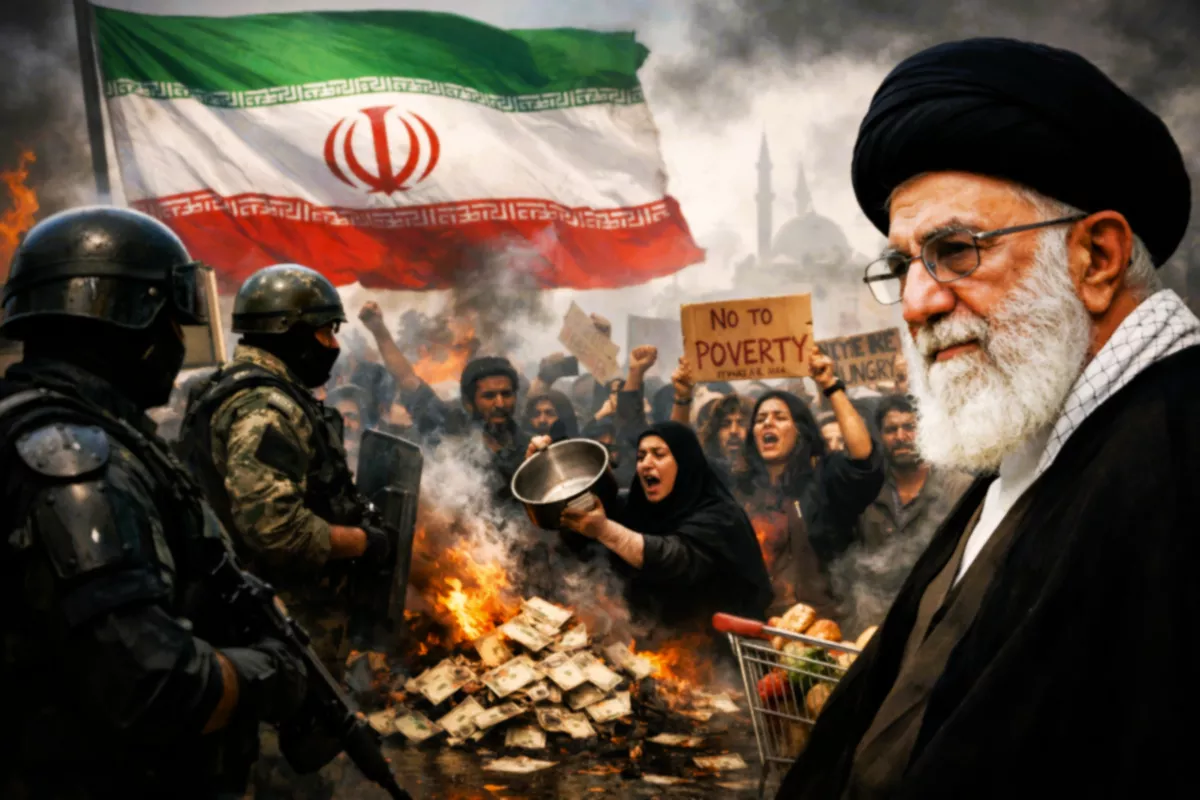
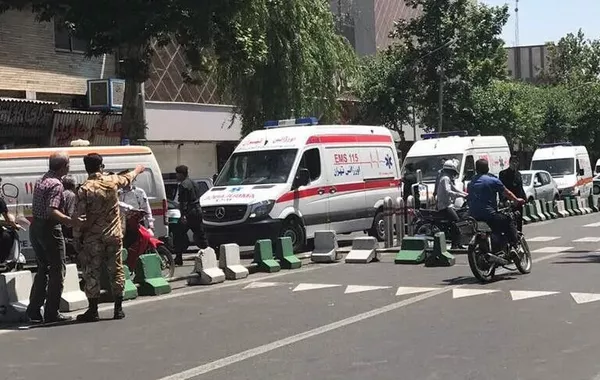
For the past three weeks, protests have been at the forefront of Iranian politics. Initially sparked by economic issues, they rapidly evolved into anti-regime demonstrations, characterized by widespread violence.
While the government initially distinguished between violent rioters and legitimate protesters, that phase proved short-lived. What followed, however, was a familiar pattern: the demonstrations gradually drifted away from their original cause and evolved into a broader, more confrontational movement, increasingly framed in regime-oppositional terms and marked by violence, The Caspian Post reports, citing SETA.
Organized and seasoned groups, carrying decades of accumulated anger toward the political system, moved in to hijack the protests and impose their own political agendas. The situation escalated quickly, with attacks on security forces carried out with lethal intent. The crackdown was brutal. It appears that hundreds of people have lost their lives, though no one knows the exact number.
The situation has also created an opportunity for separatist groups. They are largely concentrated in regions with significant Kurdish and Baluch populations and are officially designated as terrorist organizations by the Iranian state. Among them, PJAK is also on Turkey’s terror list and operates as the Iranian branch of the PKK. It is widely known that these groups receive substantial support from Israel, adding a regional and geopolitical dimension to the unrest.
A large portion of the public has stayed away from the protests. The fact that the protests involve violence at a level never seen before indicates that they are organized and planned. Even mosques have been set on fire. There is strong public backlash against this vandalism, based on the view that this form of protest is not a legitimate way of expressing political demands and that it overshadows Iran’s real problems. The protests of those demonstrating for economic reasons are being hijacked by members of organized groups.
Iran is facing significant political, social, and economic challenges. However, the widespread protests were triggered by economic issues. The value of the rial has dropped to a record low. Economic prospects have become increasingly uncertain due to currency volatility. Even Grand Bazaar merchants -historically a significant political and economic group- have shown their frustration by closing their shops. Unemployment is worsening, and inflation exceeds 50%.
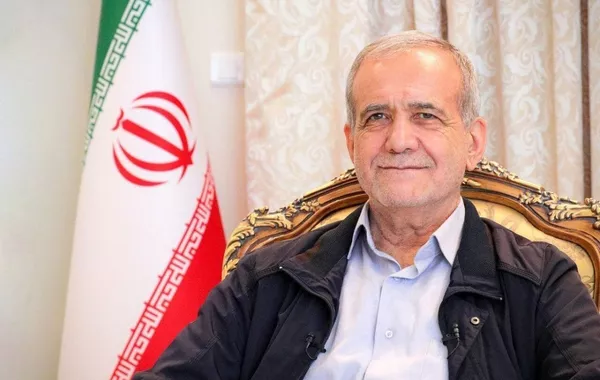
In the face of all these challenges, President Pezeshkian has been confronted with a difficult test. The absence of short-term solutions to Iran’s economic problems has deprived him of the ability to offer protesters anything beyond promises. Moreover, mounting external pressure and interference have led to the securitization of the protests.
What Awaits Iranian Politics After the Protests
There is no realistic prospect of regime change or a significant retreat by the Iranian government. Compared to earlier waves -particularly the Mahsa Amini protests- the current movement lacks an all-encompassing political agenda.
Second, there is no organized elite opposition leadership inside the country capable of replacing the existing system. Moreover, Iran has a multi-layered power structure. State authority does not operate only at the top; it penetrates the smallest veins of society, making a sudden breakdown highly unlikely.
Third, the opposition abroad lacks a genuine connection with Iranian society and remains deeply divided. Some exile figures are openly associated with Israel and do not attempt to conceal these links, which severely undermines their credibility inside Iran.
That said, even in the absence of regime change, these protests should not be dismissed. They are likely to push the system toward a strategic recalibration of state-society relations and limited reforms within the existing political framework, aimed at easing social grievances and reshaping public perceptions.
Ultimately, however, without deeper structural reform, these measures will only buy time. The protests are warning signs -indicators of accumulated and largely hidden societal grievances that cannot be managed indefinitely.
Considering the negative impact of sanctions on the Iranian economy and US-Israeli support for the protests, it can be anticipated that a new form of Iran-US negotiations could have a calming effect in the short term. The possibility of such talks has been raised by US President Trump. However, to what extent the message exchanges -likely conducted through Oman- will shape the new phase remains uncertain for now.