Strait of Hormuz Becomes the Biggest Test of US-Iran Ceasefire
The United States and Iran are officially observing a ceasefire, but it is growing increasingly fragile. The situation around the Strait of Hormuz has created a fresh and complicated point of tension in their negotiations.
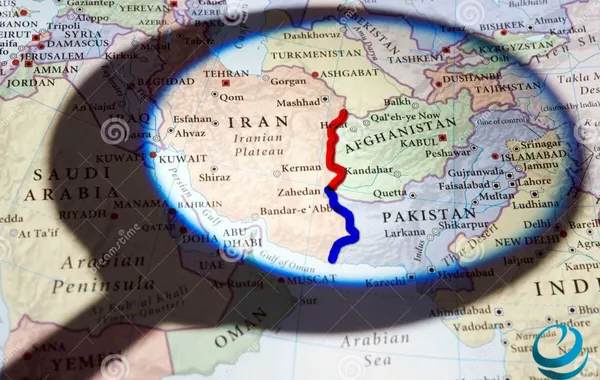
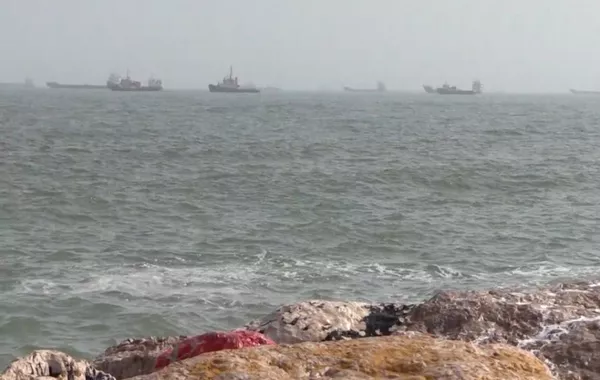
On April 23, Abbas Papizadeh, a member of the Iranian Parliament’s presiding board, announced that the first revenues from tolls collected at the Strait of Hormuz had been deposited into the Central Bank’s account. The development comes as the Strait has turned into a site of “blockade versus blockade” between Tehran and Washington: no ship can enter without U.S. permission, and none can leave without Iran’s authorization and payment.
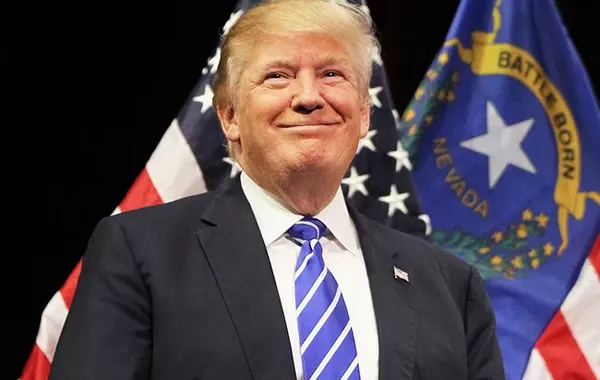
Although the “reopening of the Strait” was among the terms of the ceasefire, U.S. President Donald Trump ordered a naval blockade on April 12. While extending the temporary ceasefire, Trump stated, “The naval blockade will not be lifted until a deal is reached.” In Tehran, Parliament Speaker Mohammad Bagher Ghalibaf wrote on April 22 that the ceasefire only has meaning if it is not violated by “a naval blockade and the hostage-taking of the global economy.”
Tolls and Threats
Since shutting the Strait, the Islamic Republic has tried to change the legal regime governing the waterway by demanding tolls in exchange for providing “security.” While figures ranging from $1 per barrel of oil to $2 million per ship have been mentioned, Papizadeh said the tolls are calculated according to the type and volume of cargo and the current transit conditions. He added that decisions on how to use these revenues would be made later.
According to an Al Jazeera report, vessels from non-hostile countries, such as China, Pakistan, and Malaysia, are allowed passage only after screening and cargo verification. At least two ships have reportedly paid these fees in currencies other than the U.S. dollar, including the Chinese yuan. Another MP, Hamid-Reza Hajibabaei, stressed that Iran had received its first payment, stating, “This Strait belongs to the Iranian nation, and no one has the right to discuss it with others.”
This has become one of the main reasons the ceasefire remains fragile. The Iranian side argues that negotiations are meaningless as long as the Persian Gulf remains under blockade. Ghalibaf tweeted: “A full ceasefire only makes sense if it is not violated by a naval blockade… opening the Strait under such blatant violation of the ceasefire is impossible.” Foreign Minister Abbas Araghchi has placed responsibility for the global economic fallout directly on the “aggressors.”
On the other side, President Trump told reporters at the White House on April 23 that the Strait would reopen only when a deal is reached or “something else happens.” He said that if the Strait were opened, the Islamic Republic would earn around $500 million a day, stressing that such revenue should not be generated until the issue is resolved.
Tension Despite the Risks
Since the conflict began, the IRGC has banned traffic through the Strait. Over the past 50 days, this has resulted in military attacks on ships attempting to pass without authorization, as well as the deployment of naval mines. On April 23, Axios reported that the IRGC had planted additional mines in the Strait. In response, Trump declared: “I have ordered the U.S. Navy to shoot and destroy any boat, no matter how small, that is laying mines in the waters of the Strait of Hormuz.” This “fire-at-will” order could effectively bring the fragile ceasefire to an end.
Despite the rhetoric of “security,” the situation remains chaotic. On April 22 alone, the IRGC targeted three ships, while on April 23, the U.S. military seized at least three Iranian-flagged oil tankers in Asian waters. At the same time, the IRGC announced the seizure of two “violating” vessels that had allegedly tried to leave the Strait secretly. Despite the tensions, Reuters recently reported that between April 13 and April 20, at least 10.7 million barrels of Iranian crude oil managed to pass through the Strait via six tankers.
The Global Energy Impact
Rystad Energy, an independent research firm, has described the disruption in the Strait of Hormuz as the largest oil supply disruption in history, saying that even if an agreement were reached today, it would take months for oil flows to return to normal. Fatih Birol, Executive Director of the International Energy Agency, added: “We are facing the greatest threat to energy security in history. We are losing 13 million barrels of oil per day due to the war.”
European powers are now stepping up efforts to reopen the waterway. French President Emmanuel Macron stated, “We will assume our responsibilities and reopen the Strait of Hormuz.” Britain and France have proposed a military package, with London offering to deploy RAF Typhoon fighters stationed in Qatar, autonomous mine-hunting drones, and specialist clearance divers. However, these plans depend on the existence of a stable ceasefire.
The Islamic Republic sees control over the Strait as a “powerful tool” to resist Western military, economic, and diplomatic pressure, with some hardliners even calling it Iran’s “atomic bomb.” Yet, while Ghalibaf claims the public supports this control, recent polls by state-affiliated media suggest that only 21% of Iranians prioritize sovereignty over the Strait, while 56% prioritize the lifting of sanctions.
See the original article here