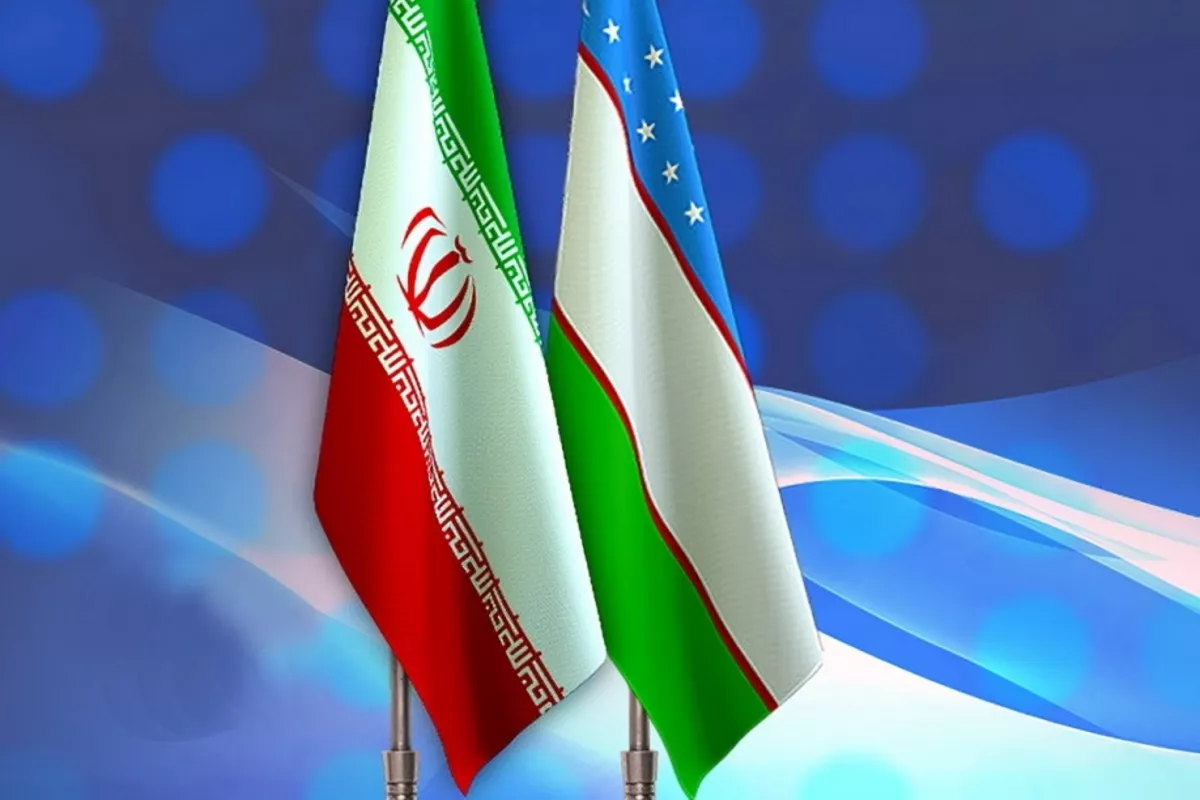
According to the Public Relations Office of the Arak Chamber of Commerce, Nasser Biki made the remarks at a meeting of economic operators from Markazi Province with the Ambassador of Uzbekistan to Tehran. He said structural problems and economic pressures have trapped many businesspeople in routine activities, diverting them from their core mission of export development, The Caspian Post reports, citing the Iran News.
“Currency depreciation, personnel issues, and difficult economic conditions have distanced us from our main responsibility-exports,” Biki said. “These challenges have prevented forward momentum.”
Criticizing weak market intelligence, he added that while Iranian firms produce goods, they often lack the know-how to export them effectively. “A Chinese producer can visit a market with a simple camera, identify demand, and manufacture the right product. This weakness lies with us, and we must acknowledge it,” he said.
Referring to Uzbekistan’s foreign trade figures, Biki noted that the country’s international trade reached about $47.8 billion in 2024 and has recently approached $100 billion. “Yet Iran’s share of this vast market is less than one percent, despite being a neighboring country. Our presence should be far more substantial,” he said.
He urged Iran’s private sector to capitalize on opportunities in Central Asia and prevent competitors from dominating regional markets.
Biki also pointed to shortcomings in internal coordination, saying visits by foreign ambassadors to provinces should be planned in advance to include tours of major production units. “Having to submit multiple requests is not befitting of a chamber of commerce,” he said.
Highlighting the need to facilitate trade ties, he announced efforts-together with the Uzbek ambassador-to establish a permanent base in Uzbekistan for Iranian traders. “This hub would enable practical, organized, and sustainable engagement and serve as a point of connection for economic actors in both countries,” he said, calling on businesspeople to remain engaged with the chamber to strengthen the initiative.
Addressing the role and limitations of government, Biki said the state is naturally preoccupied with political, security, and cultural issues, while non-oil economic growth depends on the private sector. “Without effective efforts by economic actors, no sustainable transformation will occur,” he warned.
He also cited Iran’s weak performance in tourism, noting that in 2023 Iran earned around $1 billion from tourism, compared with Turkey’s $54.7 billion. “This gap shows we have overlooked many capacities,” he said.
Biki further noted that new authorities granted to provincial governors allow for the establishment of economic bases in neighboring countries. “Uzbekistan, as an observer member of the Eurasian Economic Union, is the best option for this initiative, and we must seize the opportunity,” he said.
In closing, he addressed the Uzbek ambassador, saying: “You have set a $2 billion trade target with Iran. We are ready to establish a permanent base for Uzbek economic actors in Markazi Province and provide all necessary facilities. We hope to achieve this shared goal together.”
At the outset of the meeting, the Deputy for International Affairs of the Arak Chamber of Commerce described the presence of the Uzbek ambassador and deputy head of mission as a valuable opportunity to showcase the province’s capacities. Saeed Beigzadeh said the main objective of hosting foreign delegations is to familiarize them with the industrial, economic, and commercial strengths of Markazi Province and to create platforms for joint cooperation.
He added that an economic delegation from the province is scheduled to visit Uzbekistan next month, with a specific Uzbek province to be selected as the destination to streamline official coordination and avoid procedural complications.
A member of the Arak Chamber’s Board of Representatives, Abolfazl Babaei, said the visit by the Uzbek diplomatic delegation reflects the serious intent of both sides to expand economic ties. He highlighted Markazi Province’s strong industrial, agricultural, and export capacities, describing it as a reliable partner for Uzbek businesses.
Babaei said the chamber stands ready to facilitate private-sector engagement between the two countries and noted that an upcoming trade mission to Uzbekistan aims to conduct on-the-ground assessments of investment opportunities and export potential.
Later in the meeting, Seyed Mehdi Mirashrafi, Executive Secretary of the Arak Chamber, said bilateral trade between Iran and Uzbekistan currently stands at around $500 million, despite a target of $2 billion set during recent presidential talks. He described the goal as achievable given the political will and complementary geographic positions of the two countries.
Mirashrafi highlighted Iran’s strategic role in international transport corridors and Uzbekistan’s position along East-West land routes, calling the two countries natural partners. He also cited limited mutual awareness among private sectors as a key obstacle, while noting progress through recent visits, including tours of industrial and agricultural sites and participation in the Saveh pomegranate festival-an event that could pave the way for sister-city partnerships.
He acknowledged challenges in transport, finance, and customs procedures but noted that under existing trade agreements, 10 goods are exchanged tariff-free, with scope for expansion. “The private sector has consistently shown it can find creative solutions,” he said.
Comparing trade volumes, Mirashrafi said Iran trades about $1 billion with Afghanistan despite ongoing conflict, while trade with Uzbekistan remains at $500 million. “Given Uzbekistan’s vast potential and shared cultural and economic ties, this figure should be much higher,” he said.
In the final segment, Uzbek Ambassador Fariddin Nasriyev said bilateral trade, which stood at around $300 million in previous years, has now reached $500 million and should rise to $2 billion under agreements between the two presidents.
He pointed to improved connectivity, noting that weekly direct flights between Tehran and Tashkent have increased from one to four. He also referenced the Uzbek prime minister’s May visit to Iran with a 150-member business delegation, during which an agreement was signed to allow the tax- and duty-free exchange of 10 goods from each country, with the list to expand annually.
Nasriyev said transport challenges have been resolved, with trucks no longer paying the $400 fees previously required. However, banking transactions remain constrained due to Iran’s lack of access to the SWIFT system. Until this issue is resolved, he said, the two sides have agreed to pursue trade through barter arrangements.
The ambassador expressed Uzbekistan’s interest in expanding provincial-level cooperation, including proposed sister-city agreements between Arak and an Uzbek city, as well as between Saveh and another Uzbek municipality.
Inviting Iranian businesses to explore opportunities firsthand, Nasriyev highlighted Uzbekistan’s advantages: a sanctions-free economy, a central location in Central Asia with a regional population of around 70 million-37 million of whom live in Uzbekistan-and strong inflows of foreign investment, including more than $35 billion in agriculture this year.
He noted that Uzbekistan allows the duty-free export of 12,000 product categories to Europe, calling it an exceptional opportunity for Iranian manufacturers. Iranian goods, he added, enjoy competitive pricing in the Uzbek market, and participation in trade fairs could further boost their visibility. This year alone, more than 250 Iranian companies have begun operating in Uzbekistan.
“All Uzbek provinces have special economic zones,” Nasriyev said, adding that Iranian investors can benefit from tax exemptions and long-term land leases.
The ambassador’s remarks underscore Uzbekistan’s emergence as a key destination for Iran’s economic engagement-a large, growing, sanctions-free market with extensive export advantages and developing infrastructure. Observers say that with financial barriers eased and subnational ties strengthened, industrial and commercial cooperation between the two countries could expand significantly.