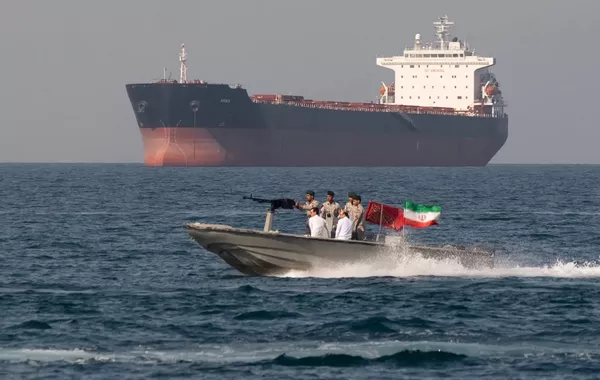
Iran Has Unveiled A Network Of Underwater Missile Tunnels Allegedly Housing Hundreds Of Long-Range Cruise Missiles, While Warning That The Strait Of Hormuz Would Not Remain Safe If The Country Were Attacked, Amid Rising Tensions With The US.
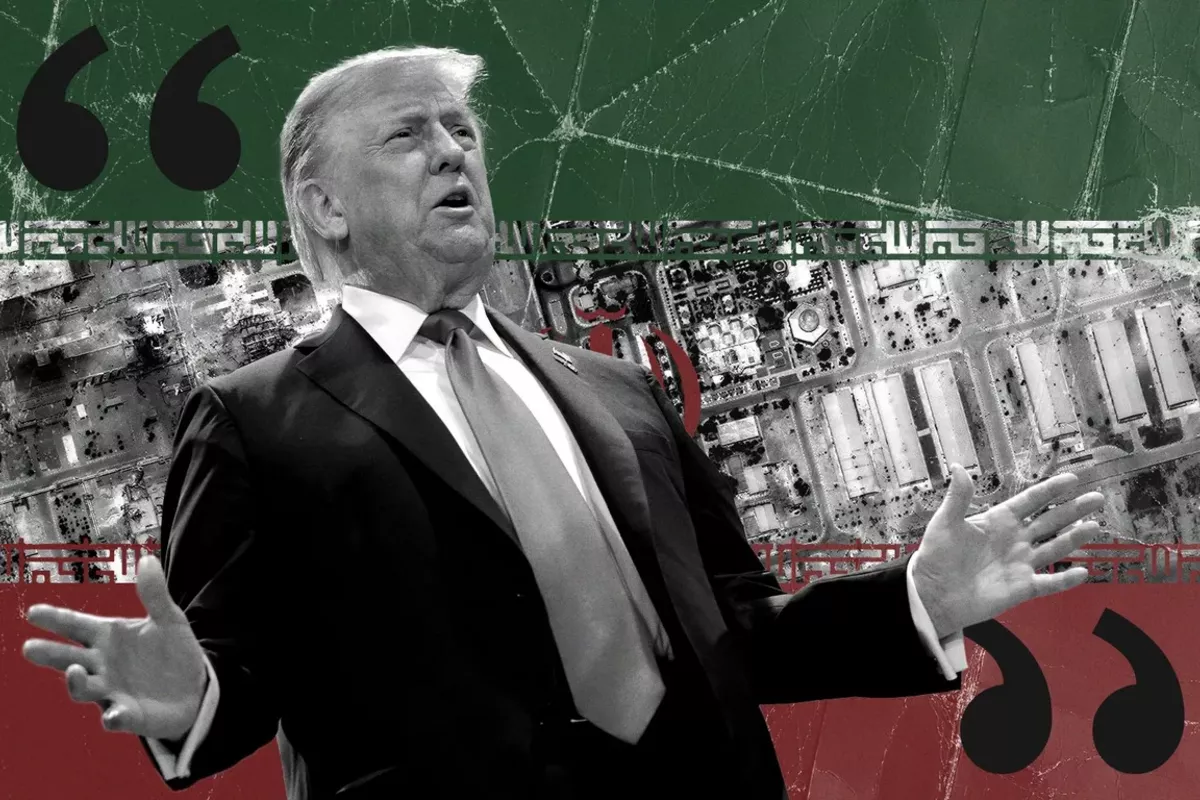
Donald Trump is weighing up everything from all-out war to high-precision strikes on Iran’s elites as the Islamic Republic braces for an imminent attack after the US expanded its military presence in the Middle East, The Caspian Post reports, citing foreign media.
The USS Abraham Lincoln aircraft carrier and its strike group entered US Central Command’s (Centcom) area of responsibility on Monday, joining other naval assets, air power and defensive systems that arrived in the region in recent days.
“A massive Armada is heading to Iran,” Trump posted on his Truth Social platform on Wednesday. “It is moving quickly, with great power, enthusiasm, and purpose.” He said it was “a larger fleet” than that sent to Venezuela before the strike early this month, and that it was “ready, willing, and able to rapidly fulfil its mission, with speed and violence, if necessary”.
Referring to the US bombing of Iranian nuclear sites last June, he added, “The next attack will be far worse! Don’t make that happen again,” urging the Government to negotiate a deal over its nuclear programme.
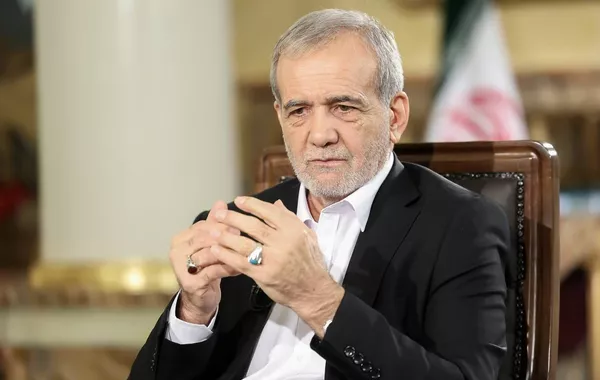
Ali Shamkhani, secretary of the Supreme National Security Council of Iran, said any US military action would be considered the start of a war and Iran’s response would be “immediate, all-out and unprecedented”, directed at the US, Israel and allies.
Trump warned weeks ago that the US was “locked and loaded” and prepared to strike if Tehran did not stop massacring anti-government protesters. As the protests were crushed, Trump dialled down his threats.
The US assets in the Middle East
That has now changed. The regional build-up marks an escalation in American firepower and defensive capabilities in the region. Centcom has announced that US Air Force Central will conduct military readiness exercises in the coming days.
A Gulf official told Middle East Eye that the US was considering precision strikes on Iran as early as this week. Ambrey, a maritime risk firm, said the US had “positioned sufficient military capability to conduct kinetic operations against Iran while maintaining the ability to defend itself and regional allies from reciprocal action”.
The USS Abraham Lincoln is a formidable Nimitz-class nuclear-powered aircraft carrier, one of the largest warships in the world, which can support more than 65 aircraft and 97,000 tonnes of equipment. It is now believed to be somewhere in the Arabian Sea, off the coast of Oman.
The Abraham Lincoln is escorted by three Arleigh Burke-class guided missile destroyers - the USS Frank E Petersen, Jr, USS Spruance and USS Michael Murphy - which can detect and engage ballistic and cruise missiles. They are capable of firing Tomahawk cruise missiles, which, with ranges of 1,500-2,500 kilometres, could strike strategic targets deep inside Iran. In June, the US launched 30 Tomahawks at Iran from submarines.
The US has also deployed F-15E jet fighters from RAF Lakenheath in Suffolk, possibly to Muwaffaq Salti Air Base in Jordan. Israel network Ynet reported the presence of P-8A Poseidon maritime patrol aircraft, MQ-9 Reaper drones and C-17 cargo carriers.
Other US assets sent to the region in recent weeks include Patriot and Terminal High Altitude Area Defence (THAAD) missile systems, which could help to defend American and allied installations from Iranian counter-attacks.
The US has adapted since Iran fired drones and missiles at Israel and Al Udeid Air Base in Qatar, a US ally, last June. The partial success of some Iranian missiles exposed the limits of interceptor systems. Two weeks ago, Centcom and regional partners opened a co-ordination cell at Al Udeid to enhance integrated air and missile defence in the region.
Britain deployed a group of Typhoon fighter jets to Qatar last week “for defensive purposes noting regional tensions”, the Ministry of Defence said. However, the UK is not expected to assist in any US operations against Iran.
More military equipment is expected to be in place in one to two weeks, a US official told The Wall Street Journal.
Trump’s military options for Iran
Trump has asked his military advisers for “decisive options” on Iran even as his special envoy Steve Witkoff hinted last week that the US was still seeking a diplomatic way forward.
“The options that the US might take depend on what the desired end goal is in Iran,” said Dr Burcu Ozcelik, senior research fellow for Middle East Security at the Royal United Services Institute. “Put differently, it’s not clear yet what the US strategy is - is it ultimately regime change or is the goal to return to the negotiating table?”
Brian Katulis, senior fellow specialising in US foreign policy and national security at the Middle East Institute in Washington, DC, said military action could mean “targeted strikes against Iran’s leadership and security agencies, additional strikes against its military and nuclear infrastructure, or some sort of naval blockade to pressure the regime”. It could also include “non-kinetic options like cyber attacks”, he added.
Trump has shown a preference for spectacular but limited strikes, including the bombing of Iran last year, the 2020 assassination of Islamic Revolutionary Guard Corps (IRGC) commander Qassem Soleimani during Trump’s first term, and the Venezuela operation.
Sascha Bruchmann, research fellow for defence and military analysis at the International Institute of Strategic Studies, said US air strikes might aim to “decapitate” Iranian leadership, or degrade command-and-control infrastructure “to weaken cohesion between leadership and security forces or among the forces”.
Trump has previously threatened the life of Iran’s supreme leader, Ayatollah Ali Khamenei, and there is speculation that he could aim to capture, remove or kill him.
But Bruchmann believes that capturing Khamenei is not feasible. “Venezuela was unique,” he said. “The distances and threats here are different. The US can strike Tehran from planes but not take helicopters.”
As in Venezuela, the removal of a leader does not necessarily mean the removal of a regime. Even if Trump were to topple Khamenei, the basic state apparatus may remain, headed by an equally brutal cleric or IRGC officer. The absence of defections among elite security forces during recent protests suggest some level of regime resilience.
Trump may be considering launching all-out war to bring down the regime. This might involve a shock-and-awe campaign targeting Iranian political and security leaders, and military infrastructure including bases and missiles. It would almost certainly trigger a ferocious response.
“Any broader and more sustained campaign would need more assets than we are currently observing,” Bruchmann added. “One aircraft carrier is not enough to sustain a longer campaign, and the missile defences in the region need to be reinforced. The US has the ability to strike Iran any moment, even from the continental US with bombers, but it is very difficult to overthrow a government purely from the air.”
Katulis suggested anything more than a limited strike would be too dangerous, “given the vulnerability of the US military personnel and assets strewn across the region in places like Israel, Syria, Iraq, and several Gulf countries”.
Regional US allies, particularly Gulf countries afraid of Iranian attacks on their territory, could persuade Trump to limit or abandon plans for a strike. An IRGC commander has warned neighbouring nations that they will be “considered hostile” if their territory is used to attack Iran. Saudi Arabia and the United Arab Emirates have banned use of their airspace for an attack.
Of course, Trump’s posturing may be a bluff aimed at forcing the Iranian regime into a deal limiting its nuclear programme.
Trump attacked Iran’s nuclear sites last year after he saw no credible movement on limiting the programme, which is believed to be developing nuclear weapons - something Tehran denies. Although Trump claimed to have obliterated the nuclear sites, the status of Iran’s uranium stockpile is unclear.
US officials have said any deal must remove all enriched uranium from Iran, ban enrichment inside the country, cap Iran’s stockpile of long-range missiles and stop Iran’s support for regional militias.
Iran has refused these terms. Although regime officials have suggested informal backchannels are keeping communication open, Iran’s foreign minister, Abbas Araghchi, denied any contact with Witkoff in recent days.
Trump may hope that threatening to hit a suffocating regime struggling with a tanking economy and hostile population will force it to the table.
Ozcelik said the US would have to keep the regime under “‘maximum pressure’ that would choke the Iranian economy, deepen the currency crisis, hasten elite fragmentation”.
He suggested intervention may involve “working multiple pressure vectors at once: economic, covert, cyber, and informational, even a possible naval blockade to disrupt Iran’s shadow fleet of oil exports”.
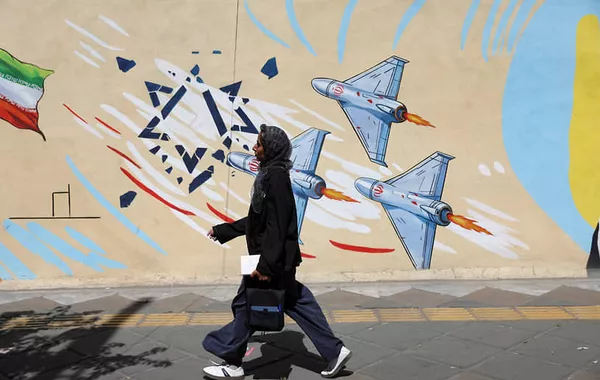
However, experts are sceptical that this extremist, ideological and murderous regime will surrender. “The regime has just shown it is willing to kill its way through any opposition by the thousands,” said Bruchmann. “Iranian propaganda shows defiance and threatens regional war. After last year’s conflict, Iran has tried to reconstitute its missile threat, which is its main deterrent now, and focused resources there. None of this indicates that Tehran would back down.”
The US armada may be intended for defensive purposes, according to Jennifer Kavanagh, director of military analysis at the Defense Priorities think-tank.
She pointed to Operation Midnight Hammer last June, when B-2 bombers that attacked Iran took off from the US mainland. “I would expect that any future campaign would be similar,” she told the Quincy Institute for Responsible Statecraft.
“Assets moved into the region seem to be those intended to defend US forces, bases and military hardware, more than what the US might use for offensive strikes on Iran.”