US-Iran Deal Won’t Shield Israel, Expert Warns

Photo credit: orfonline.org

US-Iran Deal Won’t Shield Israel, Expert Warns
  • 11 Feb, 12:57
  • Iran

A renewed nuclear agreement between Washington and Tehran, while reducing immediate nuclear threats, would still leave Israel vulnerable to Iran’s missile program and proxy networks, Prof. Amatzia Baram of the University of Haifa warned on Wednesday in an interview with Maariv.

He urged Jerusalem to prepare for a tougher regional posture even if the nuclear issue is contained, The Caspian Post reports, citing foreign media.

Baram said the White House seeks a clear, signed nuclear achievement it can present as superior to the 2015 accord.

“Trump must show a written, signed success that can be framed as a bigger win than President Obama’s 2015 deal,” he said. According to Baram, political optics weigh heavily in Washington, making a strong, enforceable nuclear deal the top priority.

However, he warned, such a deal may not include Iran’s ballistic missiles, its support for proxy groups, or protections for protesters in Iran.

“The Americans may go for a dramatic nuclear agreement while effectively dropping the tougher demands on missiles, proxies, and the Iranian opposition,” he said. “For Israel, that would mean the other threats remain.”

Baram argued that Iran’s leadership could show flexibility on the nuclear issue because concessions there, while damaging to regime prestige, do not immediately undermine core regime security.

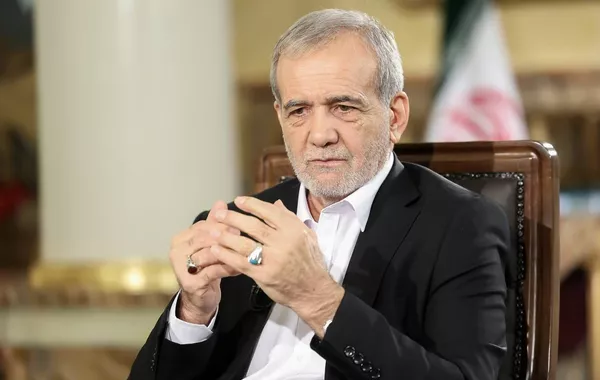
He said Iranian President Masoud Pezeshkian, whose rise was enabled by Supreme Leader Ali Khamenei, could help sell such moves if required.

“But the Islamic Revolutionary Guard Corps and senior clerics strongly oppose this,” he added.

“At present, they carry the greatest weight, and the supreme leader tends to side with them,” Baram said. He stressed Iran is unlikely to accept meaningful limits on missile ranges or to end support for Hezbollah, the Houthis, Iraqi militias, or even Hamas. These pillars, he said, are central to exporting the revolution and to Iran’s defense doctrine.

Baram estimated the chance of an American military strike is still “a bit above 50 percent” if Iran refuses fast, direct talks that include nuclear concessions. He noted that current contacts are slow and mediated through Oman.

“The US military threat is part of the pressure mechanism meant to force Iranian concessions, but without them the threat could turn into a strike,” he said.

Even a strong nuclear deal would still require Israel to prepare for missile salvos and proxy escalation, Baram cautioned. He urged tighter US-Israel security cooperation and increased investment in missile defense.

“If America settles for the nuclear track, the prime minister should seek compensation from Trump,” he said, adding that Israel must also step up efforts against the “ring of fire” around its borders.

Related news

US-Iran Deal Won’t Shield Israel, Expert Warns

A renewed nuclear agreement between Washington and Tehran, while reducing immediate nuclear threats, would still leave Israel vulnerable to Iran’s missile program and proxy networks, Prof. Amatzia Baram of the University of Haifa warned on Wednesday in an interview with Maariv.