Photo source: gov.kz
A team of archaeologists has uncovered remarkable new evidence of a large Golden Horde-era structure in northern Kazakhstan, shedding fresh light on the region's medieval history.
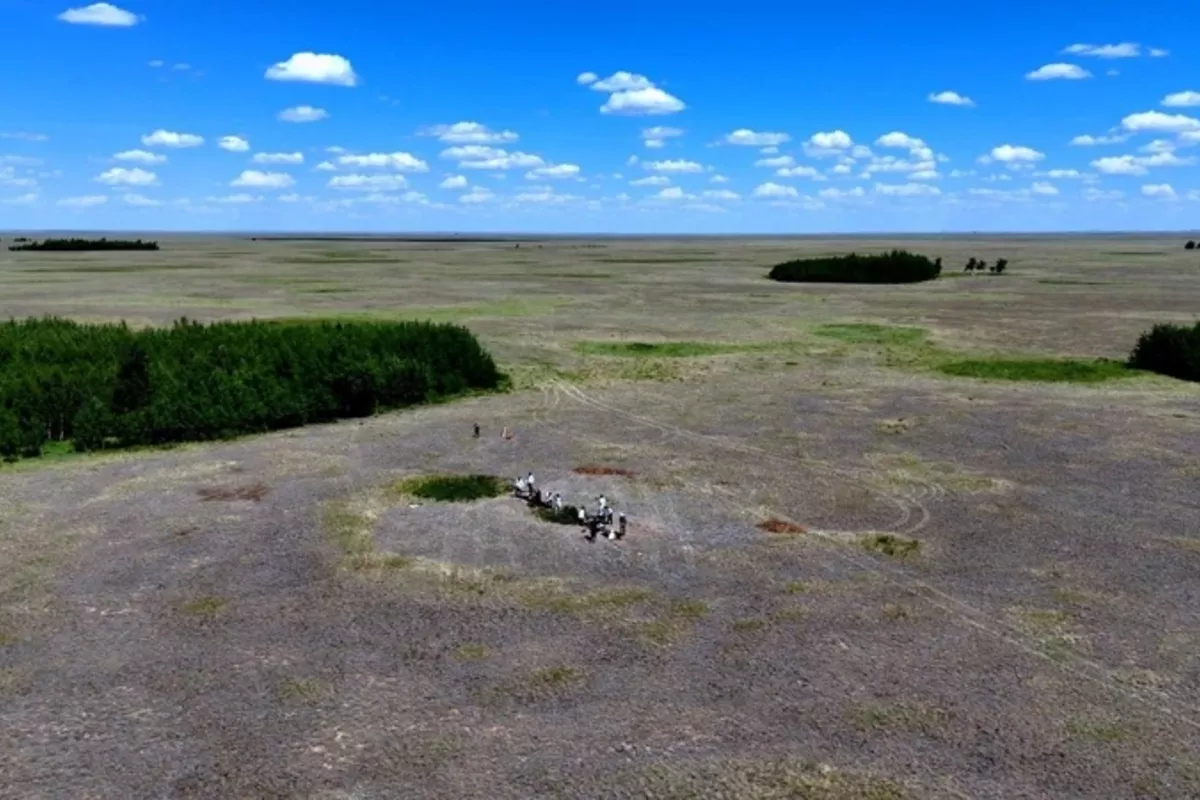
Researchers and students from Margulan University made the discovery during an ongoing archaeological expedition at the Zhantai tract, one of the most significant sites explored during this year's fieldwork, The Caspian Post reports via Kazinform.
The expedition is surveying historical sites across the left-bank Irtysh region, Lake Kyzylkak, and the valleys of the Olenti, Shiderty, and Sileti rivers, covering parts of the Pavlodar, North Kazakhstan, and Akmola regions.
At the Zhantai tract, archaeologists uncovered evidence of a substantial architectural complex, including numerous fragments of burnt bricks-a rare find for later historical periods. Advanced LiDAR mapping and ground-penetrating radar surveys also confirmed the presence of buried structures beneath the surface.
Researchers found that the bricks measure 25 by 25 centimeters, matching the distinctive "Golden Horde standard" widely used in the construction of palaces, mosques, mausoleums, and other monumental buildings during the Golden Horde period.
The discovery is expected to provide valuable insights into the political, cultural, and architectural legacy of the medieval empire that once dominated much of Eurasia.
The latest find comes shortly after Kazakhstan unveiled another major Golden Horde discovery-a rare women's robe recovered from the Bolgan Ana Mausoleum, restored by scientists and recently transferred to the National Museum of Kazakhstan.
Share on social media