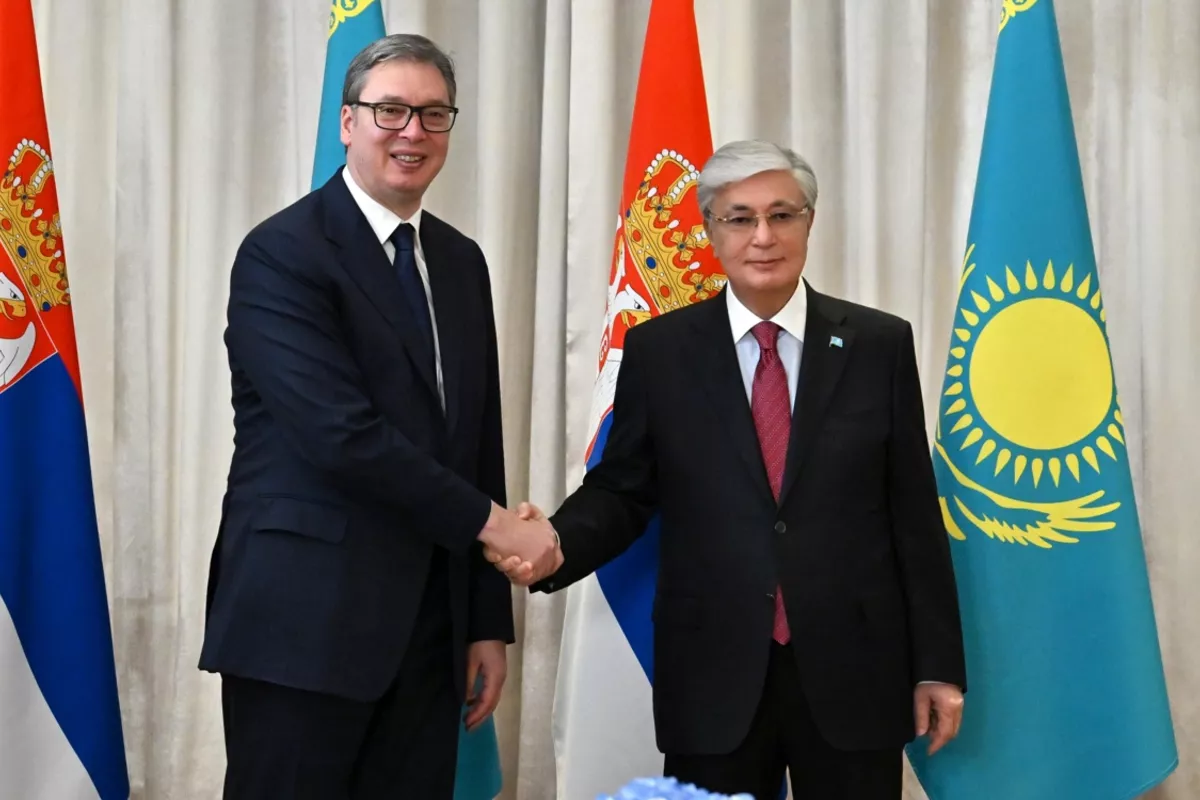
At the invitation of President Kassym-Jomart Tokayev, President of Serbia Aleksandar Vučić will pay an official visit to Kazakhstan on February 26-27.
Today, cooperation between Astana and Belgrade is developing in a new geoeconomic reality, against the background of the transformation of energy markets and trade routes, The Caspian Post reports via Kazakh media.
Mutually Beneficial Partnership
Diplomatic relations between Kazakhstan and Serbia were established on December 10, 1996. During this time, the heads of state have carried out six visits at the highest level, which made it possible to bring bilateral interaction to the level of a pragmatic partnership with stable political trust and growing economic dynamics. An important milestone was the official visit of President Kassym-Jomart Tokayev to Belgrade on November 19, 2024, following which decisions were adopted on further deepening interaction between the two countries.
Senior expert of the Institute of Foreign Policy Studies under the Ministry of Foreign Affairs of the Republic of Kazakhstan Valery Sitenko believes that Aleksandar Vučić’s visit to Astana will become a continuation of the strategic dialogue between the two countries and the mutually beneficial partnership that already counts a thirty-year history. The goal of the upcoming visit is to give a new impetus to its further development.
According to the data of the Ministry of Trade and Integration of the Republic of Kazakhstan, in 2025 trade turnover between Kazakhstan and Serbia reached $107.7 million, increasing by 7.6 per cent. Kazakhstan’s exports grew by 80.4 per cent to $28.6 million, imports from Serbia amounted to $79.1 million, a decrease of 6.1 per cent.
The Ministry of Trade notes that Kazakhstan’s exports demonstrated the highest growth for the entire observation period. The main share, 71 per cent or $20.3 million, consists of mineral fertilizers. At the same time, the nomenclature of supplies is expanding: packaging materials, cotton wool, equipment and natural gas are appearing.
At the same time, growth is observed in the import of certain categories of goods, including medicines, aluminum plates, sheets and strips, as well as paper, cardboard and cotton wool from cellulose fibers. Overall, imports decreased by 6.1 per cent by the end of last year, which led to a reduction in the negative trade balance from minus $68.3 million to minus $50.4 million.
Sitenko said that such growth reflects the beginning of a sustainable trend due to the significant unrealized potential of cooperation between the countries. The expert also emphasized that on the eve of the visit of the president of Serbia, meetings of relevant ministries took place, where projects in energy, transport, construction and agriculture were discussed.
“The reference point will be the development of a Road Map of economic projects for 2026-2027. Its implementation will be assisted by the intergovernmental commission on trade and economic cooperation: the fourth meeting took place in 2025 in Almaty,” he said.
Earlier, Deputy Prime Minister of the Republic of Kazakhstan Serik Zhumangarin spoke about the prospects for trade turnover. At the meeting of the Kazakh-Serbian intergovernmental commission he noted that Kazakhstan is ready to offer Serbia more than 90 types of non-raw materials goods totaling over $500 million, from metallurgical and petrochemical products to mechanical engineering and the agro-industrial complex.
Growth Potential is Investment
Serbian investment presence in Kazakhstan remains limited but stable. Since 2008, the inflow of foreign direct investment from Serbia has amounted to $17.4 million. The country has registered 11 joint enterprises and 47 companies with Serbian participation, of which 37 are active.
Cooperation between the Kazakh LLP “Budan” and the Serbian institute “Zemun Polje” has continued for about 30 years. Today, 85 per cent of corn plantings in Kazakhstan are hybrids produced within the framework of this partnership. Serbia also actively participates in the development of sunflower in our country through NS Seme.
Historically, a notable role was played by the Serbian company “Energoprojekt-Visokogradnja,” which participated in infrastructure projects, construction of metro facilities in Almaty, oil depots and engineering structures.
Leading expert of the Department of European and American Studies of the Kazakhstan Institute for Strategic Studies under the President of the Republic of Kazakhstan (KazISS) Ali Mukhambet notes that the investment attractiveness of the sides has a mutual character.

Photo credit: KazISS
“Kazakhstan is attractive as the largest economy of Central Asia with developed infrastructure and access to global markets. Serbia is of interest as an industrial and logistics hub in the Balkans that has free trade agreements both with the EU and with a number of other countries,” the expert says.
Mukhambet said that Kazakhstan is interested in supplies of Serbian processed agricultural products and medicines, Serbia is interested in Kazakhstan energy resources, chemical products and raw materials. Additional impetus can be provided by joint projects in digital technologies and innovation. Thus, the investment agenda is gradually shifting from episodic participation to the search for systemic projects.
The Middle Corridor and the Balkan Vector
Under the conditions of restructuring trade routes, the Trans-Caspian International Transport Route, the so-called Middle Corridor, acquires a special role. Kazakhstan promotes Serbia’s participation as a potential distribution hub in the Balkans.
“Serbia is a reliable partner of Kazakhstan in Southern Europe. An important direction of cooperation is the development of the Trans-Caspian International Transport Route. It will contribute to establishing connections between the Central Asian and European markets,” Sitenko emphasizes.
Mukhambet adds that Serbia’s geographical position and developed transport infrastructure allow it to play “a noticeable role in diversifying Kazakhstan’s export routes to Europe,” especially through the Balkan region.
Belgrade’s candidate status in the EU, according to experts, opens new opportunities. Sitenko notes that the basis of cooperation is bilateral interests, and for Kazakhstan the European Union remains a key trade and economic partner.
Mukhambet adds that as Serbian legislation becomes harmonized with EU norms, the predictability of the business environment increases, which facilitates the entry of Kazakh companies into the European market through Serbia.
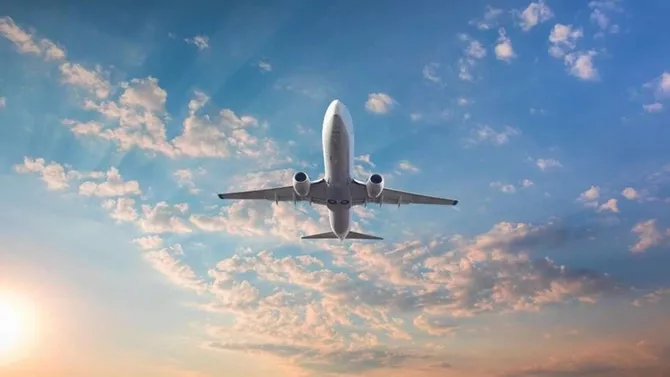
Photo credit: The Ministry of Transport of Kazakhstan
“An additional factor is the launch of direct air service Astana-Belgrade from November 2025, which strengthens business mobility and logistical connectivity,” Mukhambet said.
Multivector Policy: Similarity of Models
Kazakhstan and Serbia build their foreign policy on the principles of multi-vector policy and balance. Belgrade traditionally supported Astana’s key international initiatives, chairmanship in the OSCE, hosting EXPO-2017 and the election of Kazakhstan as a non-permanent member of the UN Security Council for 2017-2018. In turn, Kazakhstan consistently supports the territorial integrity of Serbia.
Sitenko said that the foreign policy approaches of Kazakhstan and Serbia are largely similar, both countries adhere to multi-vector policy, consistently defend national interests and rely on diplomacy.
“The main difference is that Serbia is oriented mainly toward the European vector, Kazakhstan toward the Eurasian one. These directions complement each other,” the expert noted.
The expert notes that both countries actively participate in the work of international structures, the UN, OSCE and WTO.
“The strategic interests of the two countries coincide. This is interest in preserving peace, territorial integrity of states and peaceful settlement of disputed issues. Against the background of growing conflict potential, the role of middle powers is increasing,” Sitenko emphasized.
It is precisely the coincidence of strategic approaches that makes the dialogue between Astana and Belgrade stable even under conditions of global turbulence.
A separate direction remains interparliamentary ties. In the National Assembly of Serbia, the country’s unicameral parliament, there operates a friendship group with Kazakhstan, and in the Parliament of the Republic of Kazakhstan an interparliamentary cooperation group with Serbia has been formed.
Trust Accelerates Decisions
A separate dimension of the Kazakhstan-Serbia relations is personal communication between the leaders. For countries conducting multi-vector policy, stable personal contact often becomes a practical instrument for promoting agreements.
In 2018 Aleksandar Vučić was awarded the Kazakh order “Dostyk” I degree, a state award for contribution to strengthening friendship and cooperation between the countries. This emphasizes not only the political but also the personal level of trust between the heads of state.
Photo credit: Kazinform
“Good relations between leaders always contribute to the promotion of bilateral cooperation. In 2024, assessing the results of President Tokayev’s visit to Serbia, President Vučić called him his friend who made a significant contribution to strengthening relations with Serbia in all areas of interaction,” Sitenko noted.
He added that in diplomatic practice such formulations are rare and indicate an established personal channel of communication.
“For Aleksandar Vučić, who has been in power for more than ten years and has built his own model of balance between the EU, Russia and China, personal trust in partners is an element of a pragmatic foreign policy strategy. In this context, the Kazakhstan direction occupies a stable place in his foreign policy architecture, and regular contacts at the highest level confirm the long-term nature of the bilateral dialogue,” the expert noted.
A Sustainable Trend
The Kazakhstan-Serbia relations are moving from the stage of protocol interaction to the phase of structural economic partnership. Current trade turnover demonstrates positive dynamics, but with the declared potential of more than $500 million in non-raw materials exports it is obvious that these are only the first results of joint work.
The combination of factors, export growth of 80.4 per cent, institutional mechanisms, development of the Middle Corridor, launch of direct flights and coincidence of foreign policy models, creates the basis for systemic expansion of interaction.
In this context, the upcoming visit of the president of Serbia to Kazakhstan is not the start of a new stage but a step toward consolidating an already formed trend. Astana and Belgrade are placing their stake on a long-term architecture of interaction based on pragmatism, balancing of interests and diversification of economic ties.