Digital Technologies Take Center Stage at Astana Opera
Digital reality is no longer a concept of the future-it is already reshaping even the most traditional fields, including theatrical art. In Kazakhstan, where 2026 has been declared the Year of Digitalisation and Artificial Intelligence, one of the clearest examples of this transformation can be found at Astana Opera, the country’s flagship opera house.
Victor Carare, Astana Opera’s deputy director, said that the institution has undergone a deep internal technological shift. Today, nearly every operational process is digitised-from lighting scores and video content to the daily work of sound engineers, prop masters, and the costume department, The Caspian Post reports via Kazakh media.
At the heart of this system is a central stage computer that synchronises complex performances involving frequent scene and act changes. “It is one large mechanism that is exceptionally well organised thanks to digitalisation,” Carare explains. This digital ecosystem extends beyond the stage, covering engineering systems as well, including precise climate control in the auditorium.
Digitalisation has also transformed logistics and planning. Integrated information systems now coordinate all services involved in productions-from assembling stage sets to rehearsals and live performances-significantly improving efficiency and accuracy.
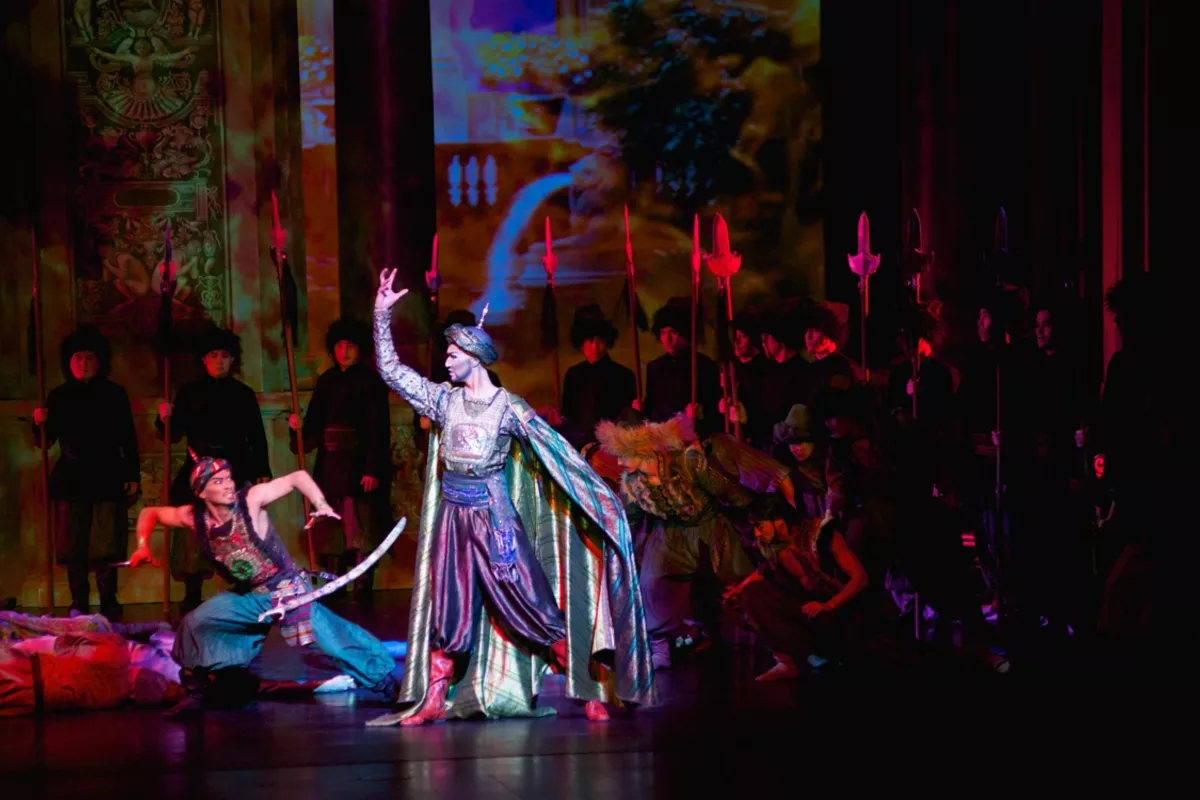
One of the most striking changes is visible in stage effects. Traditional methods, such as using flowing fabric to imitate fire, have been replaced by advanced digital solutions. Smoke and pyrotechnic effects can now be launched remotely from a control console located dozens of metres from the stage, ensuring both safety and precision.
Among the first productions to adopt these technologies was The Fountain of Bakhchisarai. Since then, Astana Opera’s technical capabilities have expanded dramatically, incorporating 3D projections, frontal video mapping, LED screens, complex lifting mechanisms, and pneumatic systems-all managed digitally. One of the most technologically sophisticated productions today is Turandot, where audiences witness real rain on the steppe, performers emerging from beneath the stage, and dramatic appearances from a dragon’s head.
“Digital technologies fundamentally change both what the audience sees and the invisible backstage work,” Carare notes. By automating routine processes, digitalisation frees creative teams to focus on artistic expression while sustaining an intensive and demanding repertoire.
The shift is evident even in production design. What was once drafted on paper is now created entirely in digital formats, reflecting how the Year of Digitalisation and AI translates into practical change rather than abstract declarations.
Audiences can experience this fusion of classical art and modern technology during upcoming performances of The Fountain of Bakhchisarai on February 4 at Astana Opera. Earlier in January-on the 16th, 17th, and 18th-the theatre also presented one of its most acclaimed repertoire works, Swan Lake, staged by the ballet company’s artistic director, Altynai Asylmuratova.
Astana Opera’s experience demonstrates how digitalisation is not replacing classical art, but enhancing it-allowing tradition and innovation to coexist on one of Kazakhstan’s most prestigious stages.