Photo credit: Industry Ministry
Kazakh researchers are developing a new technology to produce ferrotitanium from domestic raw materials, potentially making metallurgical production more efficient while increasing the use of the country’s mineral resources.
Scientists at the Abishev Chemical and Metallurgical Institute are focusing on locally sourced low-grade ilmenite concentrates and high-ash coal. The project aims to find a more cost-effective way to produce ferrotitanium, an alloy widely used in metallurgy to improve steel’s strength, durability and resistance to wear, Qazinform reports.
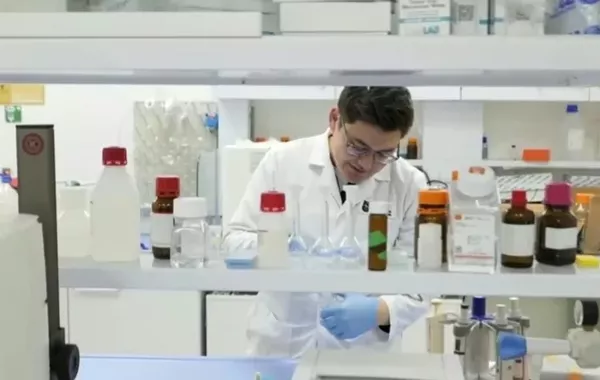
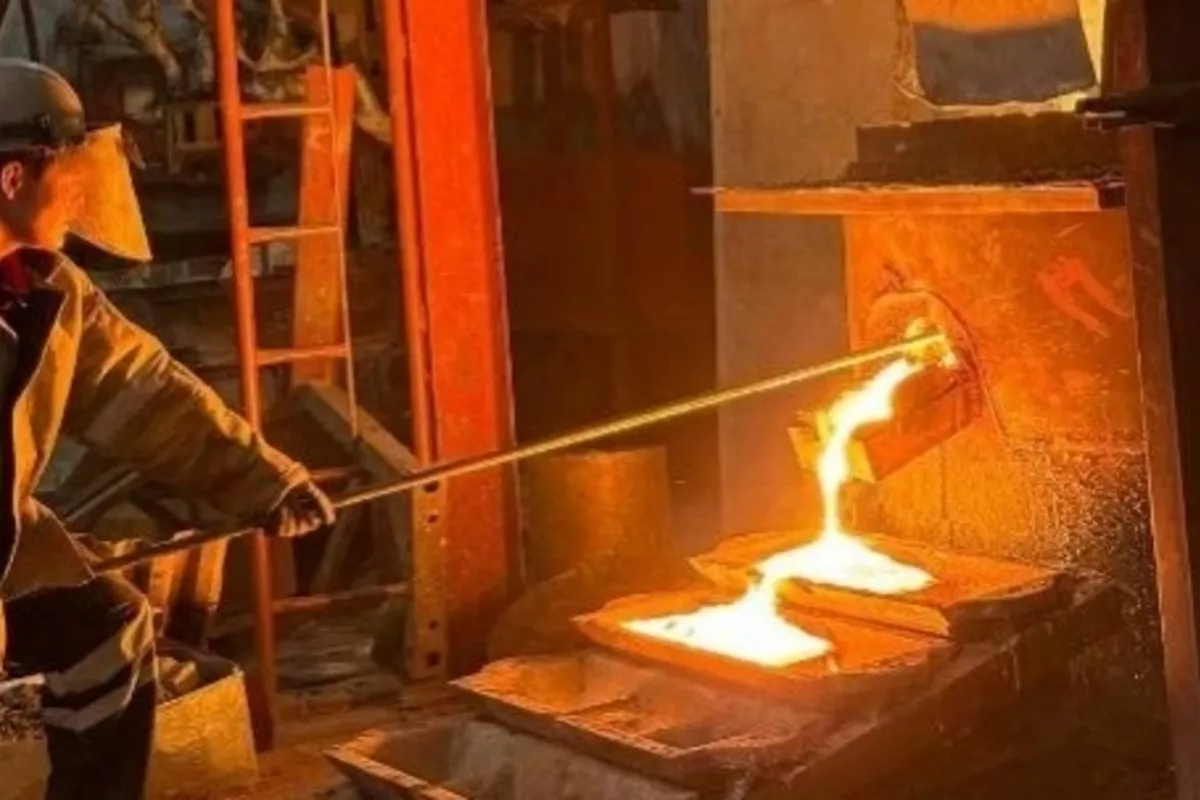
The researchers are studying the physicochemical properties of the raw materials, conducting thermodynamic modeling and carrying out laboratory and pilot-scale smelting tests. They are also examining the use of a newly developed titanium-containing alloy to produce ferrotitanium with a titanium content of more than 65%.
The project could provide a scientific and technological basis for expanding the processing of Kazakhstan’s mineral resources and developing more resource-efficient methods for producing high-demand metallurgical materials.
A major focus is also being placed on training young specialists. Researchers, engineers and students from Abylkas Saginov Karaganda Technical University and the National University of Science and Technology MISIS (NUST MISIS) are taking part in experiments, sample preparation, data processing and analysis.
Natalya Lu, Deputy Director for Research at the institute, said training a new generation of specialists is one of the project’s key objectives, with students gaining hands-on experience through direct participation in scientific and experimental work.
The initiative comes as Kazakhstan seeks to bring more scientific developments into commercial use. Earlier, it was reported that 30 developments created by Kazakh scientists had entered foreign markets, while sales from eight projects exceeded 1 billion tenge.
Kazakh researchers have also recently developed an innovative irrigation system designed to reduce water consumption by 32%, highlighting the growing focus on practical technologies in the country’s scientific sector.
Share on social media