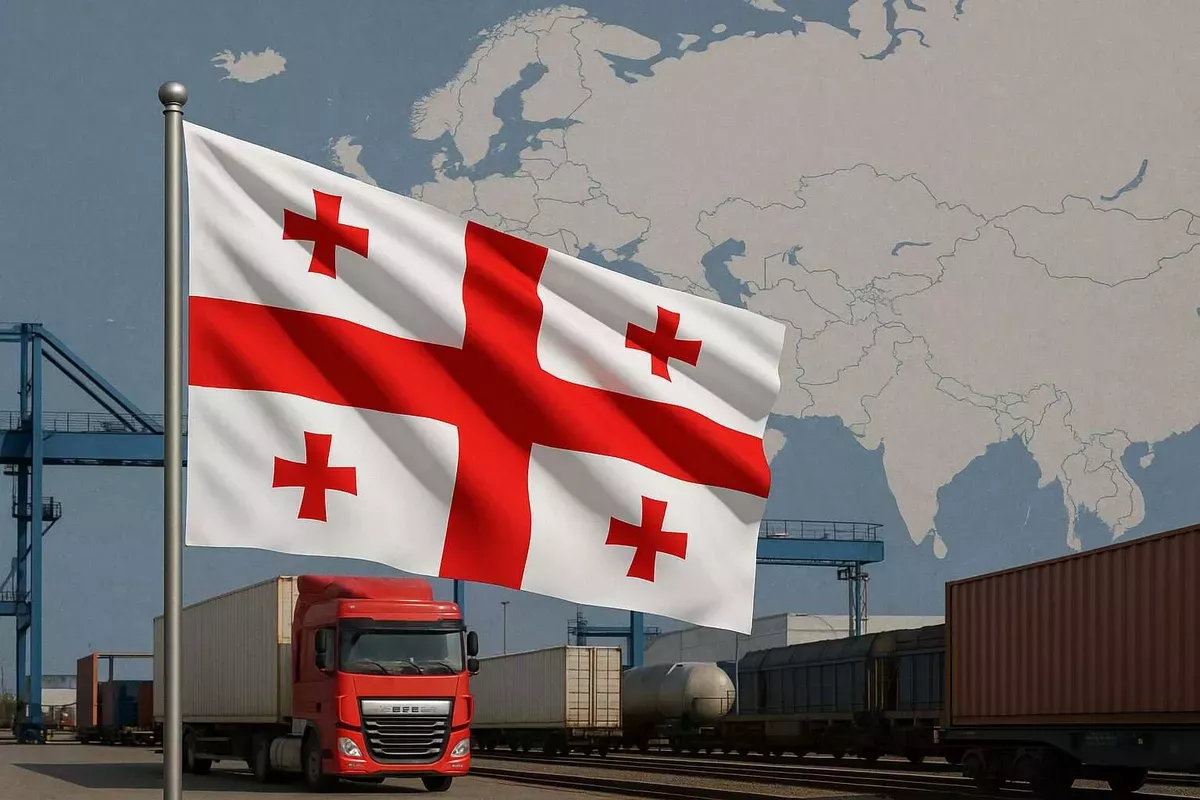
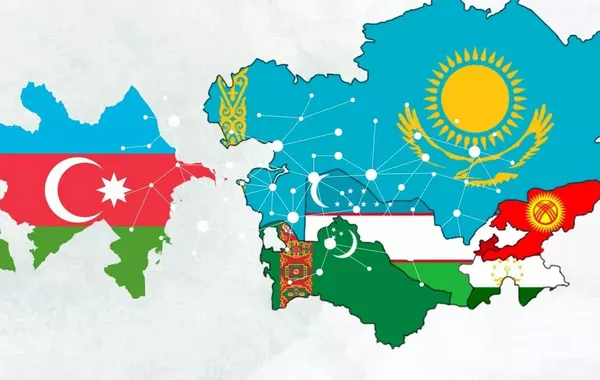
The emergence of new transport routes through Armenia is unlikely to diminish Georgia’s role as a key transit country between Europe and Asia. On the contrary, a more open, peaceful and interconnected South Caucasus could increase the region’s overall strategic value, attract investment and strengthen the Middle Corridor as a wider Eurasian connectivity system.
This was the central message behind recent remarks by Georgian Deputy Foreign Minister Lasha Darsalia, who took part in the New York event, “Prosperity Through Peace: Investing in the Trans-Caspian Trade Route and TRIPP,” organised at the initiative of the US Department of State.
Darsalia described the Middle Corridor as an important component of Eurasia’s connectivity architecture and welcomed progress in the Azerbaijan-Armenia peace process. His assessment reflects an increasingly important reality: lasting peace, open borders and new railway links in the South Caucasus would not create a zero-sum competition among regional states. They would create new commercial opportunities for all of them.
For this reason, claims that the Zangezur Corridor or TRIPP could fundamentally undermine Georgia’s geopolitical relevance are overstated. Georgia’s transit role rests not on a single route, but on its established infrastructure, its Black Sea access, its energy networks and its long-standing position within the East-West transport system.
Russian and Armenian media outlets have repeatedly argued that the launch of TRIPP could deprive Georgia of its role as a bridge between Europe and Asia. Some Georgian commentators have voiced similar concerns. Yet the available figures point to a more balanced conclusion.
The projected annual capacity of the Zangezur Corridor is estimated at around 15 million tonnes of cargo. The Middle Corridor, by contrast, already has a capacity of 27 million tonnes, according to Georgia’s Ministry of Economy, with plans to raise that figure to 48 million tonnes. This gap demonstrates that the existing transport architecture through Azerbaijan and Georgia will remain indispensable even as new routes become operational.
Georgia’s own transit statistics further underline this point. According to PMC Research, the volume of transit freight passing through the country grew by 109% between 2018 and 2025. Transit volumes reached 15.1 million tonnes in 2024, before declining by 9.5% to 13.7 million tonnes in 2025. The decrease was mainly linked to a 7.8% fall in cargo moving along the East-West Corridor. Nevertheless, that route retained its dominant position, accounting for 69.7% of all transit freight.
The lesson is clear: new corridors may redistribute some cargo flows, but they will not replace the broader Middle Corridor. If managed intelligently, they could increase the total volume of trade moving through the South Caucasus rather than weaken any individual country’s position.
The strategic significance of Georgia extends beyond freight transit. It is also closely tied to the political and security environment in which regional infrastructure operates. This makes the future of US-Georgia relations important not only for Tbilisi, but also for Azerbaijan and Central Asia.
Prime Minister Irakli Kobakhidze recently said that relations with the United States had improved significantly and expressed hope that the strategic partnership could be restored. However, it remains premature to claim that such a partnership has already been fully revived.

photo: getty images
Kobakhidze himself was cautious, saying that he had discussed the issue in conversations with US President Donald Trump and Secretary of State Marco Rubio, but could not publicly disclose the details. The key questions therefore remain unanswered: what exactly would a renewed strategic partnership mean in practice, and what commitments would Washington and Tbilisi be prepared to make?
The answer may also depend on the political balance in Washington after the US congressional midterm elections scheduled for 3 November 2026. Until then, talk of a complete reset should be treated as an expectation rather than an established fact.
Still, a stronger US-Georgia relationship would serve wider regional interests. For Azerbaijan, a stable, economically resilient and internationally connected Georgia is an essential strategic asset. Georgia remains the first transit country for Azerbaijani energy exports to international markets, while oil resources from the eastern shore of the Caspian also move through Azerbaijan and Georgia.
A stable Georgia supported by Western partners has long been a guarantor of vital energy and transport projects linking the Caspian basin with Europe. Its importance is therefore not limited to Azerbaijan. It matters equally for Central Asian countries seeking reliable routes to global markets.
At the same time, Georgia remains exposed to political and economic pressure from Russia. Moscow’s recent restrictions on imports of certain Georgian beverages should not be viewed simply as a commercial dispute. They carry a clear political message.
Since Georgian Dream came to power in 2012, Russia has periodically signalled that it would like diplomatic relations with Georgia to be restored. Tbilisi’s position has remained unchanged: such a step would be premature so long as Moscow recognises the so-called independence of Abkhazia and the Tskhinvali region, referred to by Russia as South Ossetia, and Georgia’s territorial integrity remains unresolved.
Before Georgia’s 2024 parliamentary elections, Russian media also floated the idea of a confederal arrangement involving Georgia and the occupied territories. The proposal was firmly rejected by Georgian society, political circles and the ruling party alike.
Despite maintaining extensive economic ties with Russia, the Georgian government has refused to impose national sanctions on Moscow, describing its policy as pragmatic and guided by national interests. At the same time, Tbilisi says it complies with international financial and banking restrictions.
This balancing approach has not shielded Georgia from pressure. Russia continues to seek concessions where possible and periodically tests the country’s political resilience. This time, Georgian beverage producers appear to have become the target.
Georgia’s strategic future will depend on its ability to preserve sovereignty, deepen ties with the West and remain a reliable hub for regional connectivity. New routes through Armenia should not be feared as an existential threat. They should be seen as part of a broader transformation in which the South Caucasus can become more connected, more prosperous and more consequential for Eurasia as a whole.