As part of the former Soviet Union, the Kyrgyz SSR was among the least developed republics. Despite having sufficient resources, it exhibited some of the lowest living standards both within the USSR and globally. In 1990, on the eve of the Soviet Union’s collapse, Kyrgyzstan’s GDP amounted to $2.6 billion. By this indicator, the republic ranked 143rd in the world, comparable to Namibia ($2.8 billion), Mauritius ($2.7 billion), and Mali ($2.7 billion), and slightly ahead of the tiny principality of Monaco ($2.4 billion), which has a territory of just two square kilometers and a population of 35,000. Kyrgyzstan’s share of global GDP was 0.011%. In the same year, GDP per capita stood at $593, placing the republic 169th worldwide.
Between 1990 and 1999, Kyrgyzstan’s GDP in current prices declined by $1.4 billion (a drop of 52.1%), falling to just $1.2 billion. The average annual GDP change was negative, at minus $0.15 billion, or minus 7.8%. During the same period, GDP per capita decreased by $337 (56.8%), reaching $256. A recovery began only after 1999. From then until 2022, Kyrgyzstan’s GDP in current prices grew by $9.7 billion, increasing 8.7 times to reach $10.9 billion. To a significant extent, this growth was driven by investments from China and other countries.
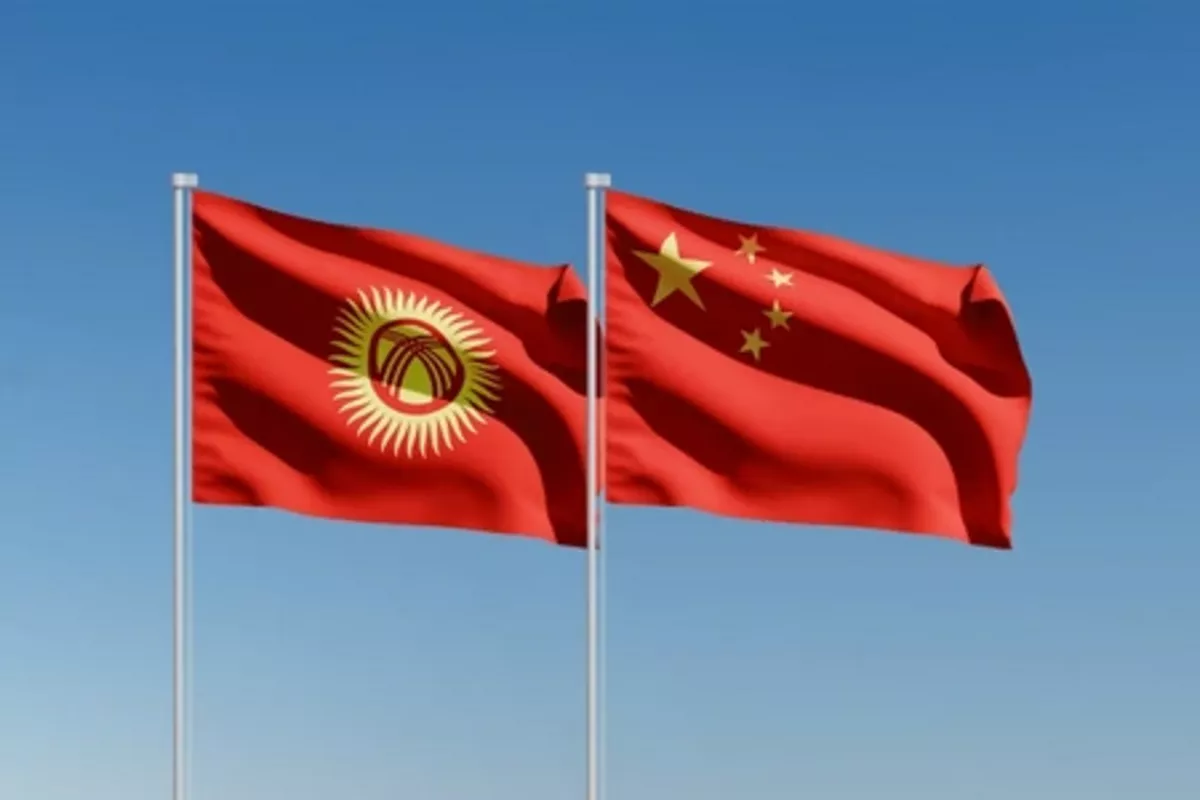
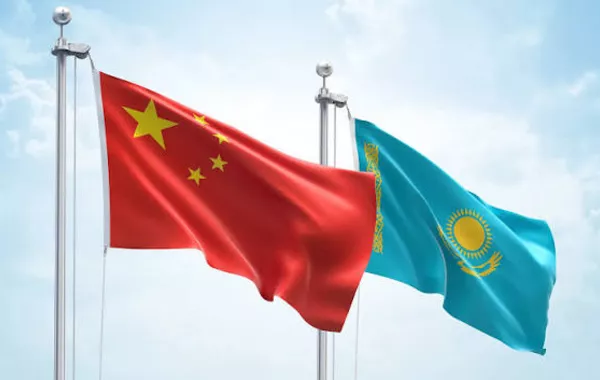
Relations between the People’s Republic of China and the Kyrgyz Republic began with the signing of a joint communiqué establishing diplomatic relations on January 5, 1992. This was followed by a series of agreements covering economic, trade, scientific, and technical cooperation, as well as the certification of import and export goods. According to Chinese customs statistics, bilateral trade amounted to only $36 million in 1992 but reached $103 million in 1993. In 1994, an intergovernmental committee on trade and economic cooperation was established to coordinate ties between the two countries. By 1995, bilateral trade had reached $231 million.
Starting in 1998, Kyrgyzstan began opening its domestic market, reducing tariffs and customs barriers in line with World Trade Organization rules, which helped trade turnover between Bishkek and Beijing reach $198 million. China’s accession to the WTO in December 2001 opened new prospects for bilateral trade and economic cooperation. As a result, trade increased from $119 million in 2001 to $5.16 billion in 2012.
However, this growth has raised concerns about a trade imbalance. Between 2002 and 2008, Chinese exports to Kyrgyzstan increased 62-fold, while imports from Kyrgyzstan grew only twofold. This led to Kyrgyzstan’s trade deficit with China reaching $9.33 billion in 2008. Despite this, since 2013 the Kyrgyz government has signed a number of agreements within the framework of the Silk Road Economic Belt and the Belt and Road Initiative. These include agreements on technical and economic cooperation; cooperation in the construction and operation of the Kyrgyzstan-China gas pipeline; a credit agreement with the Export-Import Bank of China for the modernization of the Bishkek thermal power plant; a loan agreement for the North-South highway construction project; and a framework agreement on the Kyrgyz oil refinery project with a capacity of 800,000 tons per year, along with projects involving Chinese industrial and energy companies.
As a result, the number of Chinese companies across various sectors of Kyrgyzstan’s economy has steadily increased. Chinese exports reached $5.075 billion, while imports into China from Kyrgyzstan amounted to only $63 million. About 95% of Kyrgyz exports to China consist of six commodity groups, including copper ores and concentrates, cigarettes, precious metal ores and concentrates, petroleum products, unwrought aluminum, and animal hides.
The development of economic ties has been facilitated by a shared land border, convenient transport links, and a degree of cultural proximity. Kyrgyzstan’s geostrategic location between Europe and Asia, along with favorable conditions created by the government for trade and investment, has allowed it to become one of China’s bases for the production, processing, distribution, and re-export of goods. Kyrgyzstan is also increasing exports of environmentally friendly agricultural products such as honey, fruits, and meat.
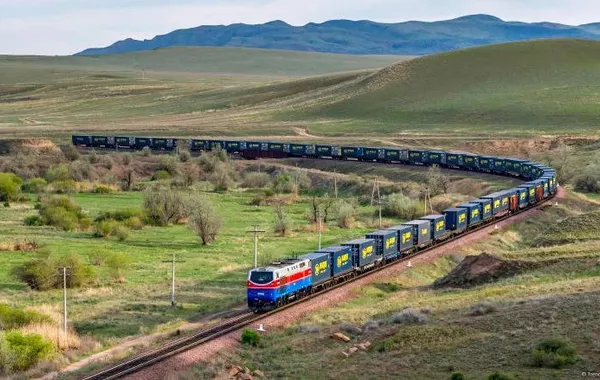
Given that agriculture has historically been a core sector of Kyrgyzstan’s economy, cooperation largely involves the export of high-quality agricultural products. In addition, to enhance Kyrgyzstan’s competitiveness as a potential transit hub between Chinese and Western markets, China has supported the implementation of several major infrastructure projects aimed at strengthening links with South and West Asia as well as Europe. These include plans for the China-Uzbekistan-Kyrgyzstan railway, the Chu Canal bypass project, and the alternative North-South road.
Despite the seemingly productive cooperation, negative trends have also emerged in recent years. In particular, the underestimation of environmental standards by Chinese companies has repeatedly led to environmental degradation. While Beijing provides financial resources to Bishkek, it often does so under conditions requiring the involvement of Chinese companies and labor in project implementation.
As a result, anti-Chinese sentiment has been growing in Kyrgyzstan. For example, during anti-Chinese protests in Bishkek in 2019, participants demanded a moratorium on granting Kyrgyz citizenship to Chinese nationals, greater transparency regarding loans from China, and even a ban on mixed marriages. Conflicts have also occurred in regions such as Naryn and Talas between local residents and representatives of Chinese companies engaged in mining activities.
In early 2019, due to the actions of a Chinese coal mining company, seven villages in the Uzgen District of Osh Region were left without water after coal waste was dumped into the bed of a local spring, contaminating the Zerger River. The trade imbalance remains a serious issue, with Chinese exports far exceeding Kyrgyz imports. Most machinery, equipment, and materials are imported from China, and Chinese specialists often maintain and finance these projects, while Kyrgyzstan primarily receives revenues from transit and land use.
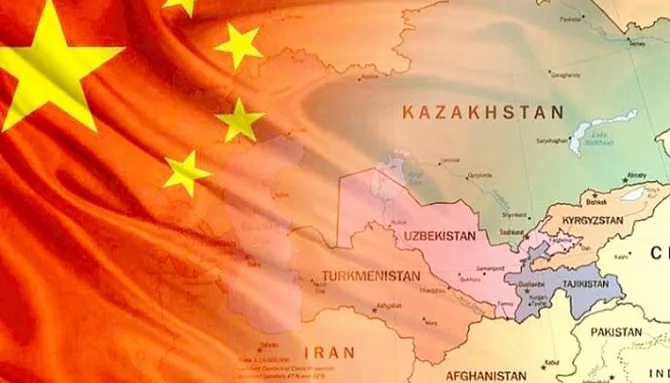
Photo: Shutterstock
Furthermore, Kyrgyzstan’s financial dependence on China has been increasing. While Kyrgyzstan’s debt to China stood at $9 million in 2008, it rose to $47 million in 2009 and $150 million in 2010. Between 2010 and 2019, it increased more than 186-fold to reach $1.7 billion. By 2021, the debt reached $1.77 billion, accounting for 42.5% of the country’s total external debt, and by April 2022 it had risen to $1.8 billion.
This trend suggests that Kyrgyzstan may become increasingly financially dependent on its more powerful neighbor. While cheap Chinese imports helped provide basic goods to the population during the 1990s, they also contributed to the decline of domestic industry and agriculture. Deep economic dependence on China poses risks to Kyrgyzstan’s national security and economic sovereignty, particularly given the raw material orientation of its economy.
At present, Kyrgyzstan’s public debt exceeds $8.94 billion, representing nearly 38% of its GDP. Under such conditions, there is a serious risk that the country could become an agrarian and raw-material appendage of China, with potentially unpredictable consequences.