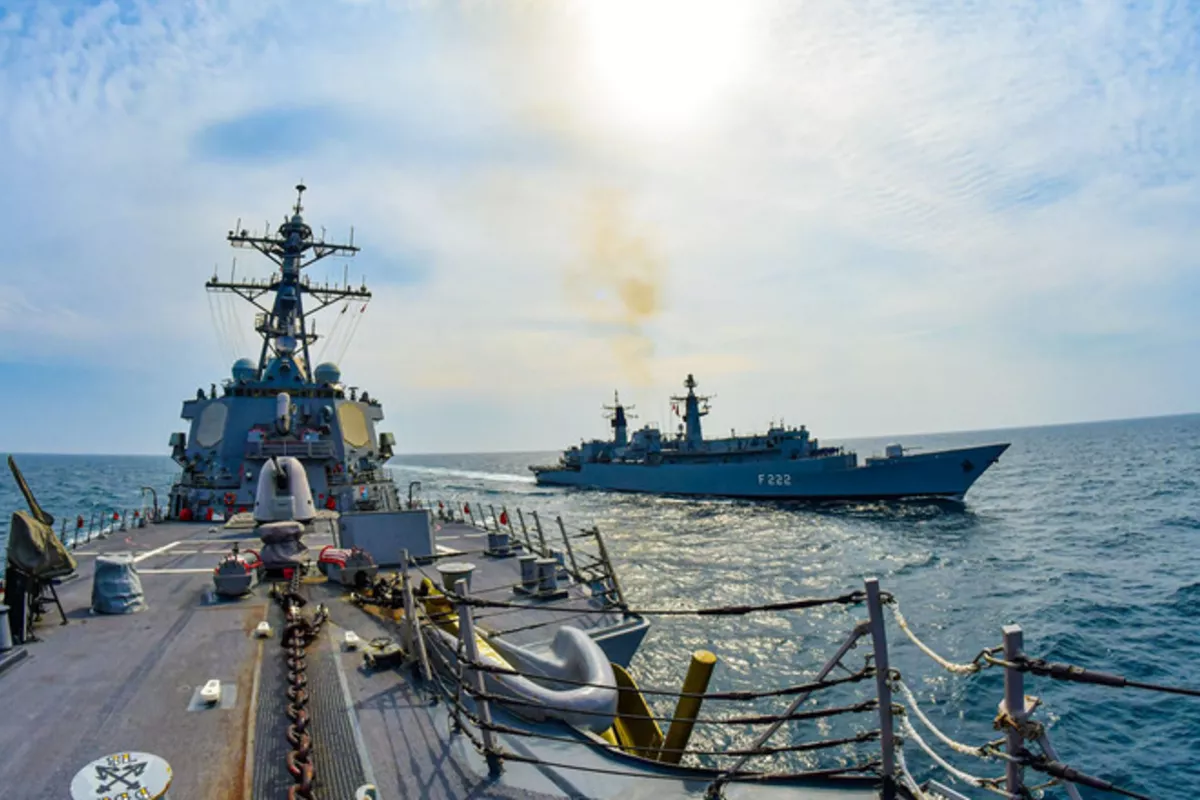
The NATO summit in Ankara in July has the potential to breathe new life into the Turkish-Romanian strategic partnership at a time when the Black Sea region is marked by strategic rivalry and geopolitical turbulence, given the wars in Ukraine and Iran, as well as the withdrawal of American troops from the Mihail Kogalniceanu air base in Constanta.
Beyond the important security and economic dimensions, President Recep Tayyip Erdoğan and Romanian President Nicusor Dan should seize the opportunity of the summit and organize a bilateral meeting that would also address the technological dimension of the strategic partnership, which is relevant both from a military perspective and from the standpoint of the economy of the future.
Momentum in Bilateral Relations
The two countries had previously upgraded their ties to a strategic partnership in 2011, but since Russia's full-scale invasion of Ukraine in February 2022, Türkiye and Romania have significantly elevated their bilateral relations, recognizing that the security of the Black Sea region hinges on closer coordination between its two largest NATO littoral states.
Deepening of this partnership has shown itself across multiple fronts with joint efforts with Bulgaria to demine the Black Sea, enhanced defense industrial cooperation, most notably Romania's landmark December 2025 acquisition of the Hisar-class light corvette TCG Akhisar for 223 million euros ($257.65 million), the first Turkish-built warship ever exported to a NATO and EU member state, and growing bilateral trade that has placed Türkiye among Romania's top commercial partners. People-to-people ties have also been strengthened, with Romanian citizens now able to travel to Türkiye with just their national ID cards since June 2024, a welcome step that reflects the broader warming of relations.
Yet despite this positive momentum, the technological dimension of the partnership remains strikingly underdeveloped. Cooperation in areas such as artificial intelligence (AI), cybersecurity, drone technology, space cooperation and dual-use innovation has yet to match the ambition displayed in the security and economic spheres. This gap is increasingly difficult to justify at a moment when technology is becoming inseparable from national security.
Focusing on Black Sea Defense
To understand what the partnership can become, Ankara and Bucharest must see each other’s progress and doctrinal ambitions.
Ankara, surrounded by instability, has been proactively shaping multiple regional orders from the Black Sea to the Levant. A more integrated partnership with Romania in the Black Sea could enable Türkiye to gain greater strategic flexibility in the Mediterranean and the Levant. In this equation, Bucharest is far from a peripheral partner. As an EU and NATO member, Romania is playing an increasingly important role in Ankara’s proactive diplomacy and strategic initiatives. Therefore, Türkiye and Romania should look beyond the maritime domain and explore opportunities to expand their cooperation into technological fields.
Another critical area for cooperation is the protection of undersea cables. The vulnerability of the undersea cables has been laid bare by the string of Baltic Sea incidents since 2022, from the Nord Stream pipeline explosions to the severing of the Estlink-2 power cable by the Russia-linked tanker Eagle S in December 2024.
Now, these risks are migrating south as NATO officials have publicly warned that Russia has mapped critical undersea infrastructure in the Black Sea. Against this backdrop, the planned 1,100-kilometer (685-mile) Romania-Georgia submarine power and data cable, a cornerstone of the EU's Global Gateway strategy to reduce dependence on Russian energy, will run within striking distance of Russian naval assets once operational. Both Türkiye and Romania should offer further high-level political support for a coordinated effort to protect undersea cables.
Deepening Technology Ties
Cybersecurity represents another promising frontier for elevating the Turkish-Romanian strategic partnership beyond its traditional domains. Romania has long harbored ambitions to position itself as a regional cyber hub, as home to the EU's Cybersecurity Competence Center in Bucharest and a growing ecosystem of cyber firms and talent. Türkiye, on the other hand, brings substantial offensive and defensive cyber capabilities developed through years of operating in a contested digital environment.
The two countries should move beyond declaratory cooperation toward concrete joint initiatives, such as the systematic sharing of cyber threat intelligence, particularly on state and non-state actors targeting Black Sea infrastructure and regular joint exercises that stress-test the resilience of both nations' critical systems.
Looking further ahead, Ankara and Bucharest could also explore how emerging AI tools can be harnessed to automatically detect and patch cyber vulnerabilities at machine speed, a field where both nations have an opportunity to shape standards rather than merely consume technology developed elsewhere. Such cooperation would not only harden the Black Sea's cyber perimeter but also signal that Romania and Türkiye intend to be producers, not just consumers, of the security architecture their region will need.
Security from Space
Space is another important domain to upgrade Turkish-Romanian cooperation. Türkiye has heavily invested in the space domain in the last decade to be a space power not just regionally, but also globally. With the founding of the Turkish Space Agency in 2018 and the establishment of the 10-Year Space Program, Türkiye reflects its strategic ambitions. The country successfully launched RASAT and Göktürk-2 satellites in 2011 and 2012, and IMECE, an Earth observation satellite with indigenously produced sub-meter resolution, in 2023. Romania launched its EMISAR satellite in March 2026, creating an avenue for cooperation and partnerships for future satellite launches.
Furthermore, Türkiye’s hosting of the 77th NATO Summit in July and the 77th International Astronautical Congress in October highlights Türkiye’s central role in collective defense and increasing space power.
Türkiye and Romania should seek to establish a bilateral working group on space situational awareness, satellite-based intelligence, surveillance, and reconnaissance (ISR) and Earth observation capabilities that would strengthen Black Sea maritime domain awareness. This would link the space agencies of Türkiye and Romania, as well as strengthen the linkages between the aerospace sectors of both countries and interoperability. The two allies are already cooperating under NATO infrastructure, and bilateral cooperation would not only bring military value but also be politically achievable. As Romania seeks to reduce its commitment to certain European Space Agency (ESA) programs and refocus its space-related investments, a bilateral partnership with Türkiye could provide an avenue for developing regionally relevant capabilities.
Black Sea Flank of NATO
Romania and Türkiye have already demonstrated that they not only adapt to changing regional dynamics but also shape the outcomes. The two countries already have strong ties, but cooperation in new domains remains an important step.
The NATO summit in Ankara presents a timely opportunity to institutionalize further cooperation that will benefit Türkiye and Romania's ambitions separately, and in unison. By investing in their technological partnership today, Ankara and Bucharest can help shape the future of Black Sea security.
See the original article here