photo: The Caspian Post
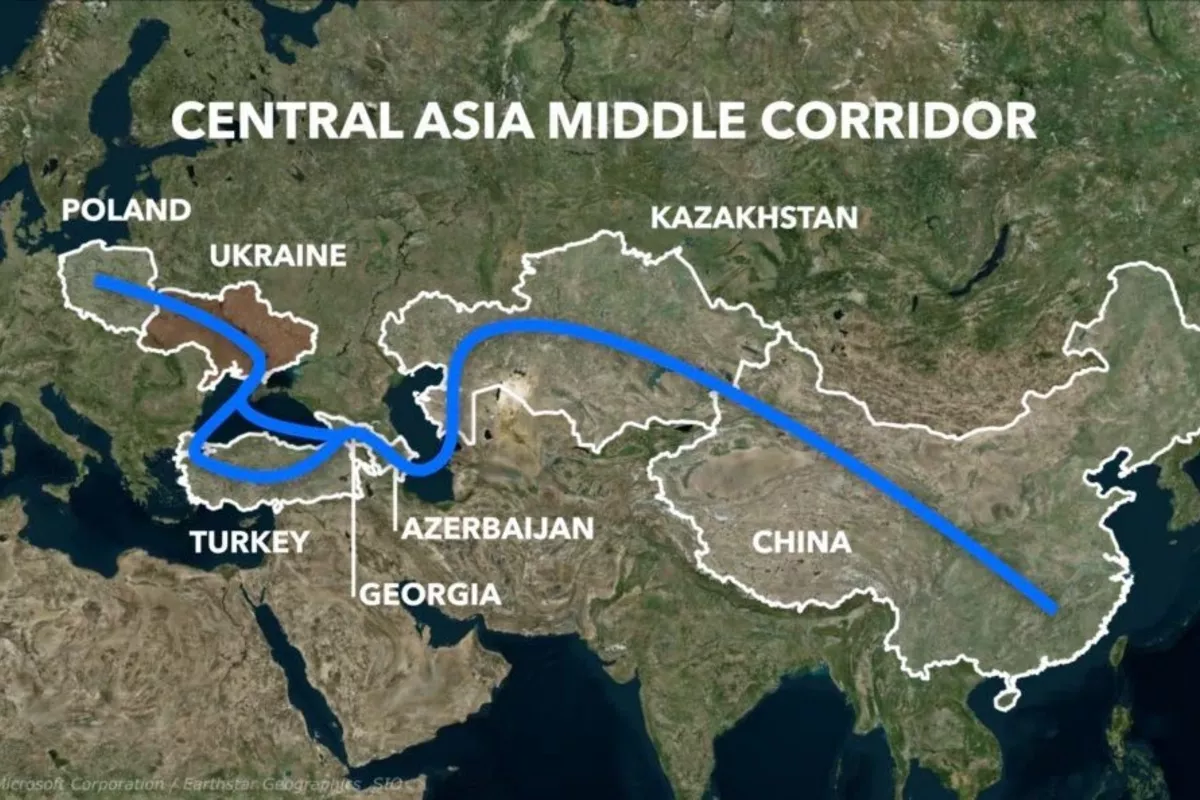
Stanislav Pritchin, head of the Central Asia sector at the Institute of World Economy and International Relations (IMEMO) of the Russian Academy of Sciences, highlights that the primary goal of promoting the Middle Corridor is to establish a trade and transport route from China to the EU that bypasses Russia.
The Middle Corridor is a trade and transport route connecting China and the EU while bypassing Russia, passing through Central Asia, the South Caucasus, and Türkiye, The Caspian Post reports via Russian media.
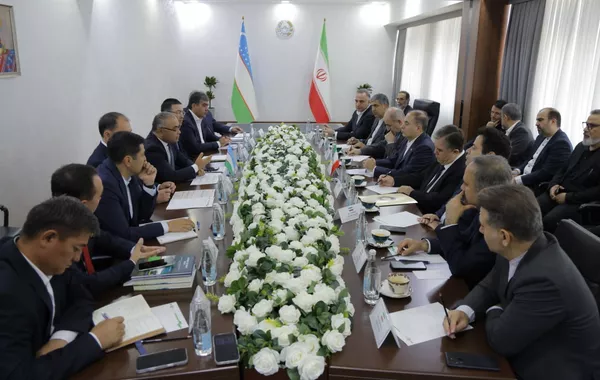
On April 2, Kazakh Prime Minister Olzhas Bektenov announced that Kazakhstan will sign an agreement with Azerbaijan to develop the Middle Corridor, a move driven by rising geopolitical tensions.
Later, Azerbaijani President Ilham Aliyev highlighted the corridor’s strategic importance for the interests of countries in the Organization of Turkic States.
The expert said that the International Monetary Fund (IMF) views the Middle Corridor primarily as a regional artery connecting the South Caucasus and Central Asia.
The expert noted that many myths, political expectations, and geopolitical narratives have been built around the Middle Corridor. In reality, even the International Monetary Fund (IMF) and the World Bank view the route with considerable skepticism due to its limited capacity.
Pritchin emphasizes that the Middle Corridor route is not without challenges, citing the large number of transshipment points and difficult terrain. Among other drawbacks, he notes the lack of adequate port infrastructure for container handling and the absence of a unified tariff system.
“The main goal promoted for this route is to create a bypass from China to Europe around Russia,” Pritchin concluded.
He also noted that, statistically, the route through Russia cannot truly compete with the Middle Corridor, given the much larger volume of shipments handled via the Russian path.
Share on social media