Eurasian Trade Revolution: Azerbaijan and Kazakhstan Lead Middle Corridor’s Ascent
The Middle Corridor is rapidly emerging as a vital artery in Eurasian trade, reshaping how goods move between Central Asia and global markets.
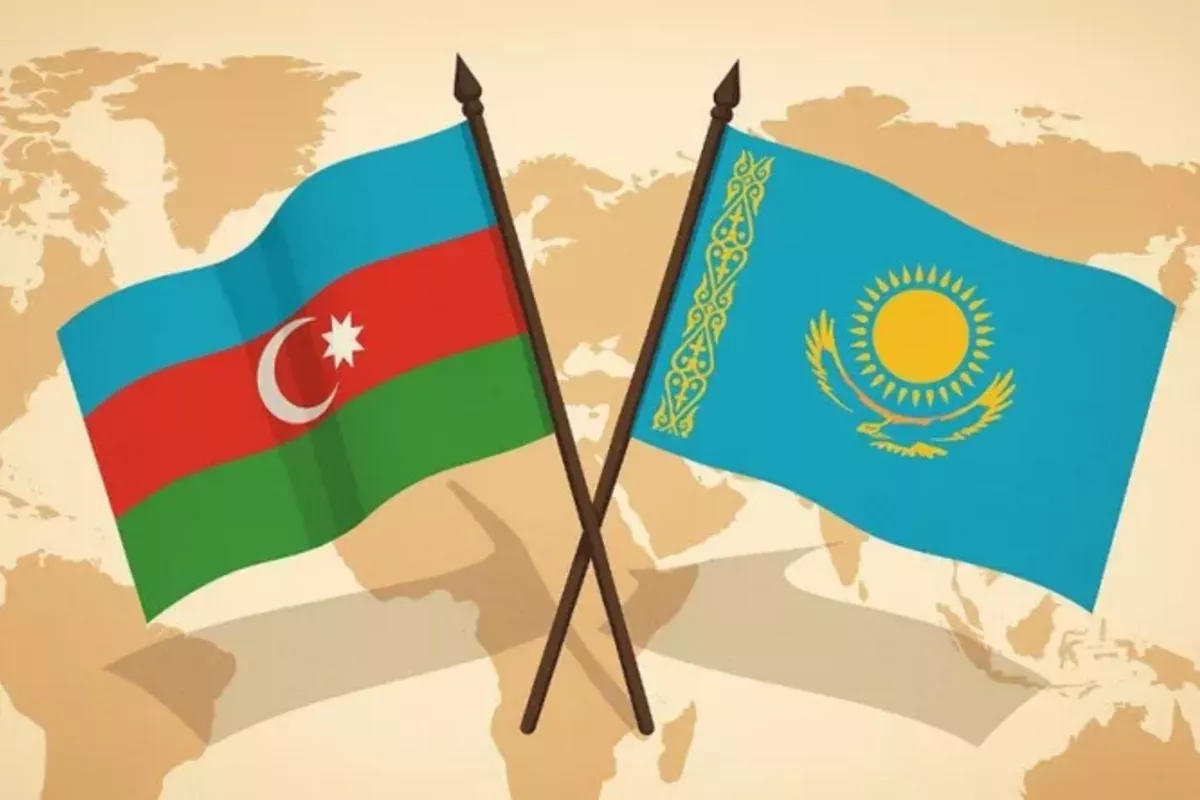
As geopolitical tensions disrupt traditional routes and global fragmentation deepens, countries are increasingly seeking reliable and diversified transit pathways. In this evolving landscape, Kazakhstan and Azerbaijan have taken on pivotal roles, positioning themselves at the core of the Trans-Caspian connectivity network.
Kazakhstan, as a major exporter of energy resources and commodities, is driving demand for alternative routes that reduce reliance on politically sensitive corridors. Azerbaijan, meanwhile, has established itself as a key logistical hub, providing a critical link between Central Asia, the South Caucasus, and onward to Türkiye and Europe. Together, their cooperation has transformed the Middle Corridor from a strategic concept into a functioning trade route with growing international relevance.
In an interview with The Caspian Post, Wesley Alexander Hill, Assistant Director and Lead Analyst at the Energy, Growth, and Security Program at the International Tax and Investment Center, said that corridor politics play a decisive role in shaping regional economic relations, particularly in the development of the Middle Corridor.
Photo: Wesley Alexander Hill, Assistant Director and Lead Analyst at the Energy, Growth, and Security Program at the International Tax and Investment Center
He noted that as global fragmentation intensifies and reliable access to international markets becomes less certain, alternative transit routes have gained strategic importance. “In this context, both Kazakhstan and Azerbaijan have emerged as central actors in advancing the Trans-Caspian connectivity framework,” he said.
According to Hill, Kazakhstan faces clear geographic and geopolitical constraints. He said that traditional export routes have long depended on Russia, which now carries increased political and economic risks, while southern routes through Iran, Afghanistan, and Pakistan remain unstable and logistically challenging. “As a result, the Middle Corridor has become a critical strategic alternative, enabling Kazakhstan to diversify its export pathways and reduce dependency,” the expert noted.
Hill emphasized that Azerbaijan plays an indispensable role in this system. “As a key transit hub in the South Caucasus, Azerbaijan serves as the bridge between Central Asia and European markets,” he said, adding that cargo from Kazakhstan crosses the Caspian Sea to Baku, from where it is transported through the South Caucasus toward Türkiye and Europe.
The expert underlined that the effectiveness of the Middle Corridor relies on close coordination between Kazakhstan and Azerbaijan. “While Kazakhstan provides the bulk of export cargo, including energy resources, grain, and raw materials, Azerbaijan ensures transit efficiency through its infrastructure and logistics capabilities,” he said, noting that the Port of Baku and the country’s expanding rail network are central to this process.
Hill also pointed to the growing strategic alignment between the two countries, noting that Kazakhstan has increased its engagement with Azerbaijan by expanding the use of Caspian shipping routes and strengthening coordination on customs and logistics. “This deepening cooperation has also prompted discussions about expanding regional formats beyond Central Asia to include Azerbaijan more formally,” he added.
“The geopolitical shift following Russia’s invasion of Ukraine in February 2022 significantly accelerated these dynamics,” Hill said. “What had previously been considered a secondary route quickly became a priority corridor. Trade flows began to shift, and demand for the Middle Corridor rose sharply, prompting both Kazakhstan and Azerbaijan to intensify coordination and infrastructure use.”
However, Hill noted that challenges remain, particularly in financing. While capacity along the corridor has improved, further investment is needed to expand ports, rail networks, and logistics systems. “Despite strong political support from Western partners, including the European Union and the United States, financial commitments have yet to fully materialize,” he said.
“At the same time, China continues to invest in regional infrastructure, including projects linked to the Middle Corridor, reflecting its broader Belt and Road ambitions,” the expert noted.
In conclusion, Hill stressed that the Middle Corridor represents a joint strategic effort shaped by the complementary roles of Kazakhstan and Azerbaijan. He noted that Kazakhstan drives supply and demand, while Azerbaijan functions as the critical transit gateway. “Their partnership has transformed the corridor into an increasingly viable alternative for Eurasian trade, with the potential to play a much larger role in global connectivity if supported by sustained investment,” he said.