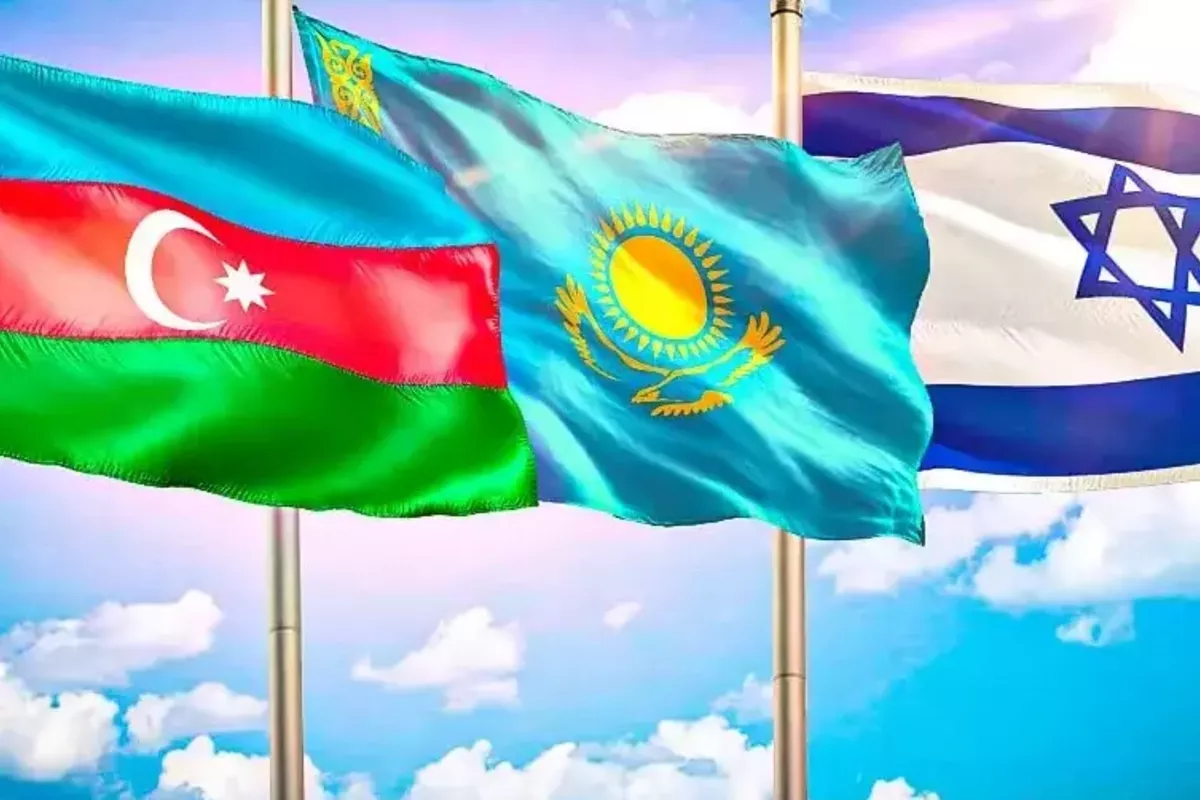
Israel’s growing engagement with Central Asia is increasingly drawing attention from strategic analysts. According to assessments by the Begin-Sadat Center for Strategic Studies (Besa Center), Kazakhstan and Azerbaijan occupy a pivotal place in Israel’s evolving regional calculus.
Since gaining independence, the Central Asian states have maintained a position of neutrality toward Israel. Following Kazakhstan’s accession to the Abraham Accords on 6 November 2025, Israel may find itself presented with an opportunity to significantly expand its diplomatic presence in both Central Asia and the Caspian Basin (after Azerbaijan joined the “Central Asian Five” in 2025, the two spaces may reasonably be viewed as a single international region - a point that will be elaborated below). It is therefore worth examining how Israeli diplomacy has begun to make use of this emerging “window of opportunity” and what potential trajectories might exist for Israel’s foreign policy in this context, The Caspian Post reports via Besa Center.
photo: Xalqqazeti
1. Israel’s Diplomatic Activity on Kazakhstan's Track
On 10 January 2026, at Israel’s initiative, Prime Minister Benjamin Netanyahu held a telephone conversation with President Kassym-Jomart Tokayev of Kazakhstan. During the exchange, the two leaders reaffirmed the steady and long-term development of bilateral cooperation and discussed further ways to deepen engagement across a broad range of issues on the bilateral agenda. A central subject of discussion was Kazakhstan’s decision in 2025 to join the Abraham Accords. Netanyahu expressed deep appreciation to Tokayev for this decision and underscored its importance for strengthening peace and international dialogue.
Kazakhstan’s accession to the Abraham Accords makes it the first Central Asian state to join the initiative and extends the geographical scope of the framework beyond the Middle East and North Africa. This significantly enhances Astana’s value for Israel-not only as a partner in bilateral economic projects but also as a key participant in multilateral peace initiatives.
The Netanyahu-Tokayev conversation took place one week before the expected visit of Israel’s foreign minister to Astana. Gideon Sa’ar plans to visit Kazakhstan immediately after his official visit to Azerbaijan on 26 January 2026. The preparation for this visit has been underway since November 2025, when - in the context of Kazakhstan’s decision to join the Abraham Accords - the foreign ministers of the two countries discussed prospects for cooperation in technology, water and agriculture, as well as the establishment of direct air transport links.
Several directions of dialogue can be reasonably anticipated during the visit:
Discussion of a possible expansion of the political dialogue in the context of the expanding Abraham Accords. Such political dialogue corresponds well to Kazakhstan’s traditional multi-vector foreign policy, aimed at maintaining balanced and mutually beneficial relations with both Western and Eastern partners.
Discussion of regional security issues in light of multiple ongoing conflicts worldwide, including in the Middle East. The conflict surrounding Iran has become particularly salient, given the possible reaction of the United States and Israel to the violent suppression of mass protests by the Iranian authorities (as well as Iran’s previous pursuit of a nuclear program and its “hybrid” confrontation with Israel and the United States in the Middle East). For Kazakhstan, it is of fundamental importance to minimize the negative spillover effects of existing conflicts - including the potential outbreak of a new war in Iran - on Central Asia.
Further development of cooperation in energy, technology, and agriculture. This dimension is critical in the context of Kazakhstan’s current economic modernization agenda. Technologies related to artificial intelligence are of particular interest, as emphasized in Tokayev’s 2025 Presidential address to the nation. Israel holds substantial expertise in this field.
photo: Aze.Media
2. Strengthening Traditional Ties with Azerbaijan
The forthcoming expansion of the Israeli-Kazakh dialogue will unfold against the background of the further consolidation of the Israeli-Azerbaijani partnership. As noted above, Sa’ar plans to visit Azerbaijan on 26 January 2026 for a one-day official visit prior to traveling on to Kazakhstan.
Information on the preparation of this visit had already begun to circulate in late 2025. The focus was on deepening bilateral cooperation in the fields of economics and security in connection with broader discussions on peace and stability in the Middle East and the South Caucasus - including Trump’s mediation on the Zangezur question, the situation in Gaza, and issues related to Iran.
Azerbaijan is of strategic importance to Israel at present for several reasons:
The country maintains a long-standing structural conflict with Iran. Estimates suggest that between 6-7 million and up to 30 million ethnic Azerbaijanis reside in Iran’s northwestern provinces - a range that is itself indicative of the opacity surrounding demographic data in the Islamic Republic. By contrast, the population of the independent Republic of Azerbaijan is roughly 10 million, making neighboring Azerbaijan a natural point of attraction for Iranian Azerbaijanis. During the 20th century, the USSR even sought to detach Southern Azerbaijan from Iran, although the effort ultimately failed due to firm resistance from the United States. Beyond the issue of Azerbaijani self-determination, Tehran and Baku have also experienced other disputes, including over the delimitation of the Caspian Sea. Added to this were longstanding ideological frictions between Azerbaijan’s secular post-Soviet regime under the Aliyev family and Iran’s fundamentalist religious leadership. In the event of a territorial fragmentation of Iran as a result of revolutionary upheaval, Azerbaijan - alongside Kurdish autonomous entities in Iraq and Syria and the Baloch movements in Iranian and Pakistani Balochistan - could play a highly consequential role.
Israel has become a key supplier of weapons to Azerbaijan. Between 2016 and 2020, Israel accounted for roughly 69% of Azerbaijan’s arms imports. Deliveries included drones (such as the Searcher and Heron platforms), air-defense and missile-defense systems, as well as simulators, personnel training, and technical support. Baku has not hesitated to signal its strategic partnership with Israel to Iran, treating this as an element of deterrence. In recent years, open-source reporting has frequently pointed to a broader security relationship between Israel and Azerbaijan, including alleged intelligence cooperation. Officially, however, Azerbaijan maintains a position of neutrality vis-à-vis Iran.
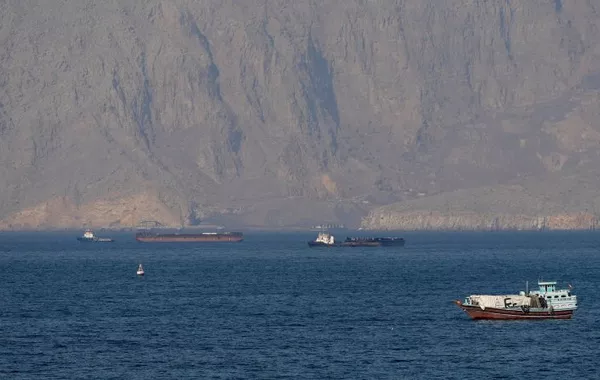
Azerbaijan occupies a unique position in the South Caucasus and the Caspian Basin as a transit corridor for the Central Asian states - and even for parts of East Asia - bypassing both Iran and Russia. The transit architecture has a major energy component, which has become especially relevant for Central Asian exporters after the Black Sea route became increasingly risky for hydrocarbon shipments due to the Russia-Ukraine conflict. This was particularly evident in 2025-2026 amid attacks on the infrastructure of the Caspian Pipeline Consortium carrying Kazakh oil to the Russian port of Novorossiysk. As a result, Kazakhstan accelerated its reorientation toward Azerbaijani infrastructure. The long-standing idea of exporting Turkmen gas to Europe via Azerbaijan also remains on the table. Such projects could play a significant role in mitigating Europe’s ongoing energy crisis.
After its victory in the Second Karabakh War, Azerbaijan’s regional role in the South Caucasus increased substantially - to the point where assessments began to describe Baku as a potential new regional hegemon. In 2025, Baku entered into a rather sharp confrontation with Russia, which also claims hegemonic status in the South Caucasus. At the same time, under Trump’s mediation, new prospects emerged for resolving the decades-long Armenian-Azerbaijani conflict, while Prime Minister Pashinyan intensified Armenia’s shift away from reliance on Russia and Iran.
Finally, recent years have witnessed an expansion of economic cooperation between Israel and Azerbaijan, particularly in technology, energy, and tourism. Sa’ar has emphasized, for example, that the flow of tourists from Israel to Azerbaijan increased sharply in 2025, and that sustaining this trend is considered a priority.
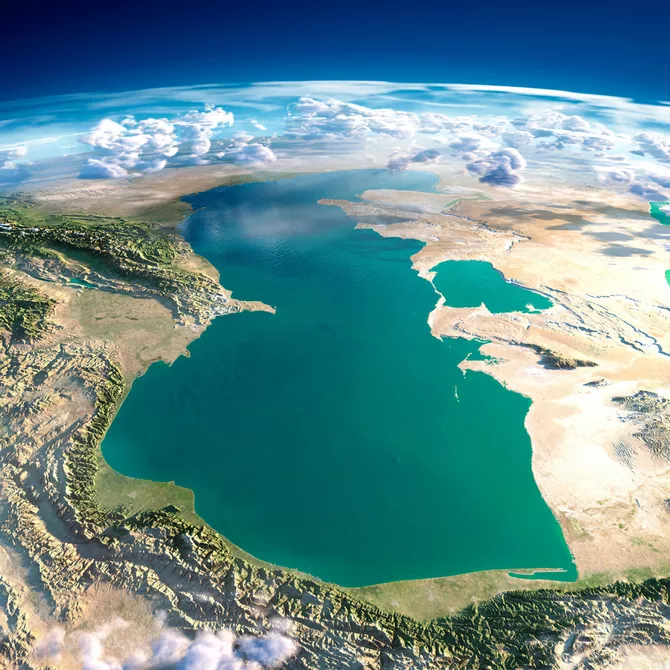
photo: The Times of Central Asia
3. Israeli Diplomatic Activity in the Context of the Regional System of International Relations in Central Asia and the Caspian Basin
Let’s analyze Israel’s relations with Kazakhstan and Azerbaijan in a broader diplomatic context. It is clear that the degree of proximity between Israel and these two states is not the same. With Azerbaijan, Israel has developed close military, strategic, intelligence, and economic ties. With Kazakhstan, the relationship remains a form of “soft cooperation,” centered on multilateral diplomacy and economic engagement. Cooperation with Azerbaijan gives Israel an avenue for deeper participation in Caspian projects and for expanding its soft economic presence in Central Asia. At the same time, Kazakhstan - as the most economically developed country in the region and the source of more than half of Central Asia’s GDP - may serve as a key intermediary target for such gradual penetration. Israel and Kazakhstan have significant room for developing their economic partnership. Moreover, the evolution of this partnership may function as a positive precedent for other Central Asian states, all of which maintain normal diplomatic relations with Israel.
For Israel itself, such an opening would represent the next step in expanding diplomatic contacts across the Islamic world, following the recent recognition of Somaliland.
How might the deepening of Israeli-Azerbaijani and Israeli-Kazakh cooperation be perceived by the principal actors in the region?
From Washington’s perspective (because of US-Israel strategic partnership), the emerging configuration could serve as one of the mechanisms for compensating the deficit of U.S. influence in Eurasia that resulted from the withdrawal of American forces from Afghanistan. Without such a compensatory strategy, it will be difficult for the United States to address a number of broader strategic challenges associated with its confrontation with China, Iran, and Russia simultaneously. For the United Kingdom and the European Union, the logic would be broadly similar, and in general they are likely to support any regional initiatives that reinforce Western diplomatic presence and connectivity in Central Asia, especially, in the forms of “soft power”.
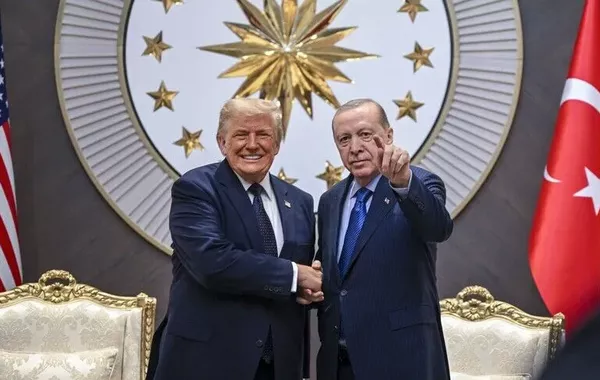
Türkiye’s position is more nuanced. In principle, Ankara has grown accustomed to the strategic alignment between Azerbaijan and Israel, as well as to Kazakhstan’s multi-vector foreign policy. For that reason, Türkiye is unlikely to obstruct such cooperation directly. Moreover, Türkiye has historically shown an ability to treat the foreign relations of other Turkic states as an additional diplomatic resource. A notable example is Kazakhstan’s role in facilitating the reduction of tensions between Türkiye and Russia during the Syrian crisis through the “Astana Process”. However, given the current depth of Turkish-Israeli disagreements, President Erdoğan is not inclined to welcome a visible rapprochement between Israel and the Turkic world. The most realistic scenario is a policy of pragmatic tolerance: Ankara will neither endorse nor hinder such cooperation, while preserving room for maneuver and seeking to ensure that it does not alter the balance of influence within the Turkic political space.
For Russia, Azerbaijan’s ties with Israel - as well as Kazakhstan’s multi-vector foreign policy - are no longer surprising. While the situation is strategically disadvantageous for Moscow, it is unlikely to trigger a harsh response in the short term. Two factors explain this restraint. First, the Kremlin is currently preoccupied with its confrontation with Ukraine and the European Union and is therefore willing to engage in various forms of “geopolitical trade-offs”, as illustrated, for example, by its behavior in the Syrian theater. At this stage, Israel and the United States are seen as a lesser strategic challenge compared to the EU-Ukraine axis. Second, this posture is also shaped by the ideological profile of the current Russian leadership. With its pronounced ultra-conservative worldview, the Kremlin perceives figures such as Trump and Netanyahu - representatives of the Western right - as ideologically more proximate than the more left-liberal leadership in Europe.
China’s strategic focus in the region remains economic expansion. Beijing grants the Central Asian states a relatively wide margin of autonomy, particularly regarding multi-vector and pragmatically oriented external partnerships, as long as the Chinese vector remains among the central pillars of their foreign policies. If cooperation with other external actors contributes to the development of projects that align with China’s own interests - such as the trans-Caspian connectivity corridor - Beijing tends to view such engagement calmly, even if it simultaneously benefits Western actors.
The state most predisposed to react sharply to the expansion of Israeli influence near its northern borders is Iran. Baku’s foreign policy is perceived in Tehran as a direct strategic risk. The extension of the Abraham Accords beyond the Middle East has also generated significant irritation in Iran, as it undermines Tehran’s efforts to forge a unified “Global South” front against Israel and the United States. However, for the moment, Iran is deeply absorbed by its own internal challenges, including ongoing revolutionary upheavals and the severe weakening of its “Axis of Resistance” in the Middle East, particularly in Lebanon and Syria. As a result, Tehran is unlikely to take meaningful action on this front in the near term.
Moreover, Kazakhstan has pursued a balanced diplomacy and complemented its multi-vector approach with gestures towards Iran. Notably, on 10-11 December 2025, President Masoud Pezeshkian paid an official visit to Astana, during which the sides discussed the expansion of regional cooperation in transportation and energy.
The Turkic states of Central Asia - and Uzbekistan in particular, as the region’s second political and economic center after Kazakhstan - are likely to take a cautiously positive view of the deepening partnership between their neighbors and Israel. In this context, Kazakhstan’s policy could become a useful precedent. Should Astana’s cautious engagement with Israel prove beneficial and unfold without major costs - including reputational ones - other Central Asian states may eventually line up to explore cooperation with Israel in a similar manner and within comparable formats.
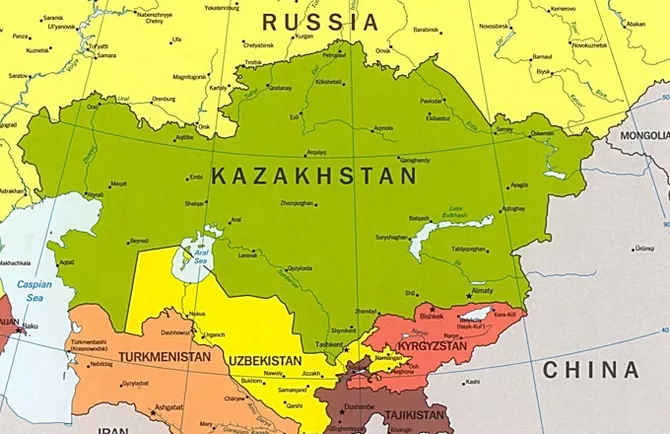
photo: Asia Society
4. Most Positive Scenario: Establishing a Permanent Consultative Format Between Israel, the Central Asian States, and Azerbaijan
If the scenario described above materializes, the question arises as to where Israel’s diplomacy could move next in its relations with the Central Asian region. One plausible direction would be for Israel to adopt, at a later stage, a version of the “Central Asia 5+1” mechanism currently independently employed by the United States, the European Union, China, Russia, Japan, South Korea, and India.
The defining characteristics of these formats are well known: they are non-institutional, do not impose binding bloc-type obligations, focus on concrete pragmatic projects, and remain largely depoliticized and demilitarized. In other words, they are optimally tailored to the multi-vector foreign policies pursued in different degrees by the Central Asian states.
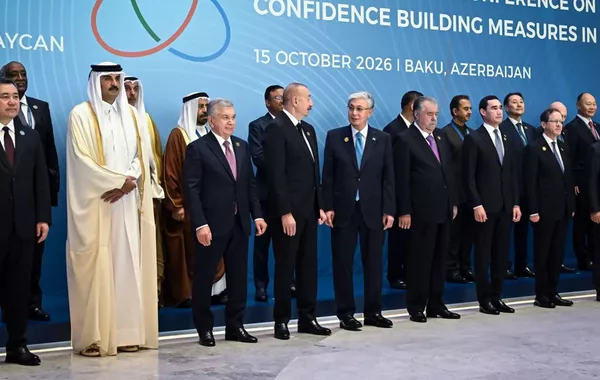
The “core” regional format independent of external actors remains the Consultative Meeting of the Heads of State of Central Asia, often referred to as the “Central Asian Five.” A significant development in 2025-largely overlooked outside the post-Soviet space-was the expansion of this format from a five-party to a six-party framework. At the Consultative Meeting held in Tashkent in November 2025, Azerbaijan officially joined the format, thereby transforming the informal “Central Asian Five” into a regional “Six”.
In this sense, the traditional 5+1 format is becoming insufficient not only for regional actors but also for external partners. The emerging reality suggests that a 6+1 framework is already more relevant. For Israel, such a configuration would be particularly advantageous, as it simultaneously includes two key states with which Jerusalem has developed strong, sustainable relations: Azerbaijan and Kazakhstan.
Uzbekistan, Kyrgyzstan, and Turkmenistan also maintain diplomatic relations with Israel. In the latter, Israel even opened a resident embassy in 2023 - an important symbolic and institutional step. None of these states espouse an official ideological anti-Zionism; their relations with Israel are better described as “latent” or “dormant” rather than adversarial. According to the dominant pattern of multivector foreign policies their political and administrative elites approach external partners through a pragmatic lens, focusing primarily on trade, investment, technology, and connectivity.
The most complex bilateral track for Israel is with Tajikistan (the only non-Turkic state of the region), largely due to Iran’s cultural and linguistic proximity and Tehran’s sustained influence in that country. Nevertheless, even Tajikistan maintains formal diplomatic relations with Israel, and Israel is represented in Dushanbe through its embassy in Tashkent (Uzbekistan), accredited concurrently to Tajikistan. Moreover, within its own multi-vector foreign policy, Tajikistan readily engages in multilateral, pragmatic, technically defined initiatives.
Under these conditions, the groundwork could be laid for the establishment of a non-binding diplomatic consultative format between Israel and the “Central Asian Six”, initially at the level of deputy foreign ministers and/or relevant sectoral ministries responsible for specific projects.
It is equally clear that such a format, especially in its initial phase, should remain modest and strictly pragmatic - though, over time, it could be conceptually linked to the broader ecosystem of the Abraham Accords. The platform could serve to facilitate discussions on economic and infrastructure development, agricultural modernization, water-management technologies, and a range of emerging technological fields (including digital infrastructure and artificial intelligence applications).