photo: vesti.kg
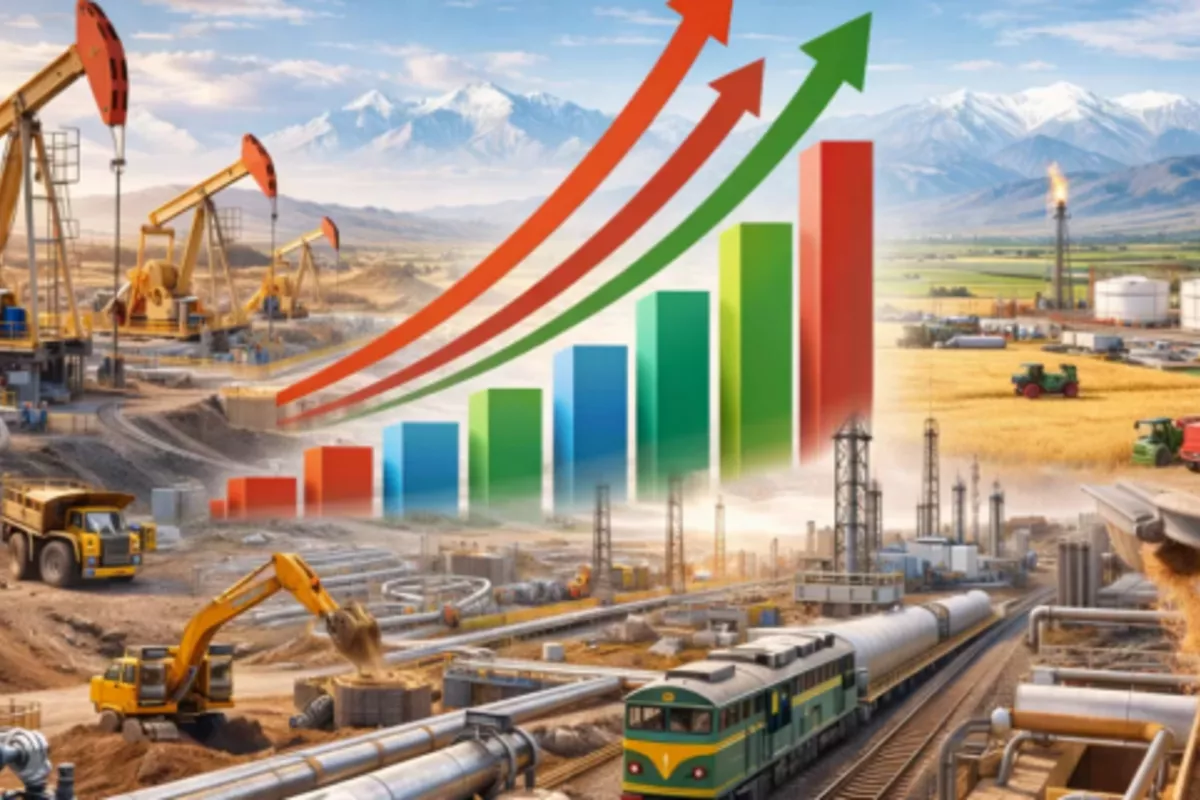
The economies of Central Asian countries have shown steady acceleration in recent years, with 2025 marking one of the most successful periods for the region.
The combined GDP of the region exceeded $500 billion, while the average GDP per capita surpassed $12,000, Kazakh analyst Asan Kurmanbekov said, The Caspian Post reports via Kyrgyz media.
Key growth drivers include high global demand for mineral resources, expanding trade links, and the gradual formation of a regional economic space. “Central Asia has experienced dynamic growth in recent years, with last year being particularly strong,” Kurmanbekov noted.
Internal factors also contributed significantly. Investments and consumer spending have been growing at double-digit rates, although inflation remains high in some countries, partially offsetting the economic momentum.
Notably, Kyrgyzstan’s economy accelerated from 9 per cent to 11.1 per cent growth, while Uzbekistan grew from 6.5 per cent to 7.7 per cent, and Kazakhstan from 5 per cent to 6.5 per cent. Tajikistan and Turkmenistan maintained stable growth rates. Since 2022, Kyrgyzstan has led regional economic expansion, increasing GDP by nearly 44 per cent in real terms thanks to domestic production, a construction boom, rising consumer demand, re-exports, and improved tax and customs administration.
Industrial production has been a major growth driver, especially in Tajikistan and Kazakhstan, contributing significantly to overall economic expansion. Internal demand also played a key role, supported by strong trade and investment activity, with remittances from migrant workers providing a substantial boost-nearly half of GDP in Tajikistan comes from remittances.
Global commodity markets further supported growth, with rising gold prices benefiting exports. However, inflation remains a key challenge, prompting central banks in Kazakhstan, Kyrgyzstan, and Uzbekistan to maintain tight monetary policies.
“Central Asian countries have demonstrated remarkable economic resilience despite external and internal shocks,” Kurmanbekov said. He added that continued regional integration and the gradual formation of a common market could provide an additional boost to economic growth.
Key Drivers of Growth:
High demand for mineral resources globally
Expansion of trade links
Double-digit investment and consumption growth
Industrial production, particularly in Tajikistan and Kazakhstan
Remittances supporting household consumption
Regional Highlights:
Kyrgyzstan: 11.1 per cent growth
Uzbekistan: 7.7 per cent growth
Kazakhstan: 6.5 per cent growth
Tajikistan and Turkmenistan: stable growth
Share on social media