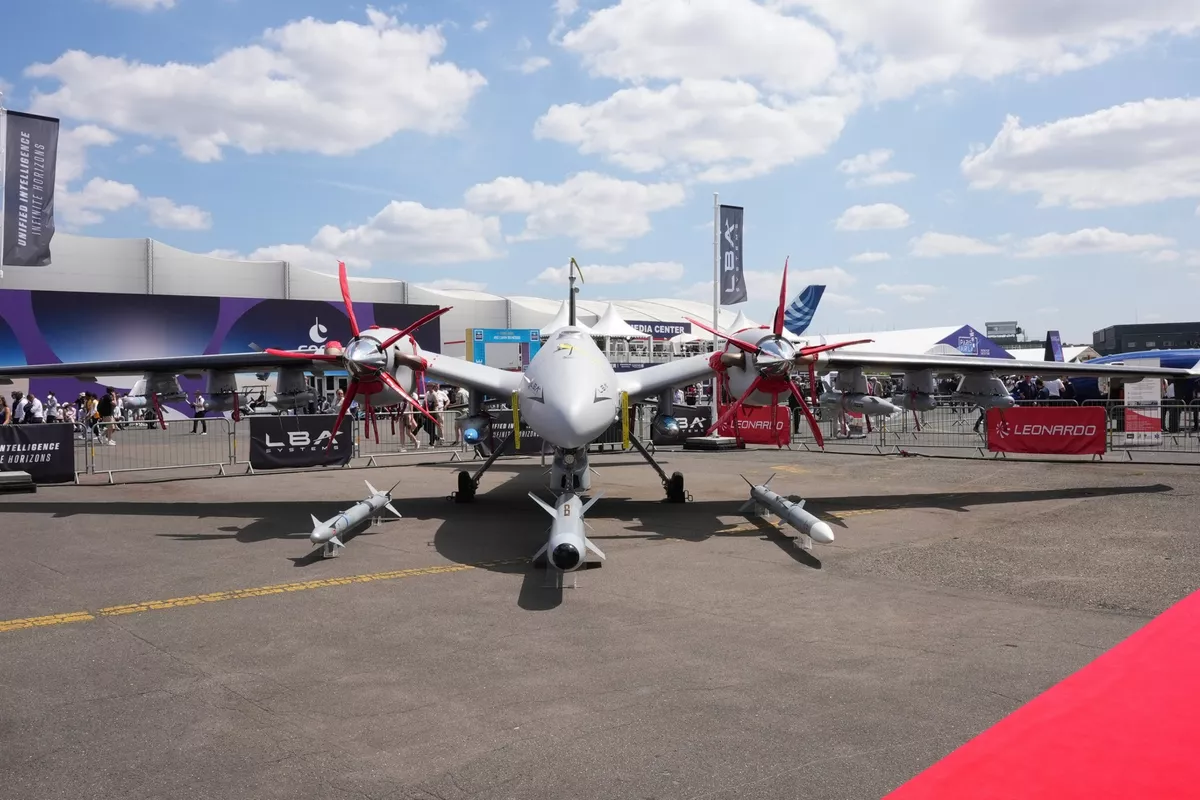
The growing partnership between Turkish defense firm Baykar and Italy’s leading aerospace and defense company Leonardo S.p.A. marks a significant development in Europe’s rapidly evolving defense landscape. Their joint effort to produce a new generation of medium-sized unmanned aerial vehicles (UAVs), expected to be unveiled in April at the Italian facility in Ronchi dei Legionari, reflects broader geopolitical, technological, and industrial shifts within the European defense sector.
The collaboration comes at a time when Europe is reassessing its defense capabilities, particularly in the field of unmanned systems. The war in Ukraine, shifting NATO priorities, and increasing concerns about technological dependence on external suppliers have accelerated efforts to develop indigenous military technologies. In this context, the Baykar-Leonardo partnership represents not merely a commercial venture but also a strategic attempt to strengthen Europe’s autonomous defense capabilities.
Europe’s Growing Demand for Indigenous Drone Capabilities
The demand for military drones has surged globally over the past decade, driven by their effectiveness in surveillance, reconnaissance, and precision strike operations. European countries, however, have historically relied on systems imported from the United States and Israel. While these systems remain highly capable, reliance on foreign suppliers has raised questions about strategic autonomy, export restrictions, and operational flexibility.
Recent conflicts have reinforced the importance of drones in modern warfare. From surveillance and targeting to loitering munitions and integrated air defense support, UAVs have become essential tools in contemporary military doctrine. Europe’s defense planners increasingly recognize that future security will depend heavily on domestically produced unmanned systems.
This demand gap has opened opportunities for new industrial partnerships. The collaboration between Baykar and Leonardo aims to address precisely this challenge: building a European-produced drone capable of meeting regional security needs while maintaining technological sovereignty.
Complementary Strengths: Platform Meets Advanced Systems
One of the most striking aspects of the Baykar-Leonardo collaboration is the complementary nature of the two companies’ expertise.
Baykar has emerged over the past decade as one of the world’s most prominent drone manufacturers. Its UAV platforms have gained international recognition for their operational effectiveness, particularly in conflicts across several regions. The company specializes in designing and manufacturing aerial platforms that combine endurance, operational flexibility, and relatively cost-effective production.
Leonardo, by contrast, brings decades of experience in aerospace systems, avionics, sensors, and electronic warfare technologies. As one of Europe’s major defense contractors, the company has extensive expertise in radar systems, intelligence platforms, and integrated defense networks.
Under the joint venture arrangement, Baykar will provide the aerial platform for the new medium-sized UAVs, while Leonardo will develop advanced intelligence systems and sector-specific technologies. These include sensors, communication systems, and mission-specific payloads that enable drones to perform complex tasks ranging from surveillance to battlefield coordination.
This division of responsibilities illustrates a strategic industrial model: pairing a proven drone platform developer with a highly sophisticated European defense technology provider. Such collaboration may allow the joint venture to combine rapid production capabilities with advanced mission technologies.
Industrial Strategy and the Ronchi dei Legionari Facility
The initial production of the new drones is scheduled to take place at the Ronchi dei Legionari facility in northeastern Italy. This site, known for aerospace manufacturing, will serve as the starting point for production before expansion to additional facilities.
Producing the UAVs within Italy carries both practical and strategic significance. Certification in Italy ensures compliance with European regulatory standards, enabling the drones to be marketed to European armed forces and other international clients.
Equally important, local production strengthens Europe’s defense-industrial base. European governments have increasingly emphasized the importance of maintaining domestic production capabilities for key military technologies. By situating production within the European Union, the Baykar-Leonardo partnership aligns with these broader policy goals.
This approach also supports European defense procurement frameworks, which increasingly favor suppliers capable of producing equipment within European territory.
The “Massive Market” for European Drones
Leonardo CEO Roberto Cingolani has emphasized that a “massive market” exists for European-made drones. This assessment reflects several overlapping trends shaping global defense procurement.
First, many European countries are seeking alternatives to U.S. and Israeli UAV systems due to export limitations and political considerations. Indigenous or European-made platforms provide greater operational autonomy.
Second, NATO members are expanding drone fleets as part of broader modernization efforts. The lessons learned from recent conflicts underscore the importance of persistent aerial surveillance and rapid-response strike capabilities.
Third, many countries outside Europe are also interested in diversified defense suppliers. Nations in Asia, Africa, and the Middle East increasingly seek advanced yet affordable drone systems that do not come with restrictive export controls.
A European-produced UAV combining Baykar’s platform expertise with Leonardo’s advanced technologies could therefore appeal to a broad international market.
Integration with the “Michelangelo Dome”
One of the most intriguing aspects of the joint project is its potential integration with the “Michelangelo Dome,” a new air defense concept unveiled in November 2025.
The system is envisioned as a layered air defense architecture designed to protect against a wide range of aerial threats, including missiles, drones, and aircraft. By integrating UAVs into the network, the system could enhance situational awareness and threat detection capabilities.
The Baykar-Leonardo drones could function as airborne sensors within this defense network, providing early warning data and real-time battlefield intelligence. Equipped with advanced sensors and communication systems, these UAVs could relay information to ground-based interceptors and command centers.
The planned testing of the Michelangelo Dome in Ukraine later this year highlights the urgency with which European defense planners are pursuing advanced air defense technologies. If successful, the integration of UAVs into such systems could represent a major shift in how air defense networks operate.
Strategic Implications for NATO and European Security
Beyond its technological significance, the Baykar-Leonardo partnership carries broader geopolitical implications.
Türkiye, the home country of Baykar, occupies a unique position within NATO as both a European and Middle Eastern power. The country has significantly expanded its defense industry over the past two decades, seeking greater independence in military technology.
Italy, meanwhile, remains one of Europe’s leading aerospace powers and an important NATO member with strong ties to both European and transatlantic defense networks.
Their collaboration reflects a growing trend toward cross-border defense partnerships within the alliance. By combining industrial resources from different NATO countries, such partnerships aim to accelerate technological innovation while strengthening collective defense capabilities.
In this sense, the joint UAV project illustrates a new model of defense cooperation that bridges national industries and strategic interests.
Competition in the Global UAV Market
The global UAV market has become increasingly competitive, with major players from the United States, Israel, China, and Türkiye vying for market share.
American systems such as the MQ-9 Reaper remain highly advanced but are often expensive and subject to export restrictions. Israeli drones are widely respected but similarly constrained by political and regulatory considerations.
China has emerged as a major exporter of armed drones, offering relatively affordable platforms to countries that may face restrictions from Western suppliers.
Baykar’s drones have gained international attention precisely because they combine affordability with operational effectiveness. Integrating these platforms with European technologies through Leonardo could create a highly competitive product capable of challenging established suppliers.
Technological Evolution of Medium-Sized UAVs
The new UAVs being developed by Baykar and Leonardo fall into the category of medium-altitude, long-endurance (MALE) drones. These systems typically feature extended flight times, substantial payload capacity, and advanced sensor suites.
The planned payload capacity of several hundred kilograms suggests the drones will be capable of carrying a wide range of equipment. Potential payloads include surveillance cameras, radar systems, electronic warfare modules, and precision-guided munitions.
Advances in artificial intelligence, sensor integration, and secure communications are also expected to play a significant role in next-generation UAV capabilities. The involvement of Leonardo, with its expertise in electronics and defense systems, could significantly enhance the technological sophistication of the final product.
Industrial and Economic Impact
Beyond military applications, the joint venture may generate substantial economic benefits.
The development and production of advanced UAV systems require highly skilled engineers, technicians, and researchers. Establishing manufacturing and research facilities within Europe could therefore create new jobs and stimulate local economies.
Moreover, successful export sales would contribute to Europe’s broader defense-industrial competitiveness. As global demand for drones continues to grow, companies capable of producing advanced yet affordable systems are likely to capture significant market share.
The Baykar-Leonardo partnership could thus become a cornerstone of Europe’s emerging drone industry.
Conclusion
The collaboration between Baykar and Leonardo represents a pivotal moment in Europe’s effort to strengthen its drone capabilities. By combining Turkish expertise in UAV platform design with Italian leadership in aerospace technologies, the partnership aims to produce a new generation of medium-sized drones tailored to European and global defense needs.
Beyond the immediate technological goals, the project reflects deeper strategic trends: the pursuit of defense autonomy, the integration of UAVs into advanced air defense systems, and the growing importance of multinational defense partnerships.
If successful, the joint UAV program could reshape Europe’s position in the global drone market while contributing to the modernization of NATO’s defense architecture. In an era defined by rapid technological change and evolving security threats, such collaborations may become increasingly central to the future of defense innovation.